Glaze
A substance applied to ceramic surfaces and fired to form a glassy coating
A mineral mixture applied to the exterior of ceramics and fired at high temperatures. As it melts during the firing process, it forms a smooth, glassy film on the surface. It fills fine gaps in the clay to prevent moisture from seeping in and adds color and luster.
 GlazeCERAMIC GLAZE
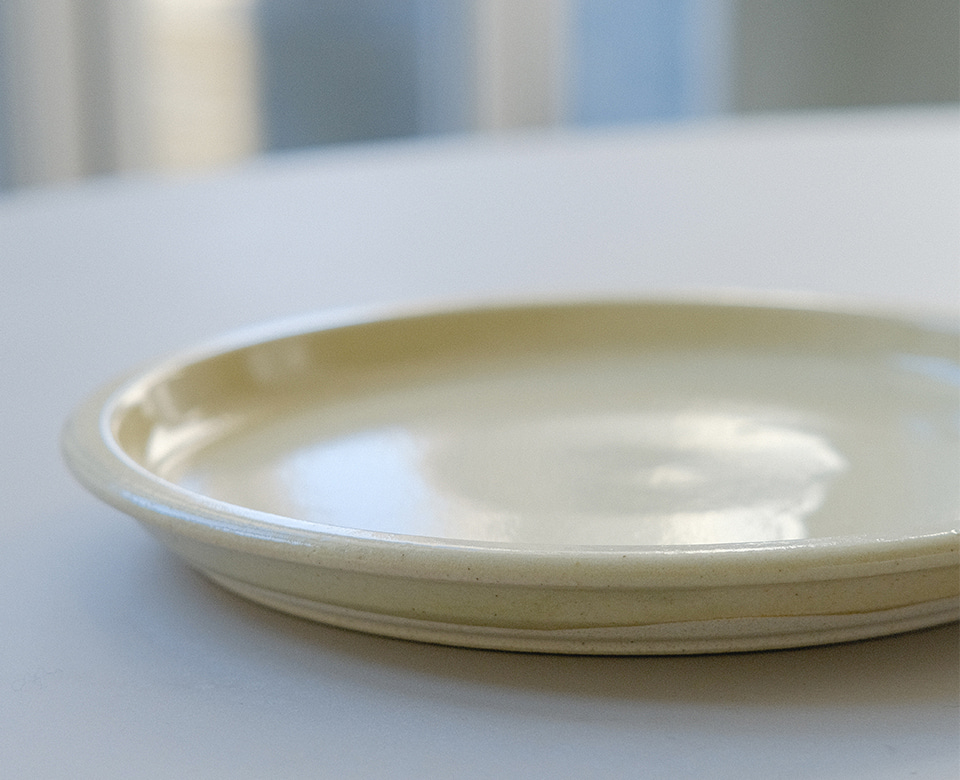 Glaze surfaceGLAZE
Appearance
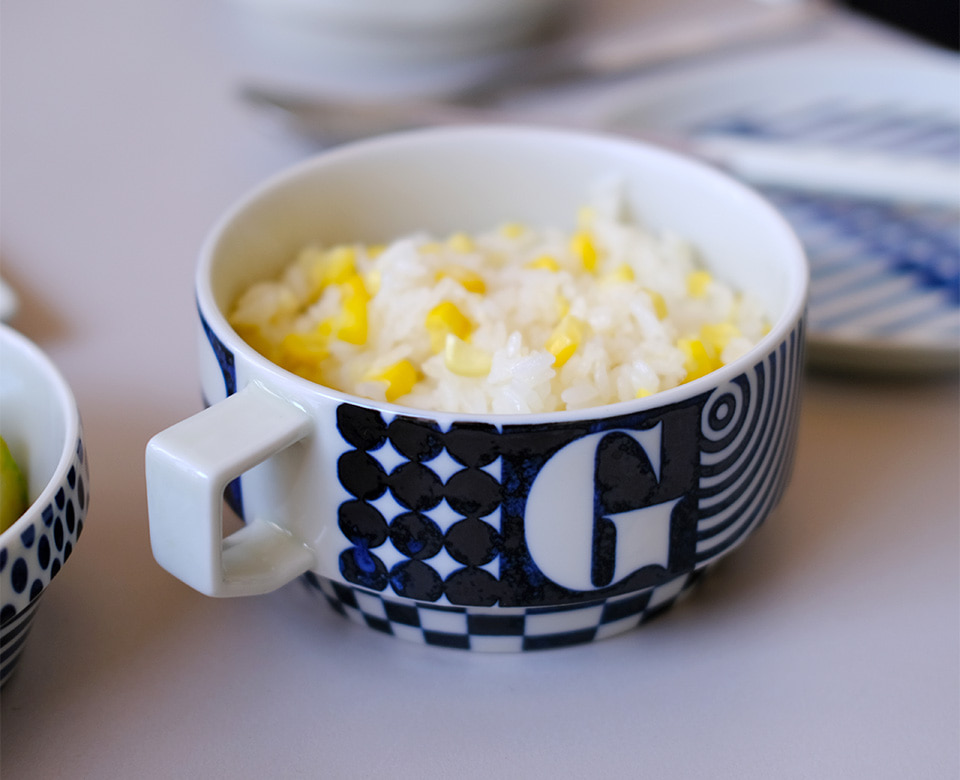
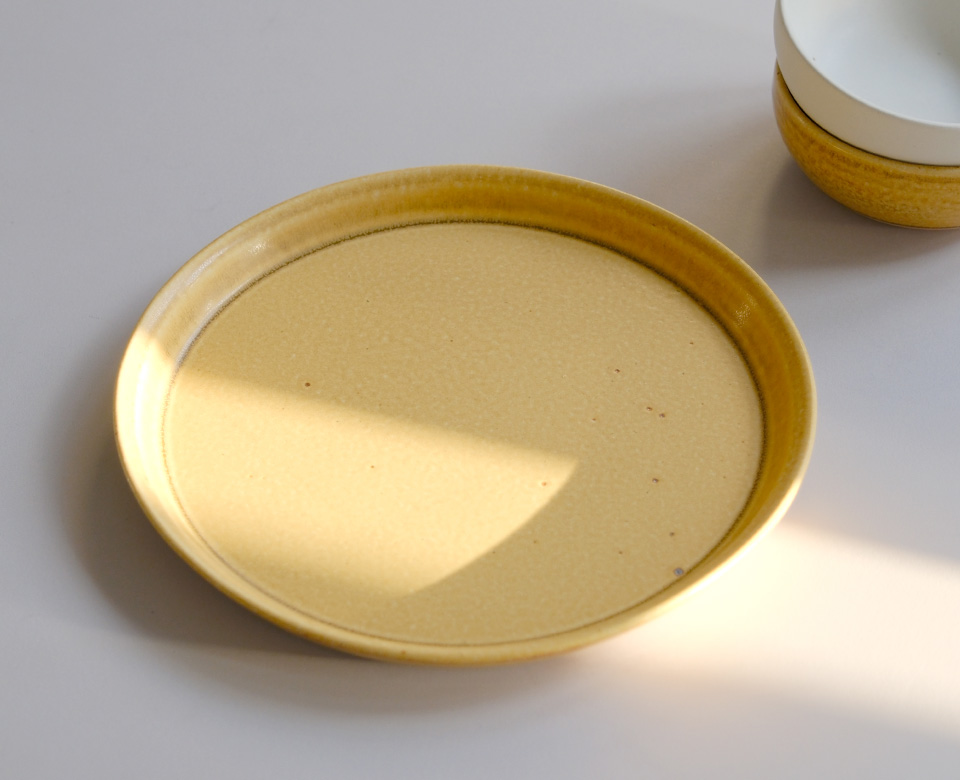
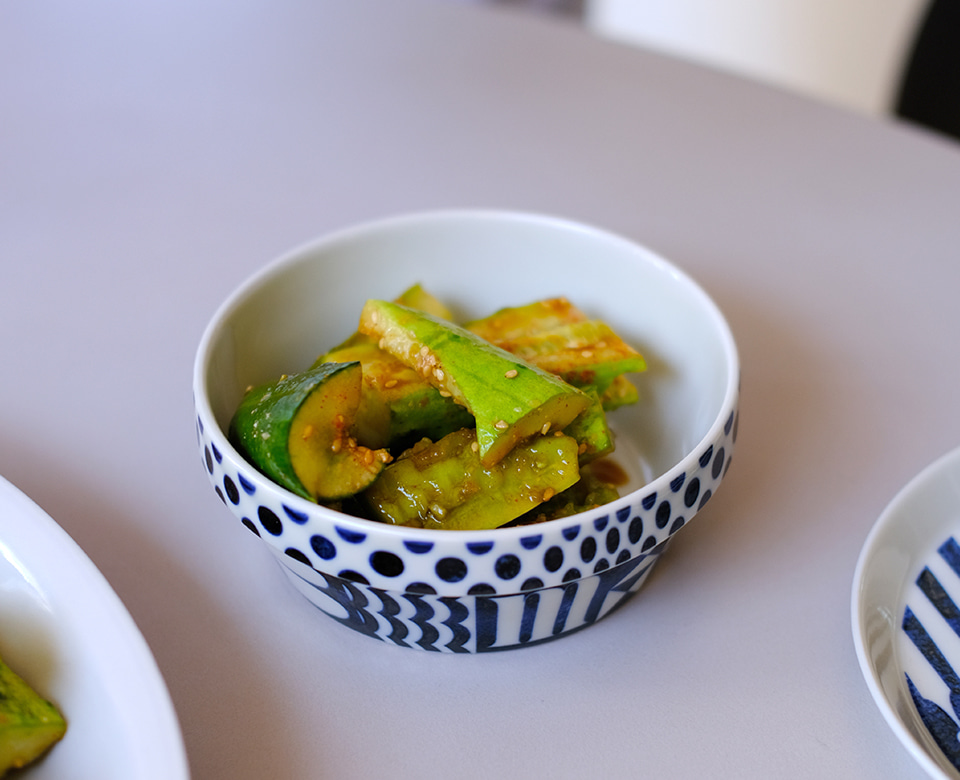
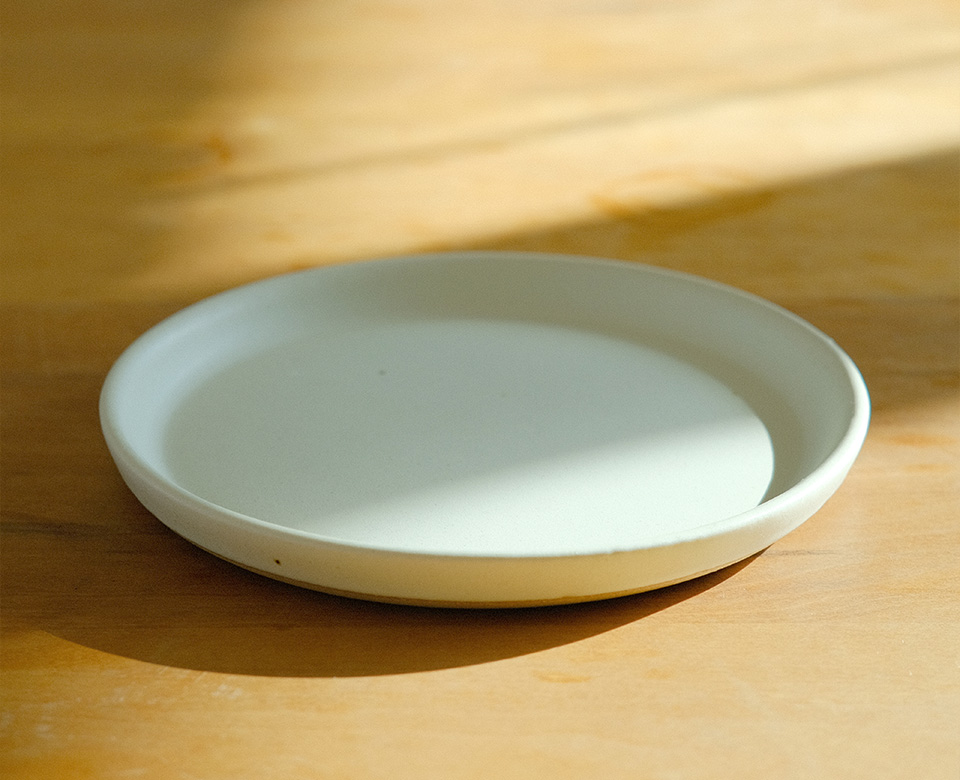
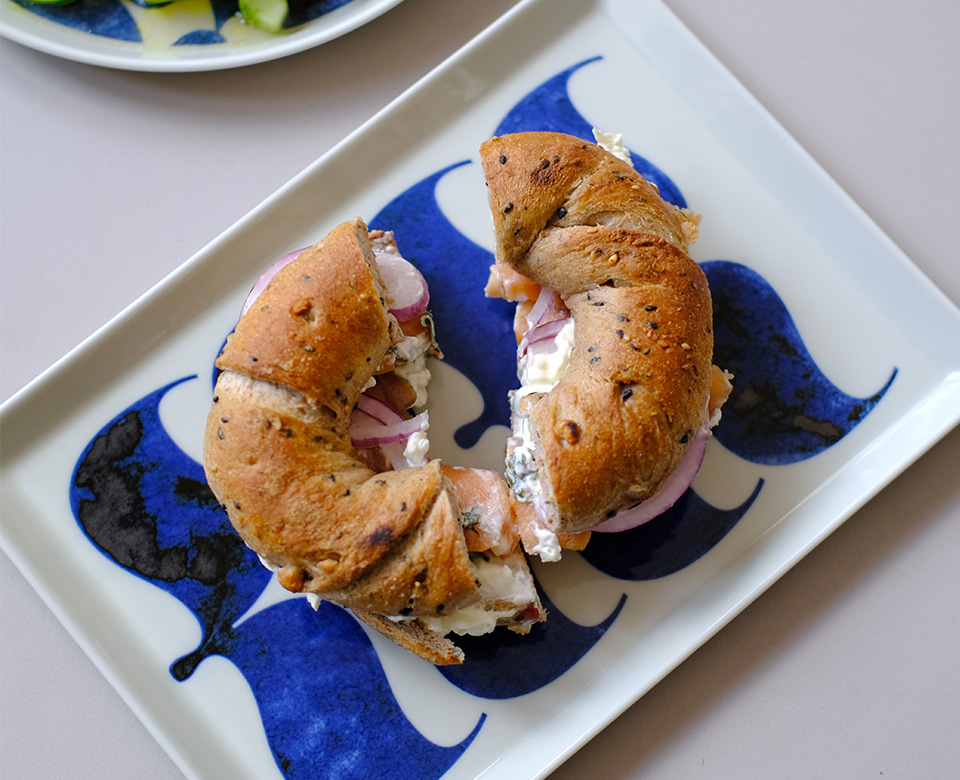
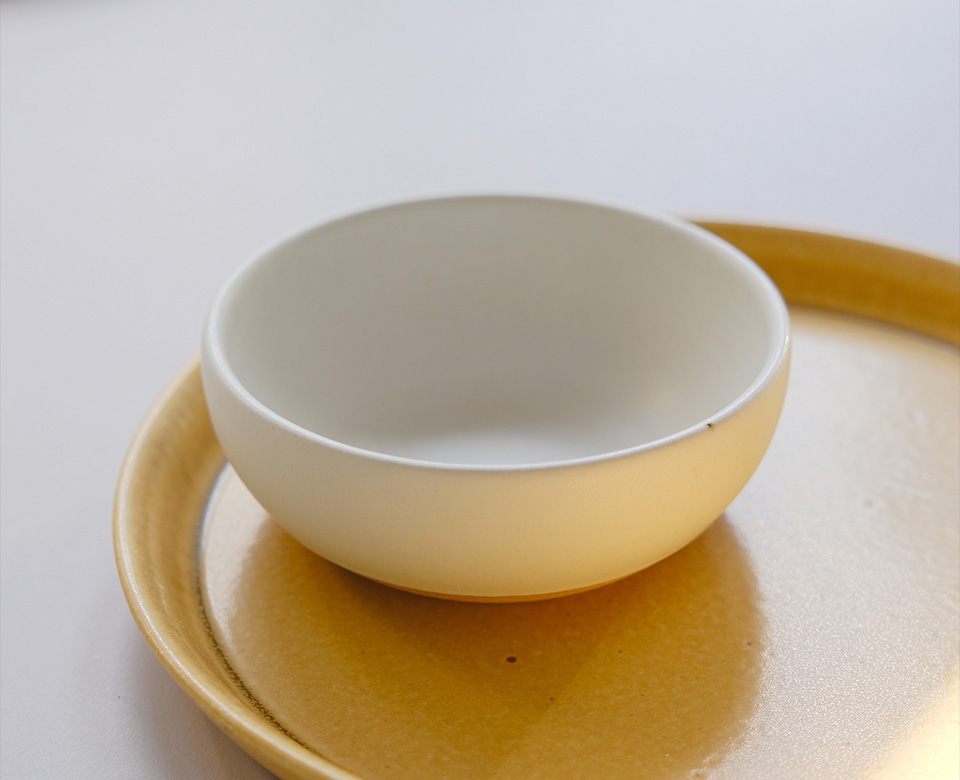
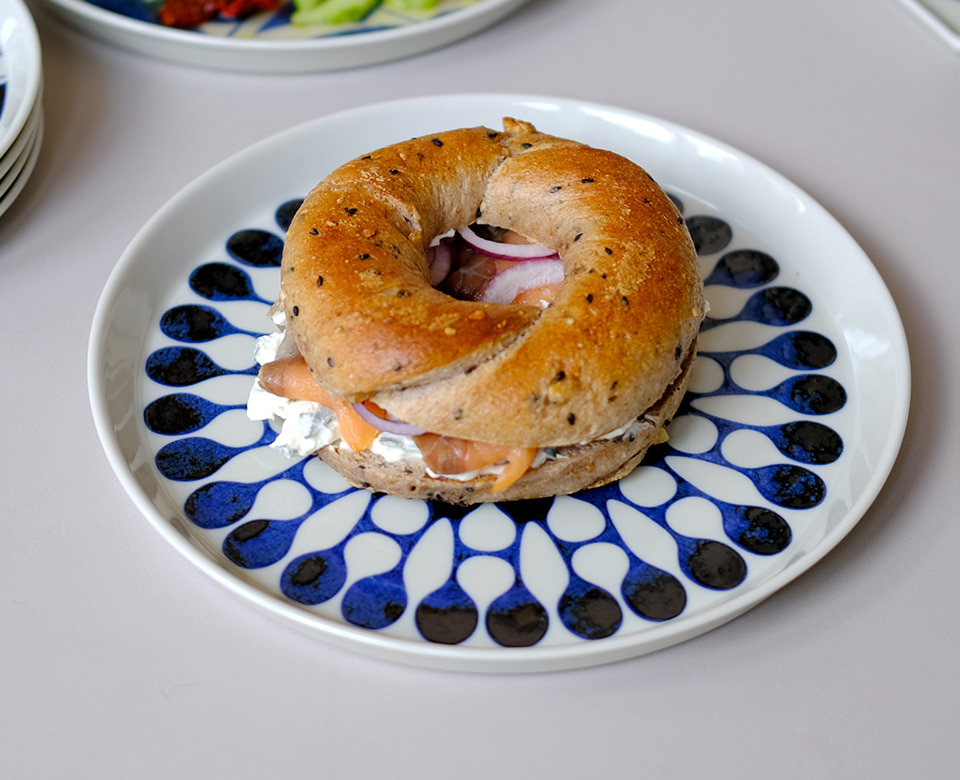
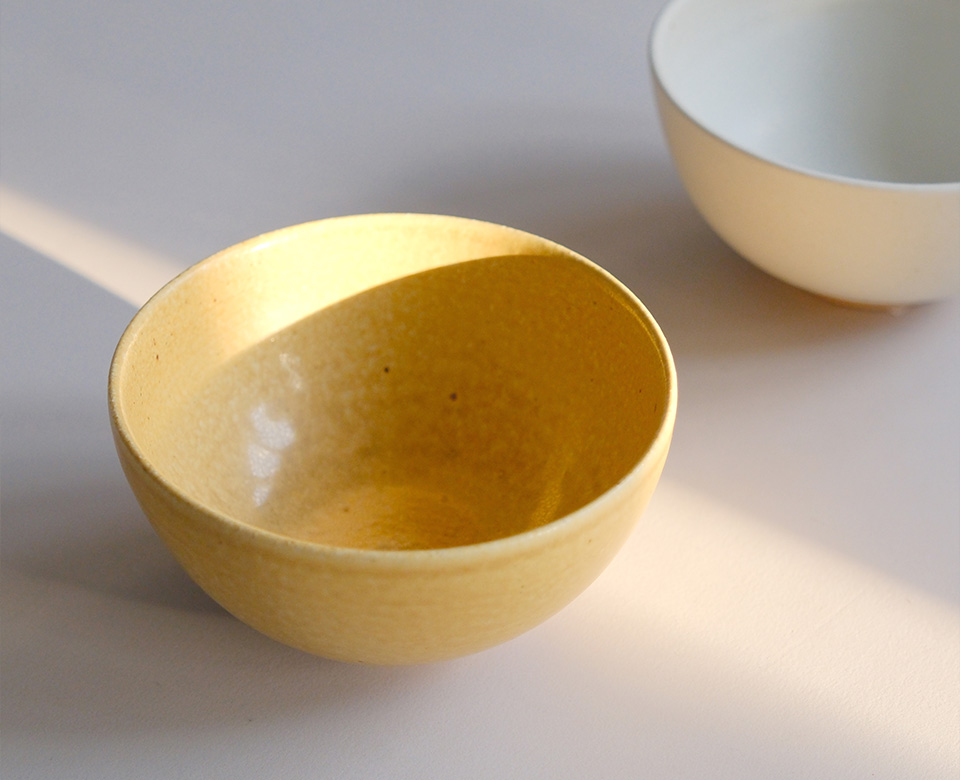
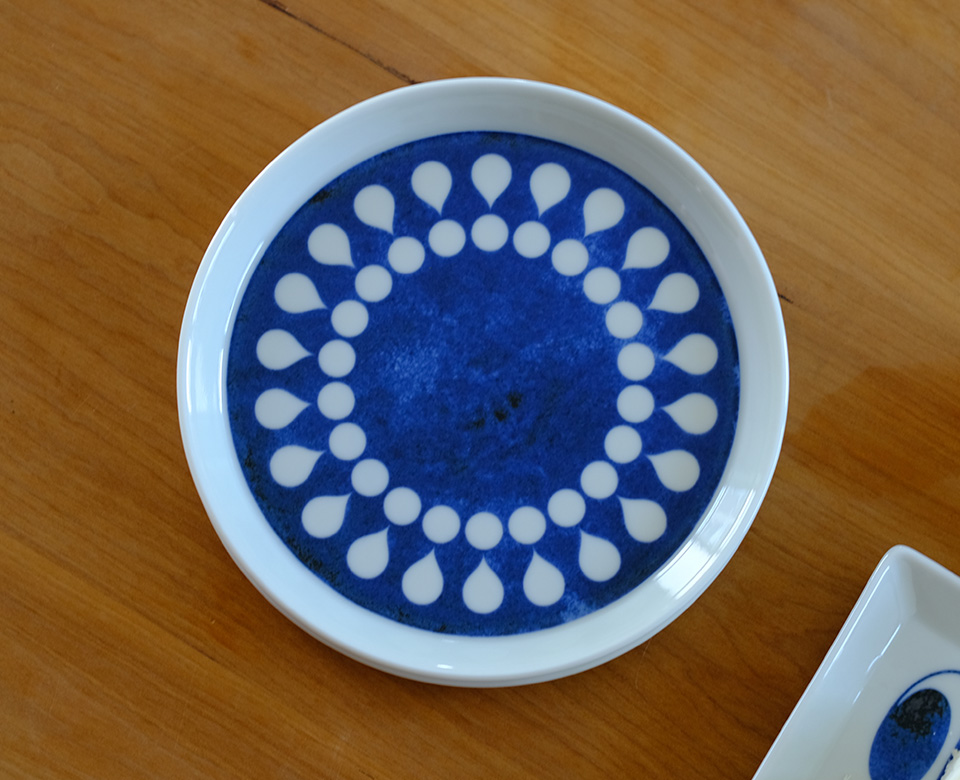
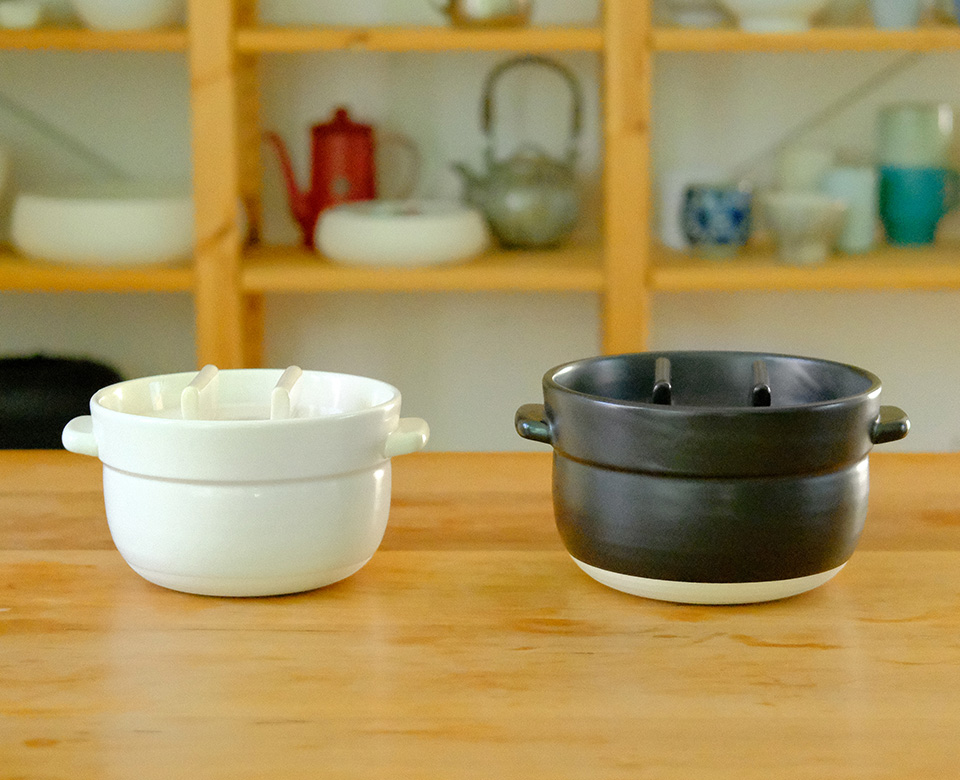
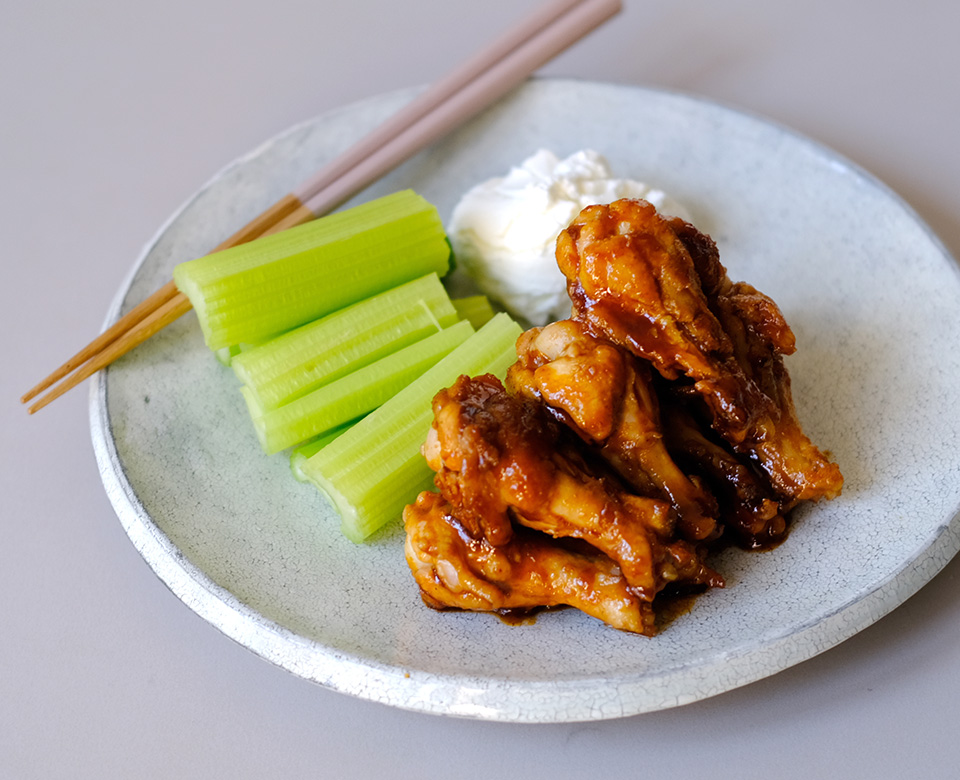
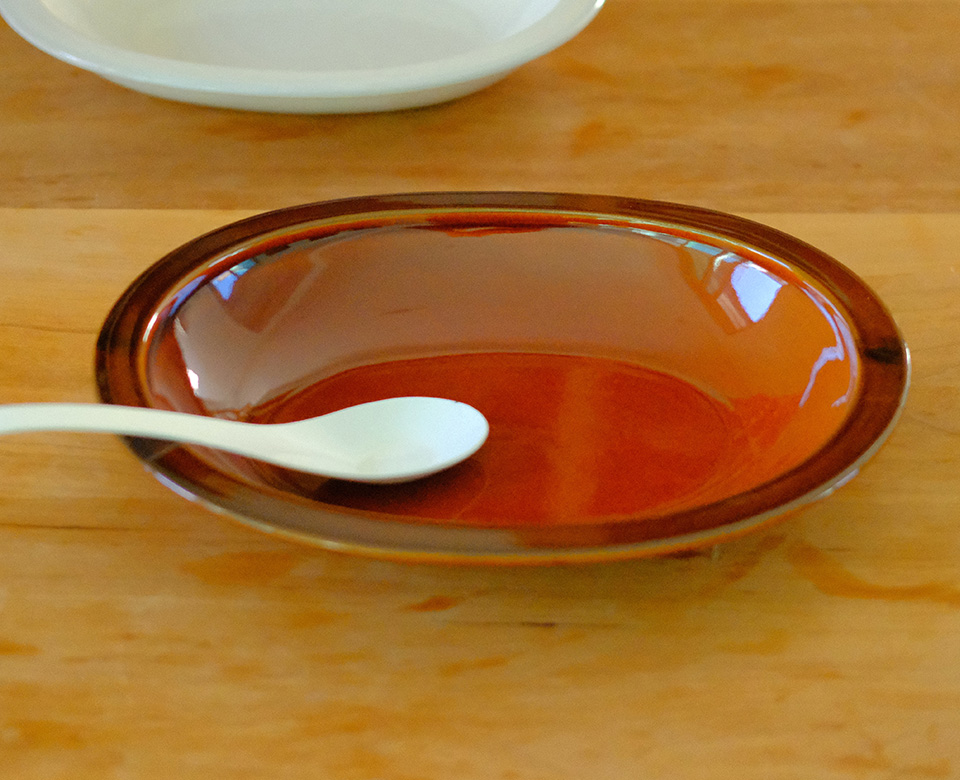
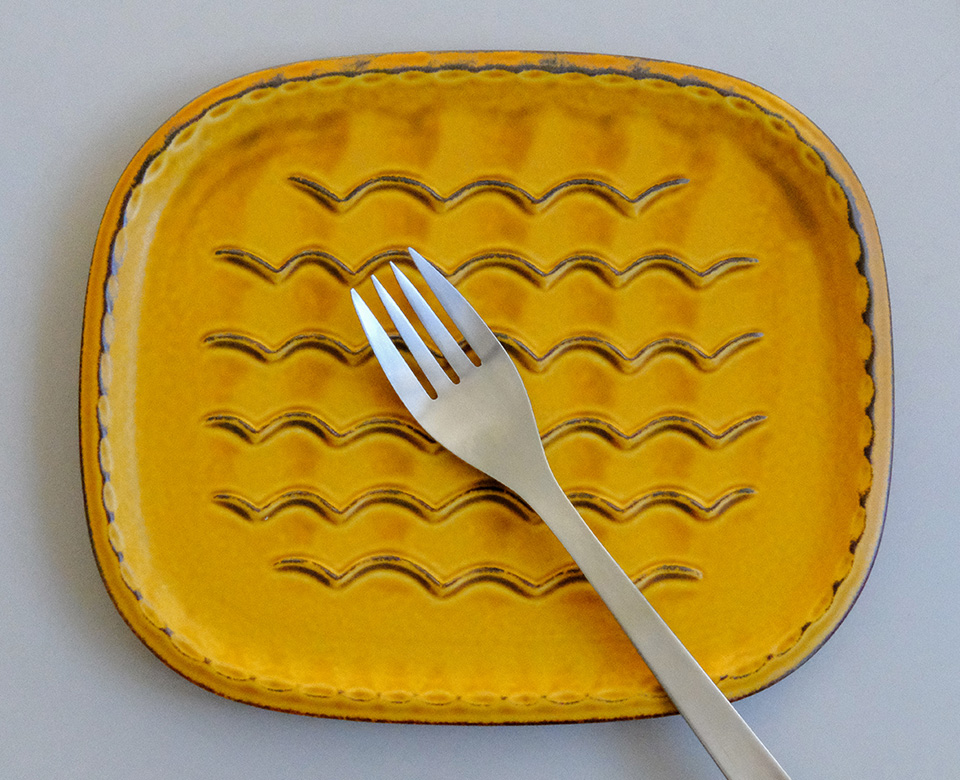
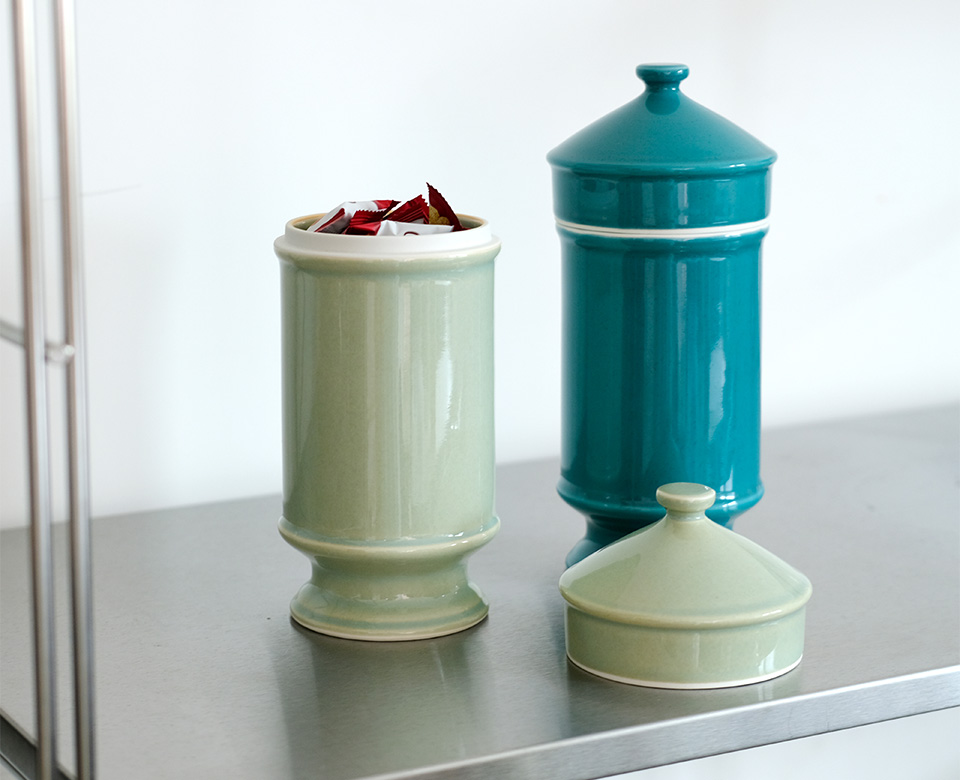
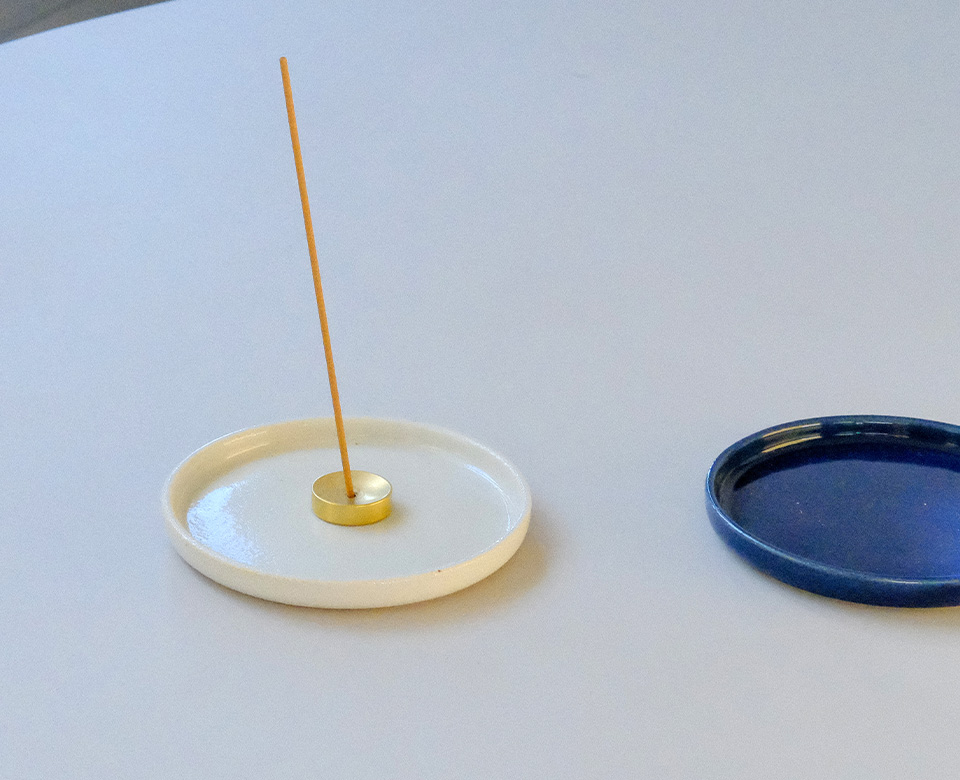
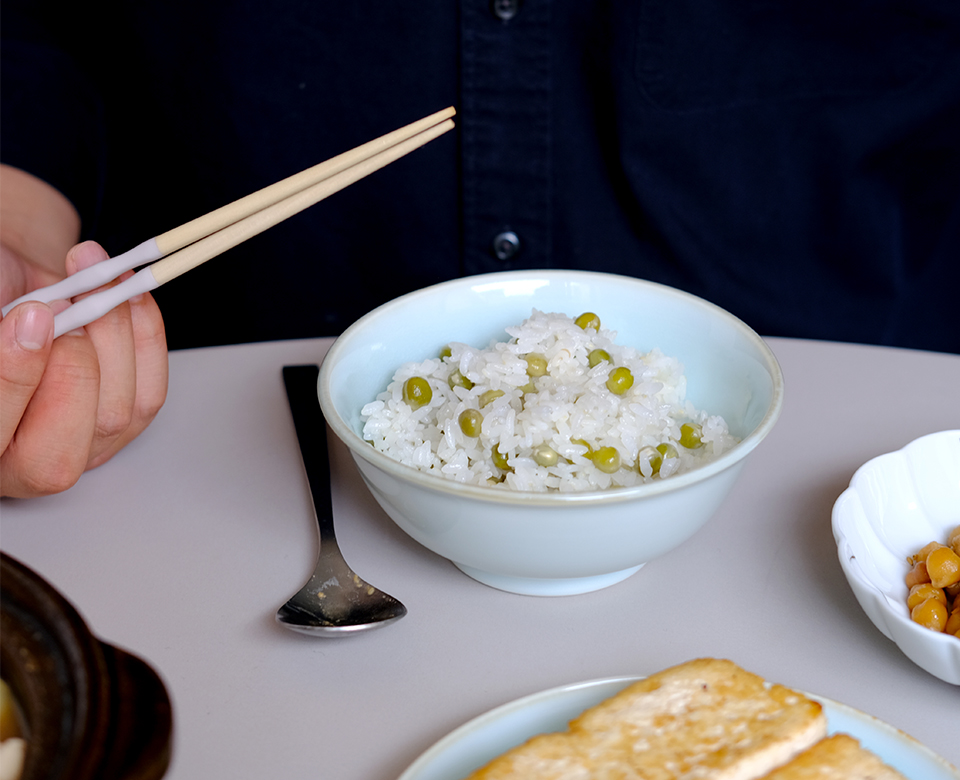
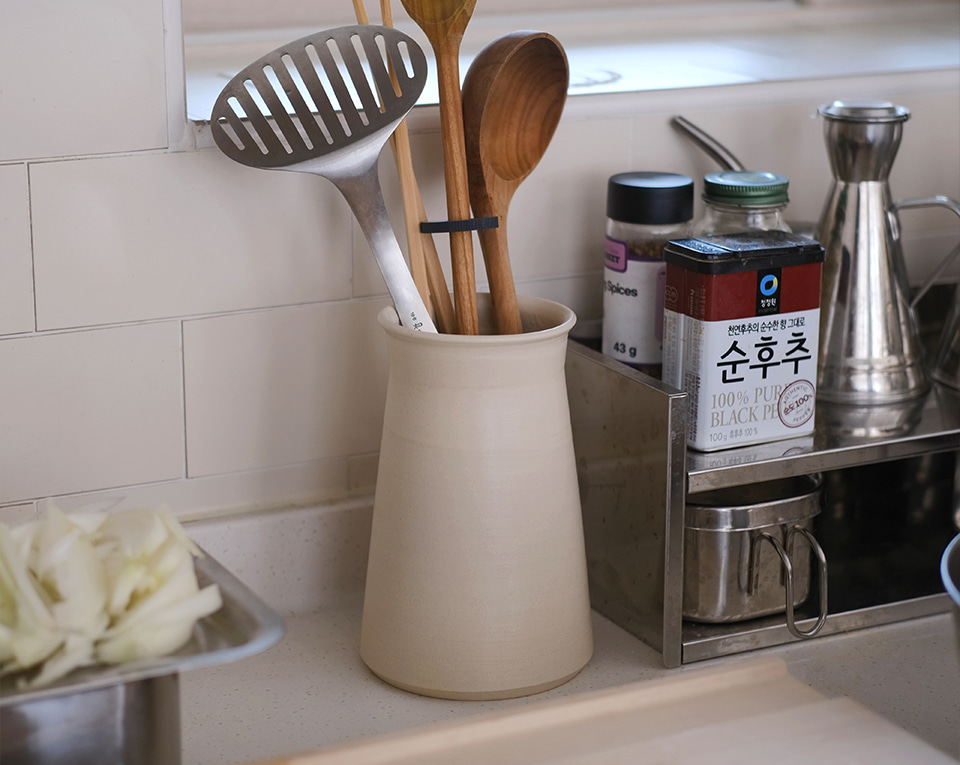
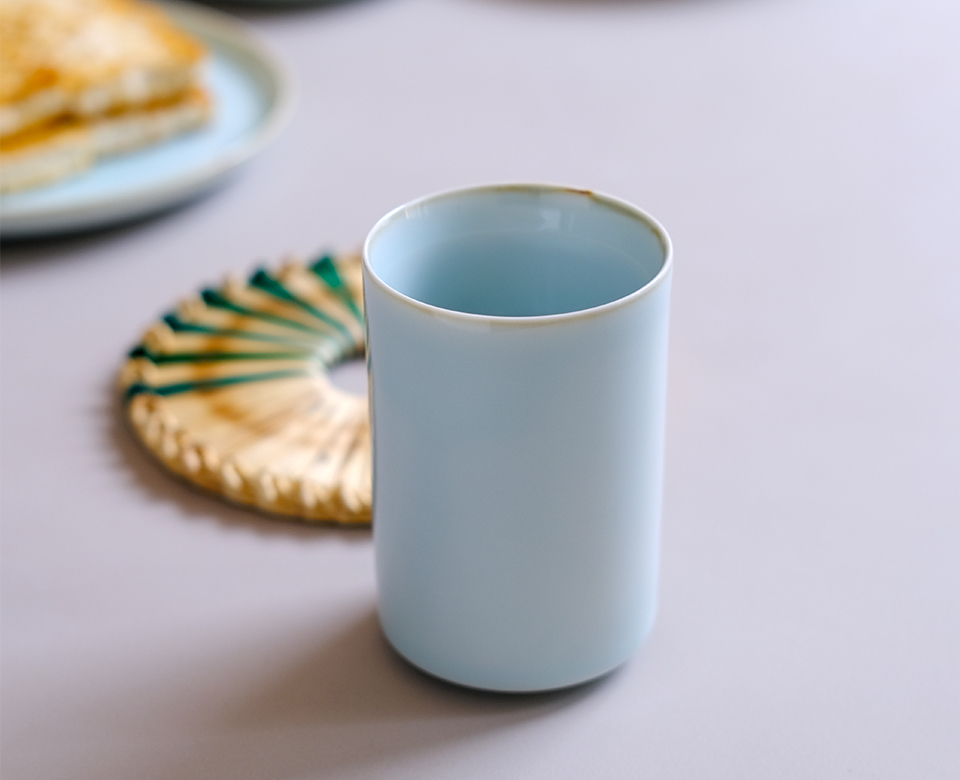
Depending on the ingredients of the glaze and the firing method, it exhibits various finishes, including glossy, semi-glossy, and matte. The surface is as smooth as glass, and depending on the added metal oxides, it reveals diverse colors such as white and green, as well as unique textures.
Use
- Waterproofing Fills fine gaps in the clay to prevent water or food from penetrating
- Durability Firmly wraps the surface to reduce scratches and abrasion
- Decoration Imparts various colors and textures such as matte or glossy
When choosing
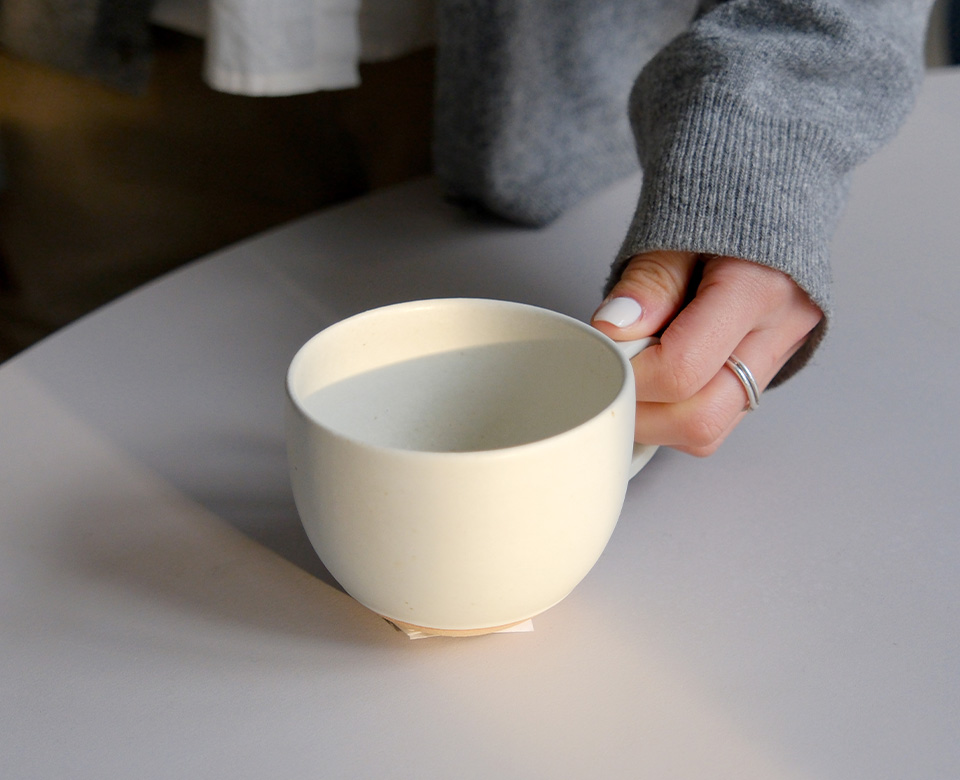
The bottom surface and foot are often fired unglazed so that the vessel does not stick to the kiln floor. Checking the product details to see whether the interior is glazed and whether the finish is glossy or semi-glossy allows you to gauge ease of care and texture.
Care
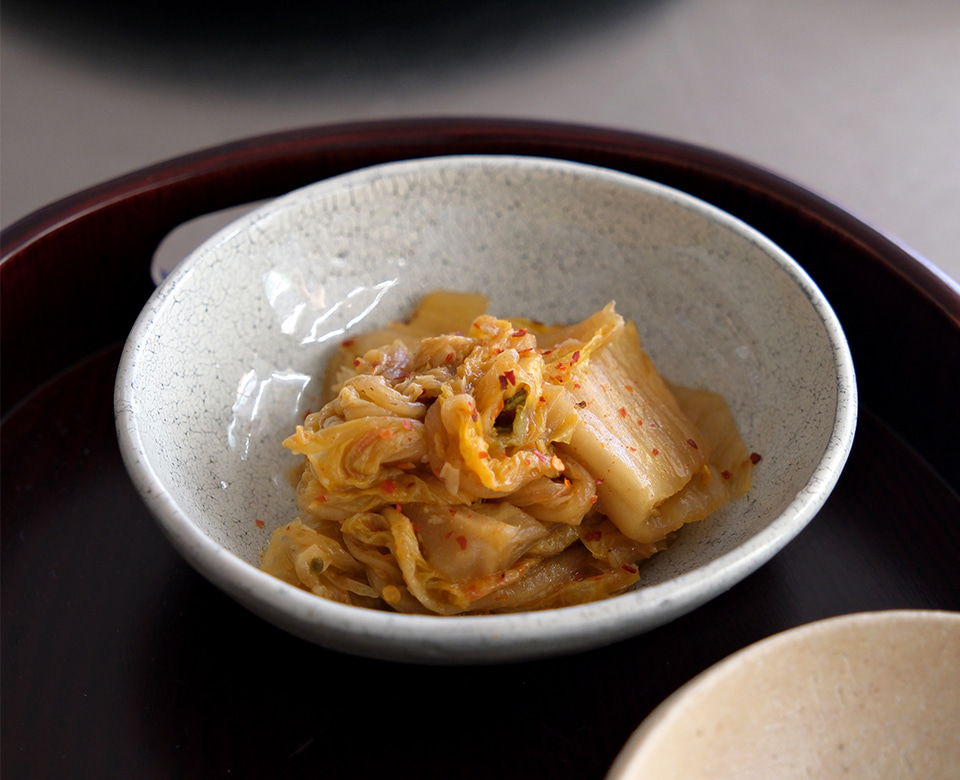
Unglazed bottom surfaces absorb moisture easily, so they must be dried completely after washing to prevent mold. Ceramics with fine cracks (crazing) on the glazed surface can stain if left in contact with dark-colored food for an extended period.
Additional information
- Slip (Engobe)
- A liquid clay, such as white slip, applied before glazing to correct the color of the clay surface or cover rough textures.
Some images are explanatory images created with AI.