Is it okay if seasoning gets on the unglazed surface of white porcelain tableware?
This is because when using white porcelain food boxes or plates at the dining table, there is a concern that dark seasonings might come into contact with unglazed areas, such as the bottom foot or rims, and leave stains.
![[호리에] h+ 라운드 백자 찬합 (2type)](https://img.hmmm.pub/brands/horie-touki/products/2aaceafb-f627-4a83-96c8-bb53a46b0129/4.jpg)
![[호리에] h+ 라운드 스트라이프 백자 찬합 (2type)](https://img.hmmm.pub/brands/horie-touki/products/0d0f59fc-fbf9-4801-b69a-2f5bffb94287/0.jpg)
![[호리에] h+ 팔각 접시 (4size)](https://img.hmmm.pub/brands/horie-touki/products/ea20c68e-d514-4009-8ef2-738b71d1bd83/0.jpg)
Ceramic surfaces without glaze can absorb color when exposed to seasonings, so care must be taken to prevent dark food from touching them.
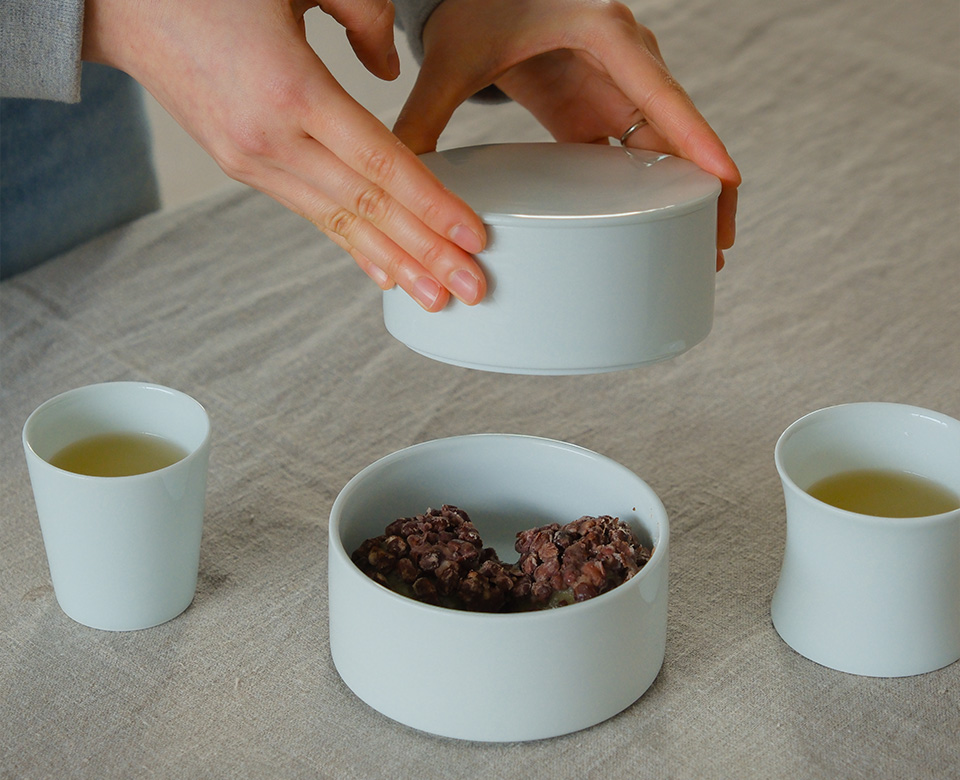
Glaze is a thin glassy film coated on the exterior of ceramics, which serves to fill microscopic gaps in the clay and prevent moisture and food from seeping in. Unglazed surfaces, such as those on white porcelain food boxes or plates from HORIE TOUKI, can be stained by seasonings like stews or sauces[1][2][3]. Because glaze is wiped off from the bottom foot that touches the surface during kiln firing or the edges where lids interlock, red seasonings or soy sauce can easily soak in and stain the bare clay surface.
In addition, because white porcelain has a clear and bright white background, black spots caused by trace elements in the clay, pooling of glaze, or indentations can appear more distinctly on the surface[4]. When serving deeply colored foods such as kimchi, it is safer to place them primarily in contact with the smoothly glazed interior surfaces, and rinse them with water immediately after a meal before seasonings can seep in.
An official cleaning method to remove seasoning stains once they have already seeped into unglazed surfaces has not yet been confirmed.
Product measurements
View details
[호리에] h+ 라운드 백자 찬합 (2type)
Other stated figures
| Part | Value |
|---|---|
| 용량 | 300ml |
[호리에] h+ 라운드 스트라이프 백자 찬합 (2type)
Other stated figures
| Part | Value |
|---|---|
| 용량 | 360ml |