Why is the ravioli cutter blade shaped like a gear instead of a smooth blade?
A straight blade might seem easier to cut dough cleanly, so you may wonder what role the serrated blade plays.
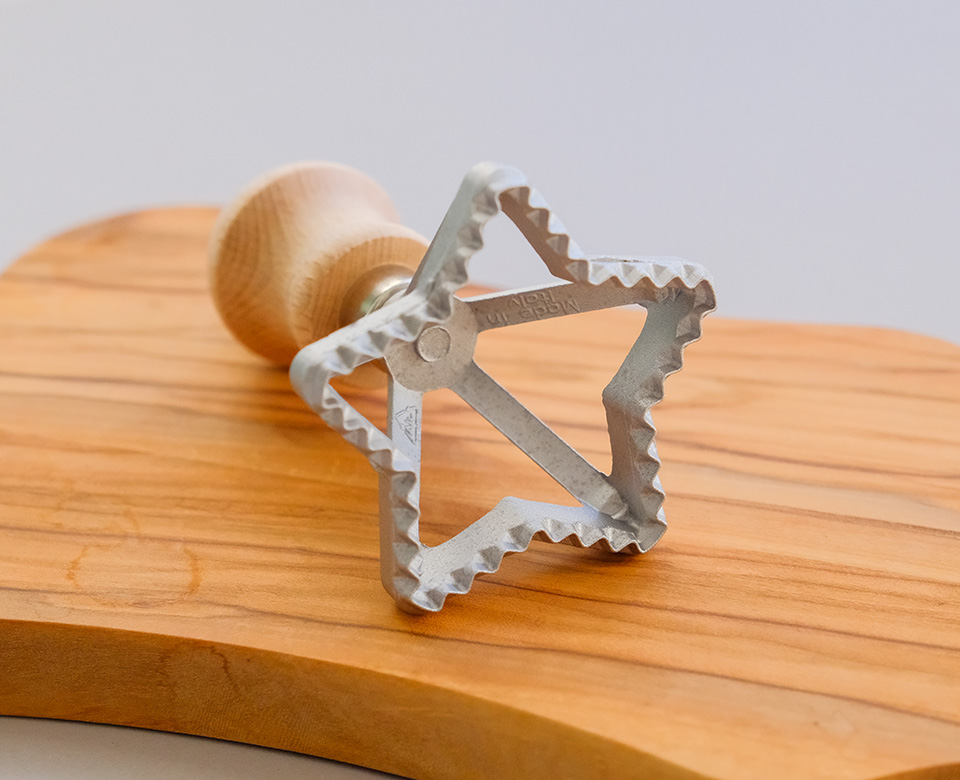
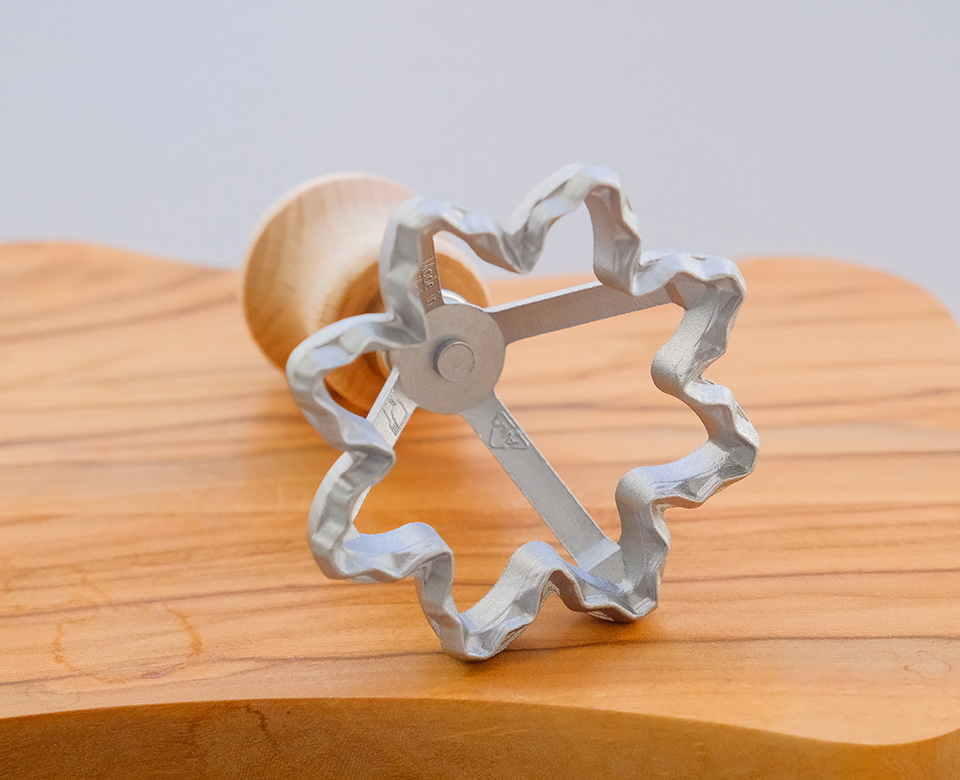
It is designed to seal the filling so it does not leak out by pressing and joining the two layers of edges together at once while cutting the dough.
It uses a gear-shaped blade instead of a smooth, straight blade[1]. While a typical blade only cuts through the dough, fresh pasta filled like dumplings can easily burst in boiling water if the top and bottom dough layers are not tightly bonded without gaps.
With Ottinetti's cutter, holding the handle and pressing down on the dough causes the circular serrated blade to firmly interlock the edges[2]. The uneven texture of the serrations firmly presses the edges of the dough, sealing it so the filling cannot escape[3]. Without the hassle of cutting the dough with a knife and pressing the edges again with a fork, simply pressing down once from above finishes both the cutting and sealing at the same time.
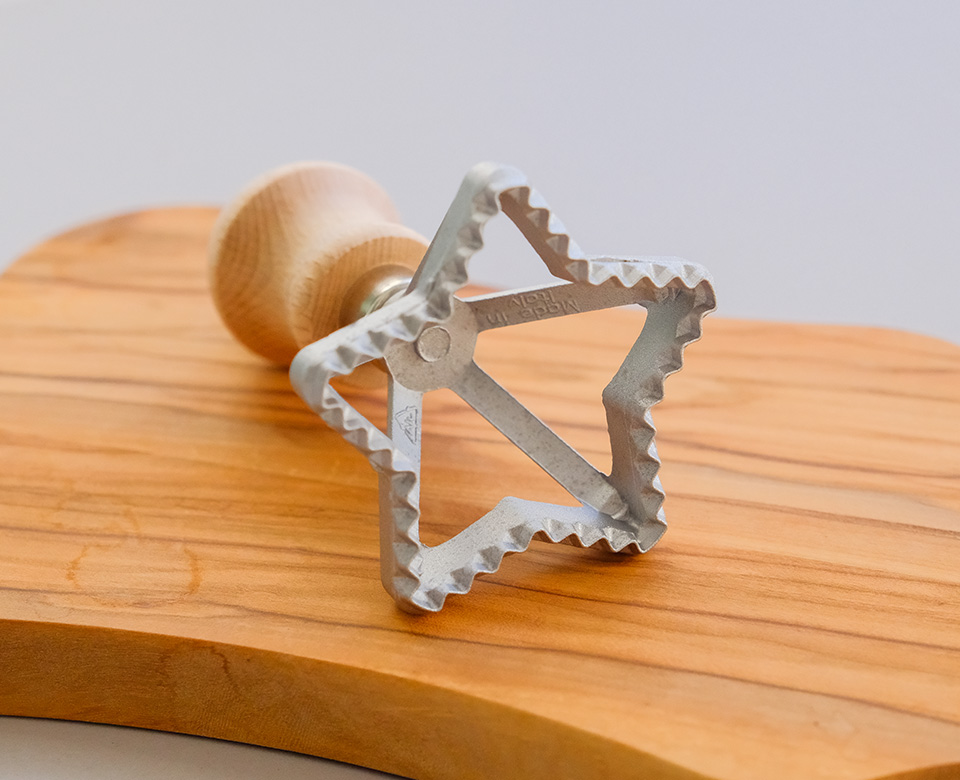
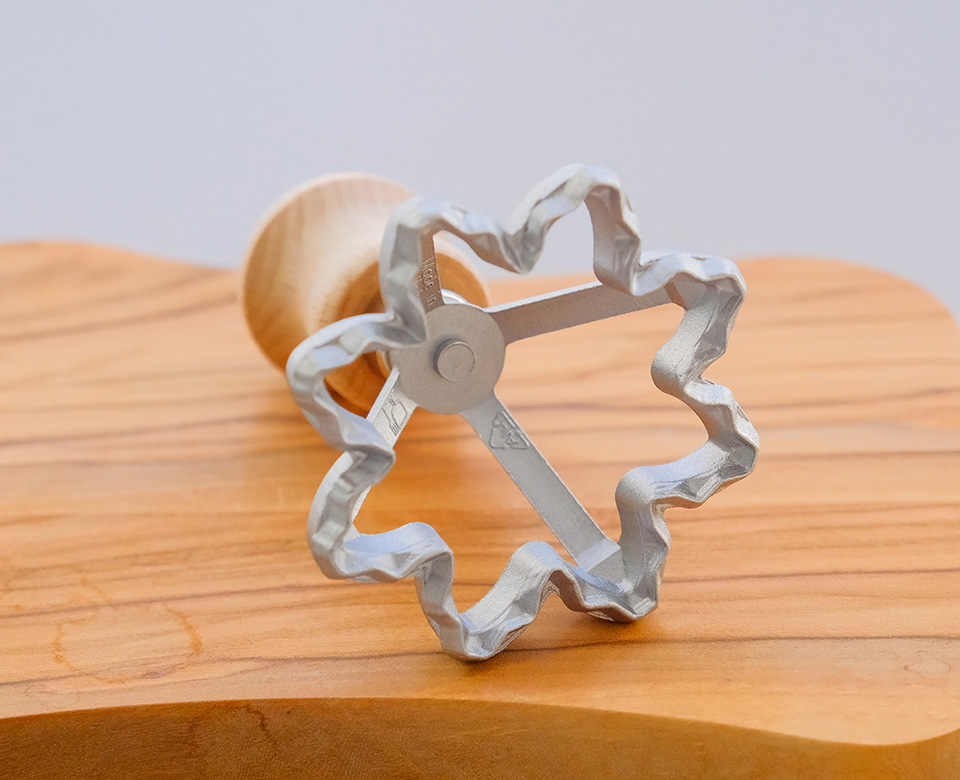
The specific metal material of the serrated blade and the cutter's diameter dimensions have not yet been confirmed.
Product measurements
View details
[Ottinetti] Ravioli & Cookie Cutter (Stella)
Other stated figures
| Part | Value |
|---|---|
| 가로 | 6.5cm |
| 높이 | 10cm |
| 무게 | 55g |
| 깊이 | 6.5cm |
[Ottinetti] Ravioli & Cookie Cutter (Flower)
Other stated figures
| Part | Value |
|---|---|
| 무게 | 55g |