What kind of processing is the 'skiving' mentioned in the leather cover description?
When reading diary leather cover specifications, one may wonder what the unfamiliar craft technique called 'skiving' applied to the inside of the spine is.
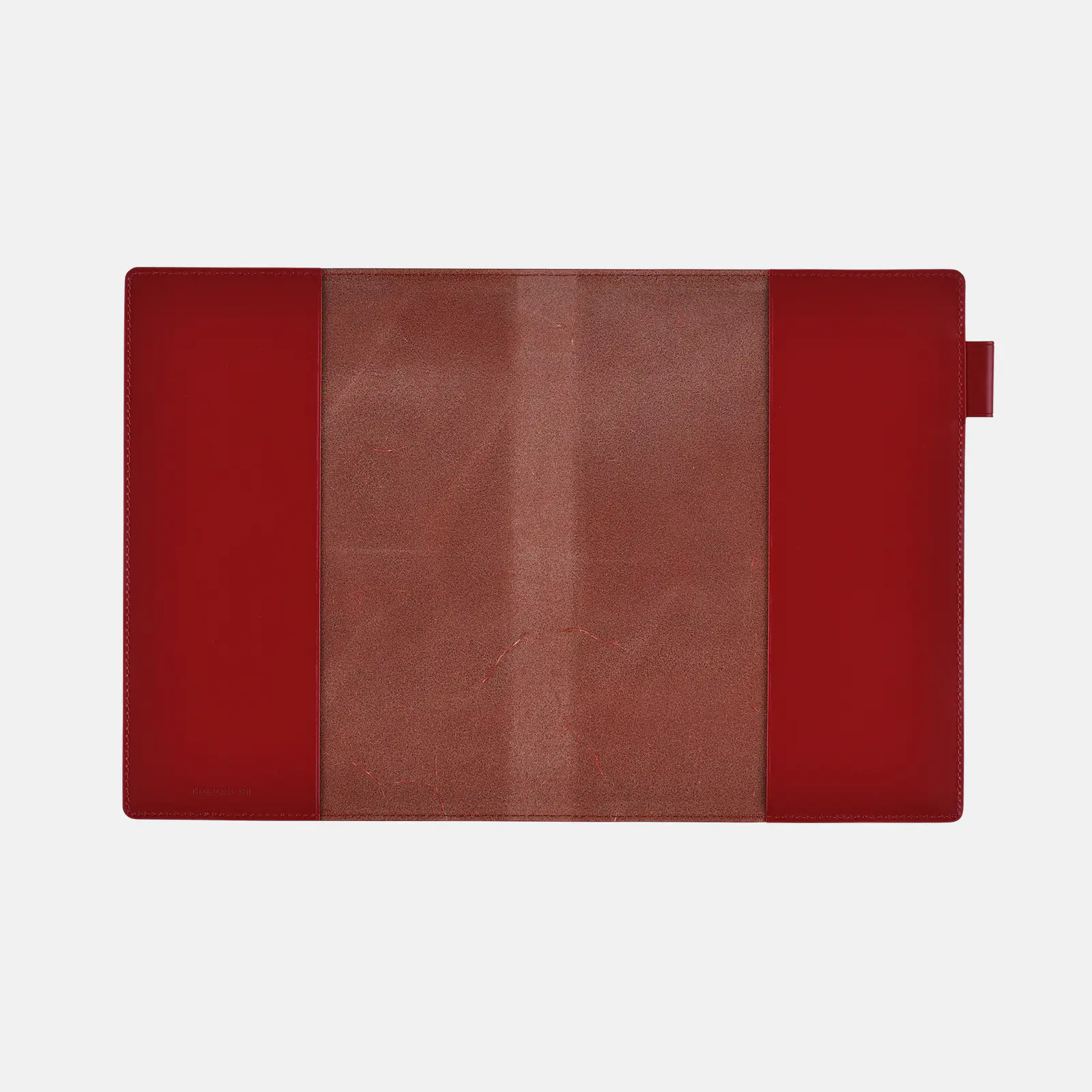
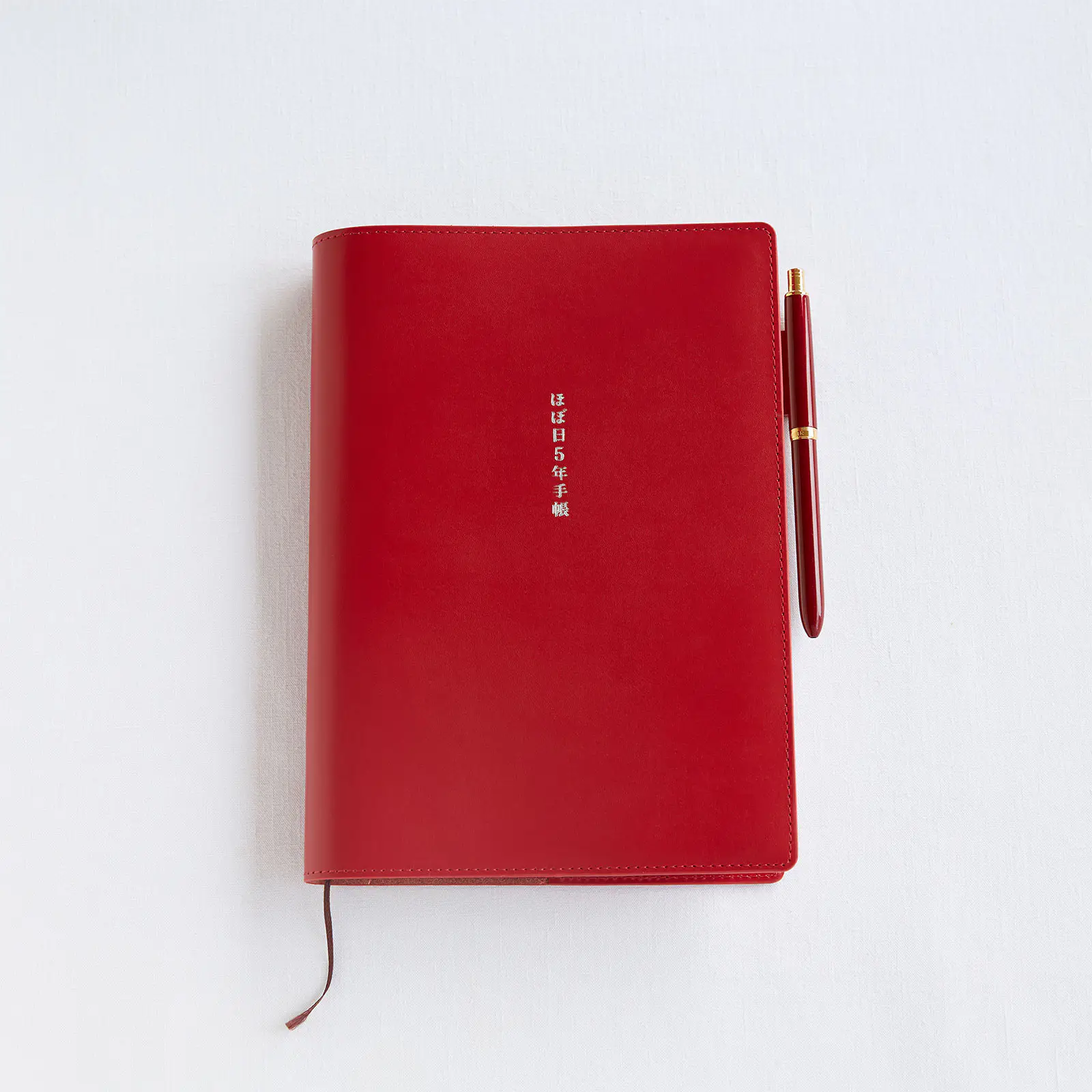
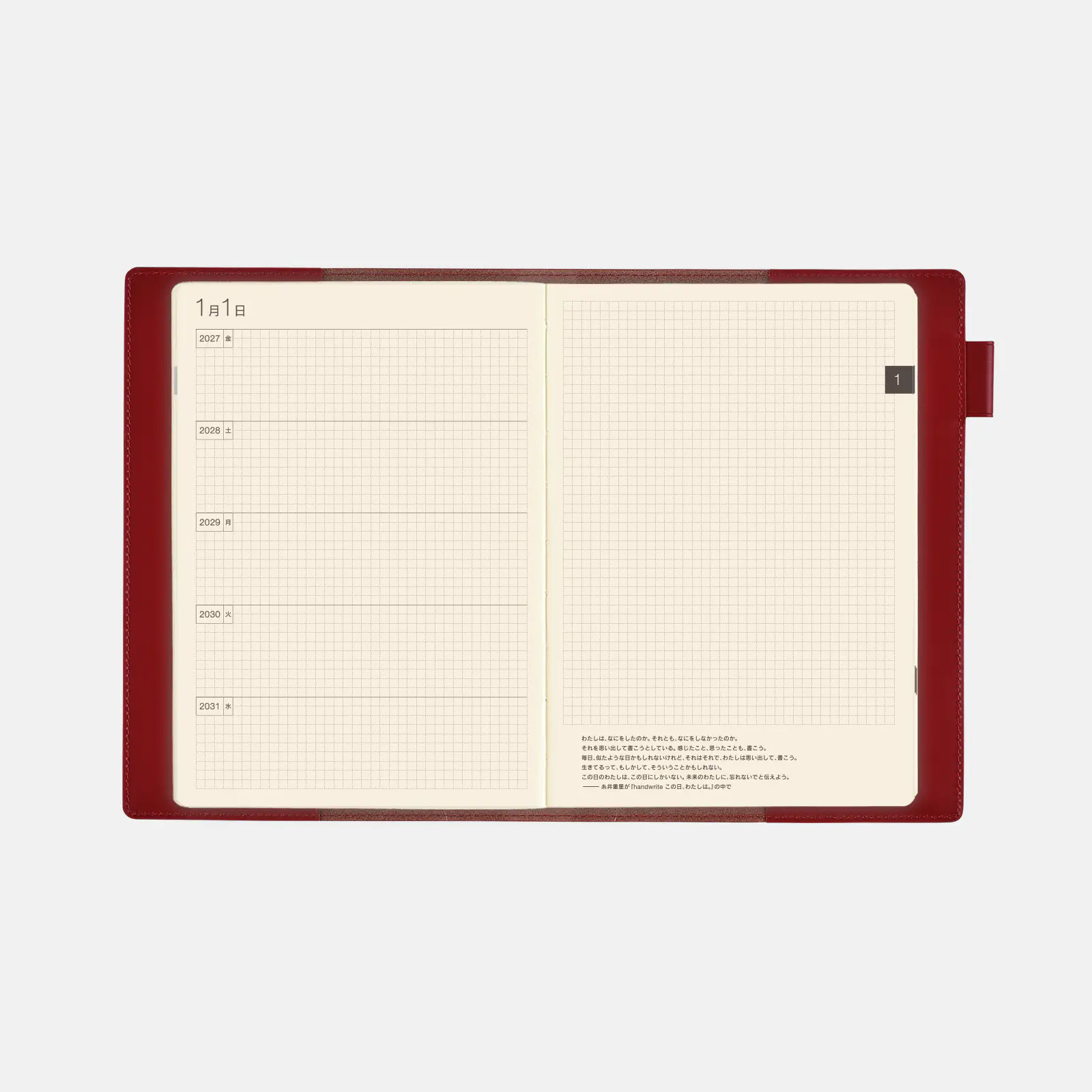

It is a craft technique of shaving leather thin, a process that helps prevent the spine portion of the cover from catching stiffly when opening, closing, and spreading the book.
Skiving is a thinning process that shaves the cross-section of leather thinly to reduce its thickness. Thick leather is tough and durable, but if used as it is in areas that fold frequently, it creates stiff resistance. Therefore, the leather in areas that need to bend flexibly is shaved to make it move smoothly.
Hobonichi applied this skiving treatment to the inside of the spine of leather covers made of cow leather for both the exterior and interior[1][2]. It serves to help the two layers of cow leather smoothly wrap around the rounded spine of a thick diary without slipping loose[3].
As the inside of the spine bends smoothly, you can spread the diary flat at 180 degrees to write even with the cover on[4]. However, due to the structure that provides flexibility so the book can be fully opened, the outer stitching may wrinkle slightly or the inner surface may appear somewhat loose[5].
hmmm, it precisely shaves only the inner passage where the book folds while maintaining the substantial bulk of the cow leather shown on the outside.
The specific thickness measurement of the leather on the inside of the spine that underwent the skiving process has not yet been confirmed.
Product measurements
View details
Large Hobonichi 5-Year Techo Leather Cover (Red) A5 Size (fits Large 5-Year Techo)
Other stated figures
| Part | Value |
|---|---|
| 무게 | 118g |
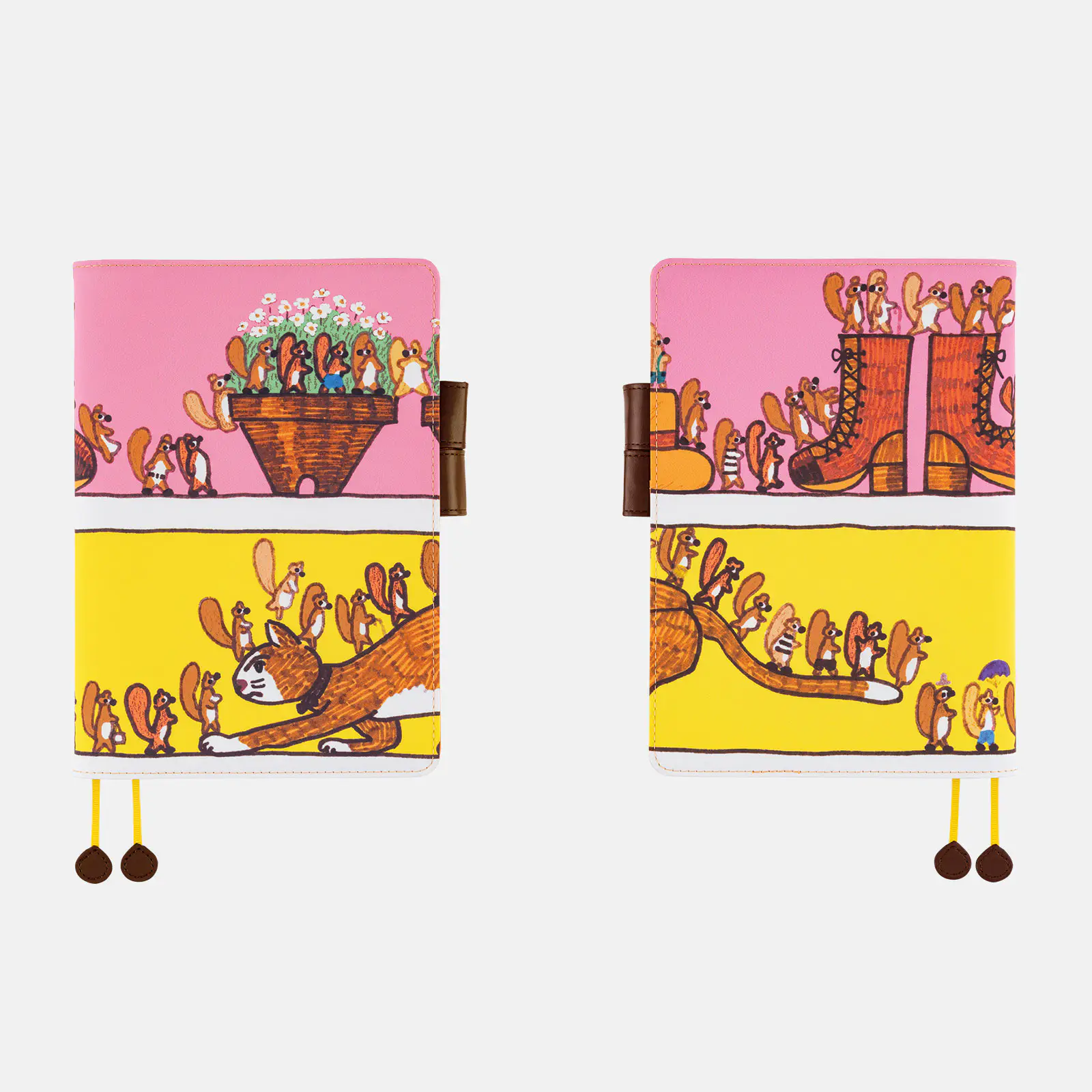
100%ORANGE: Where’s the Squirrel Going A5 Cousin Size
Other stated figures
| Part | Value |
|---|---|
| 무게 | 170g |