What kind of processing is the 'chamfering' mentioned in the description?
When encountering the term 'Edge Chamfering' in the description of a glass shelf, it is difficult to guess what and how it was smoothed. Given the nature of glass as a material, one also wonders whether it is directly related to safety.
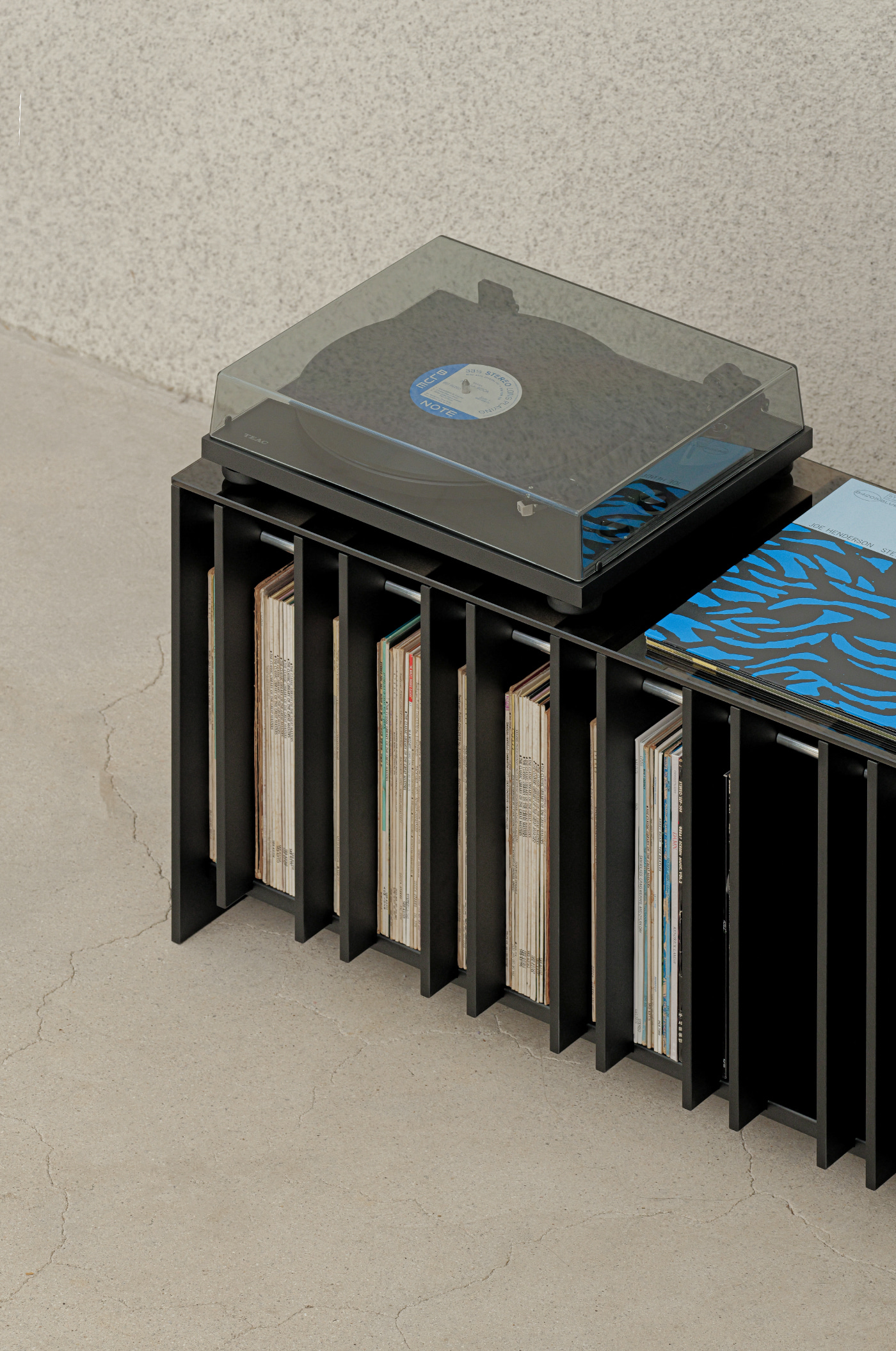
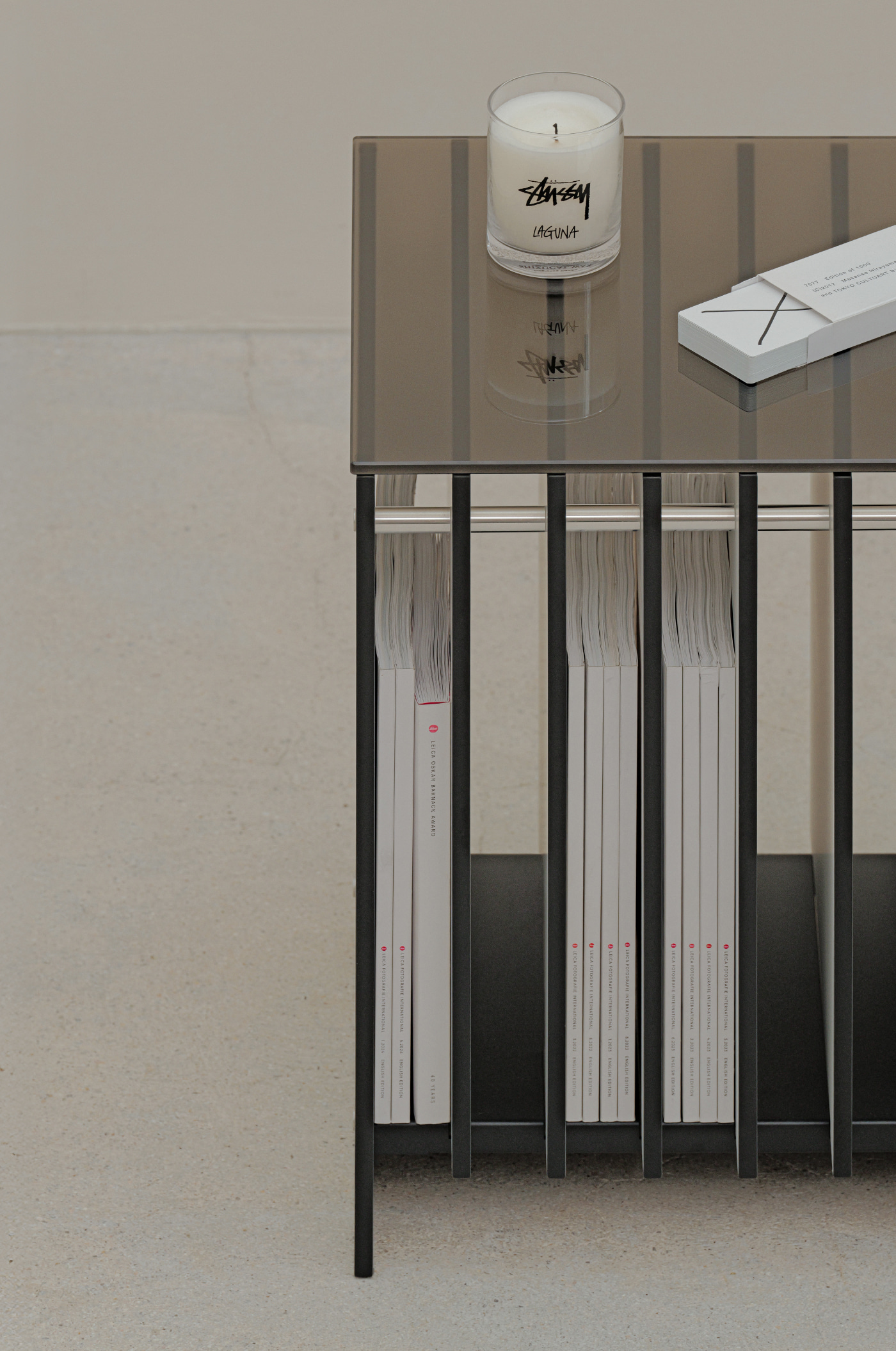
Edge chamfering is a process of shaving the glass edges at an angle to dull the sharp edges, and the glass of Fin Shelf also underwent this process.
It is the work of shaving down the edges. Edge chamfering refers to a process of smoothing the angled edges of glass, stone, or wood at an angle to eliminate the sharpness, and in English it is called chamfering. When glass is cut, a thin sharp blade forms on the cut surface and invisible micro-defects remain; if left in this state, it is not only easy to cut your hand, but when subjected to an impact, breakage can also start from that spot.
Fin Shelf | S underwent this chamfering process after precisely cutting the glass, finishing it so that the sharpness of the edges is removed and the surface feels smooth to the touch[1]. The L type also had the edges of its top glass smoothed in the same manner[2].
hmmm, chamfering is a finish that is hardly noticeable when looking at the finished furniture with the naked eye, and is only confirmed the moment your hand touches the edge to move the shelf or place items on it.
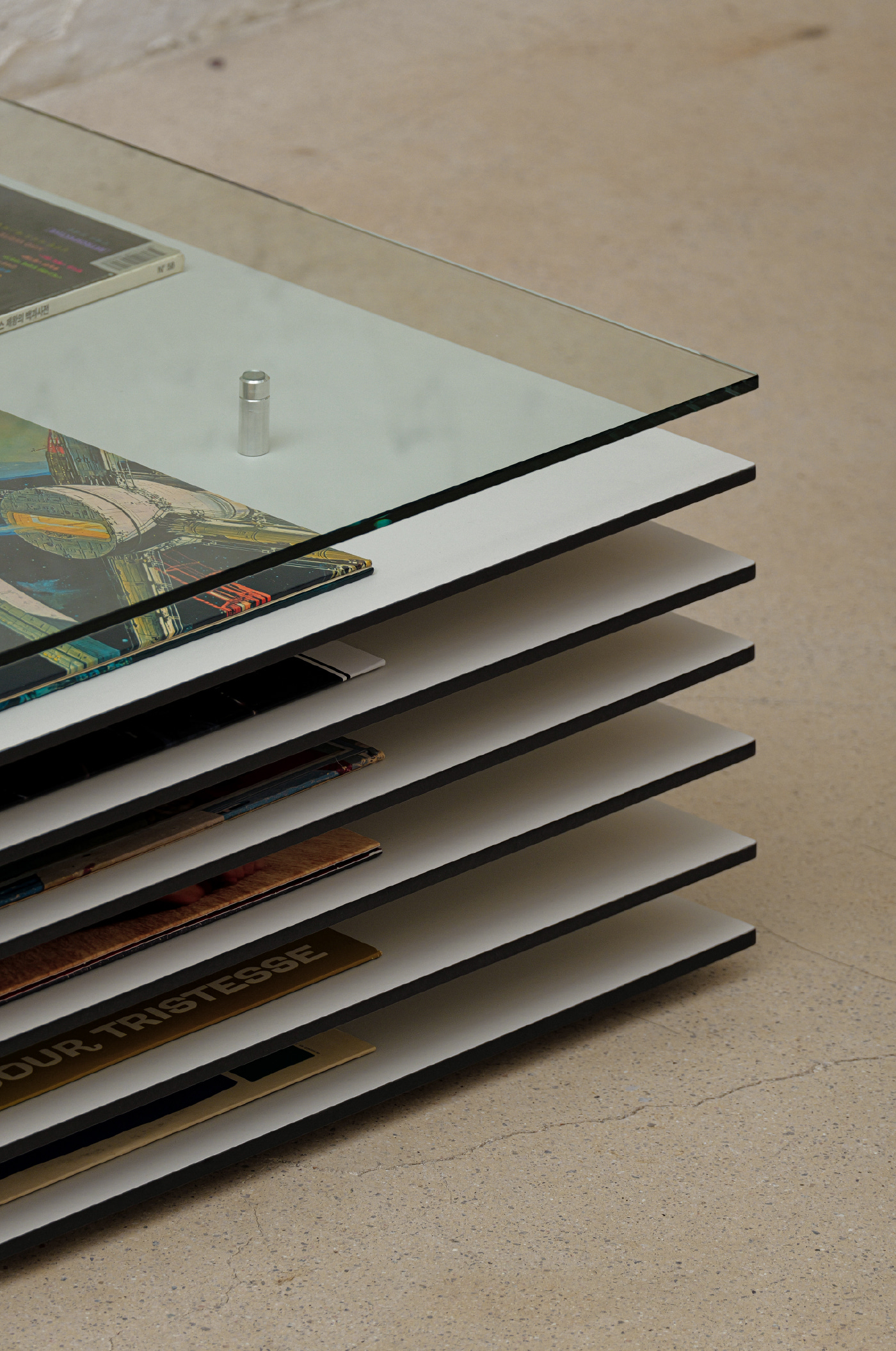
We have not yet confirmed the angle and width at which the chamfering was set, or what the thickness of the glass is.
Product measurements
View details
Fin Shelf | L
Other stated figures
| Part | Value | L |
|---|---|---|
| 두께 | 10mm | |
| 높이 | 505mm |
Fin Shelf | S
Other stated figures
| Part | S |
|---|---|
| 높이 | 350mm |
Piloti Sofa table
Other stated figures
| Part | Value |
|---|---|
| 높이 | 155mm |
| 두께 | 10mm |