What difference does 'absorption rate below 0.05%' make in actual use when seen in a sofa table description?
This is a question that arises when encountering an unfamiliar figure while looking at the specifications of a ceramic sofa table top. Rather than the number itself, people want to know whether stains really do not remain when coffee or food is spilled.
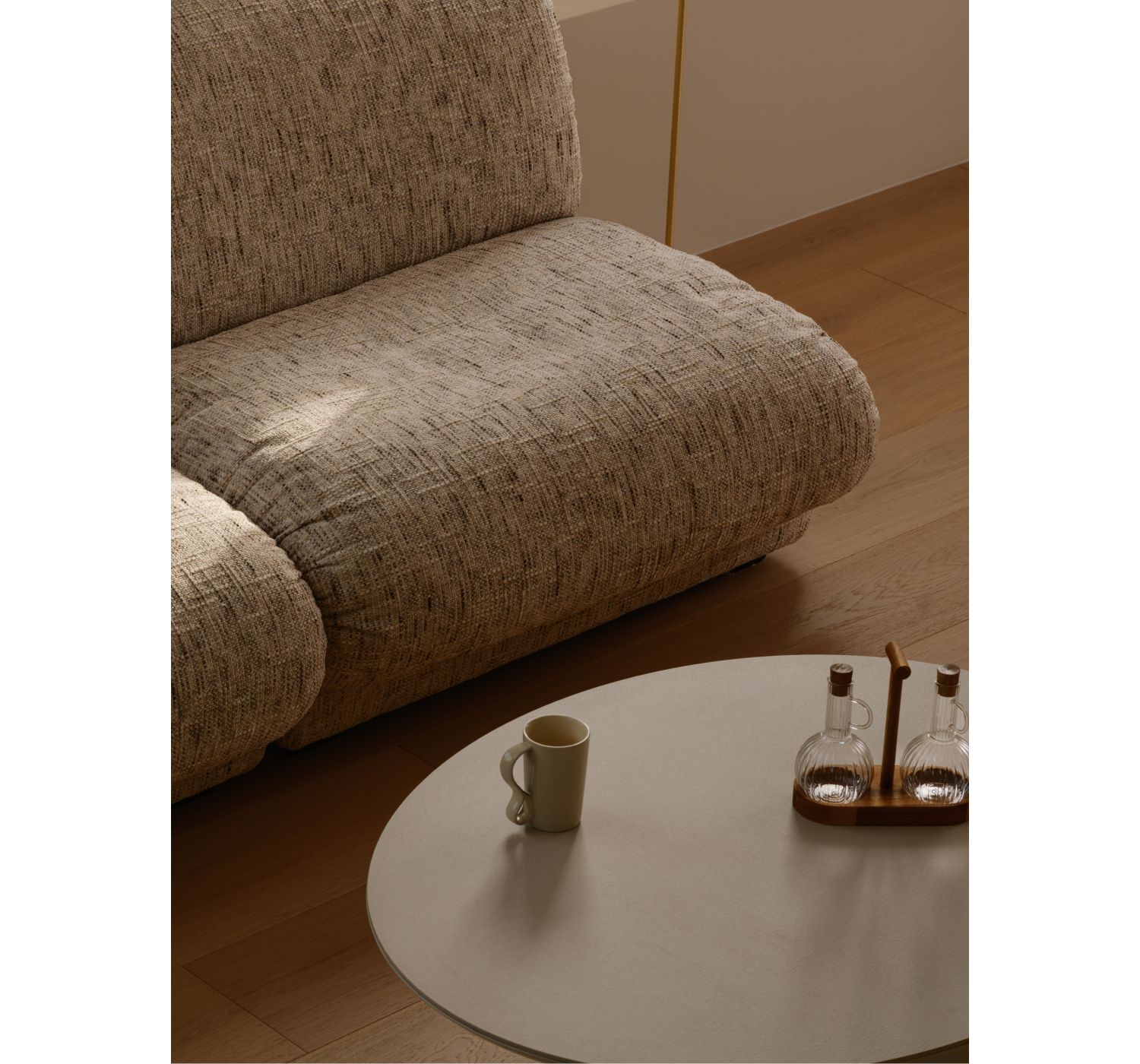
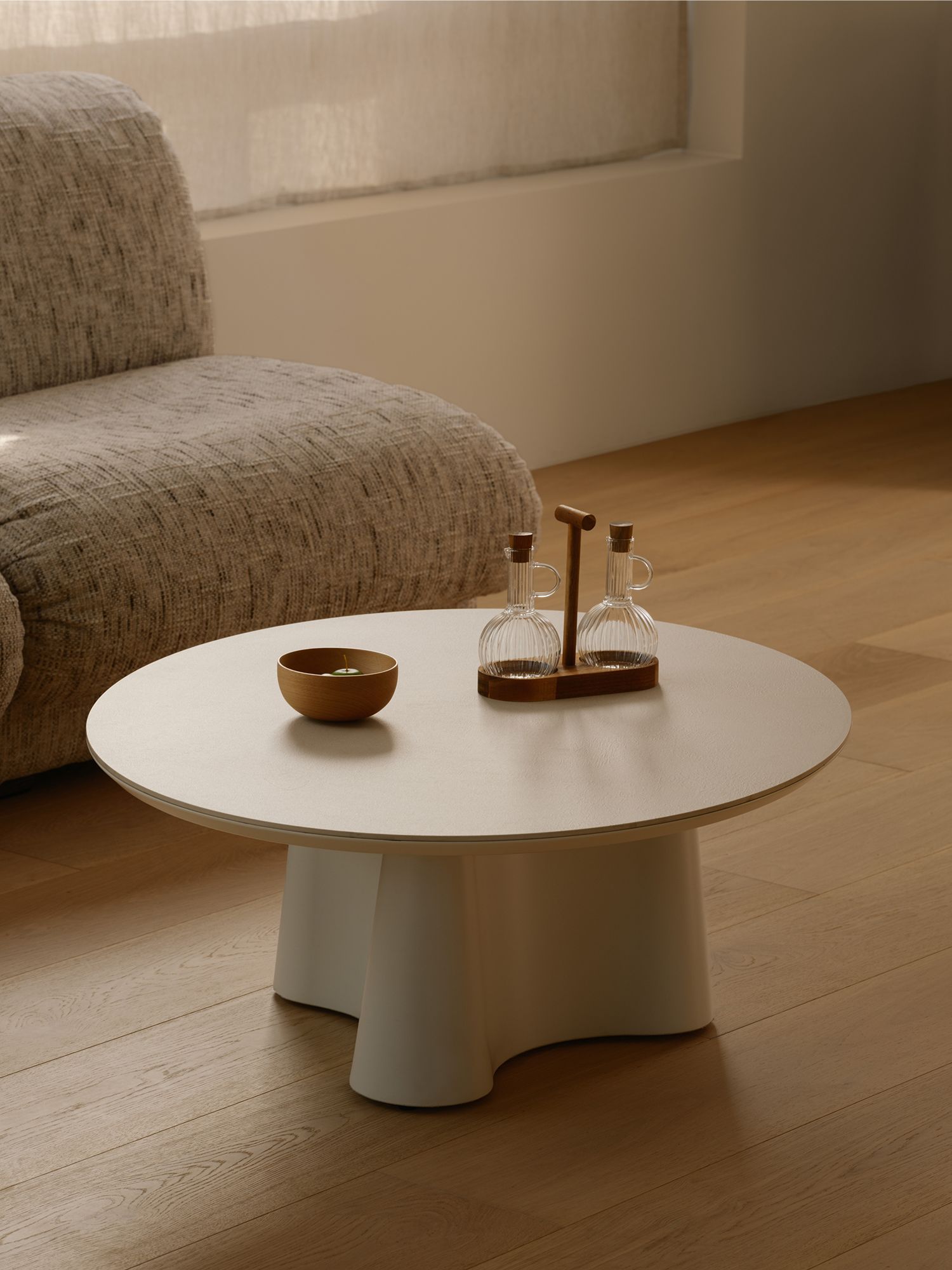
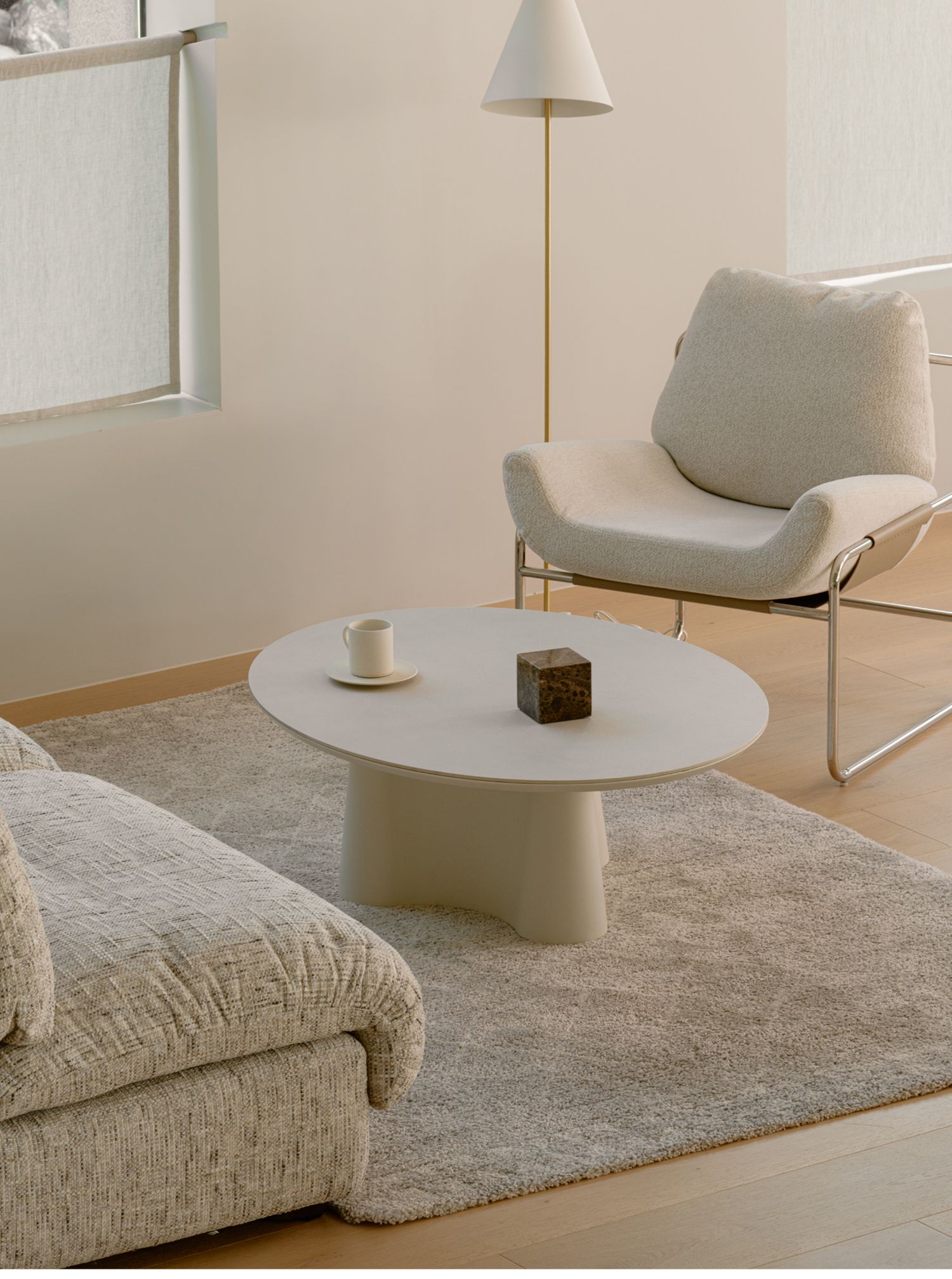
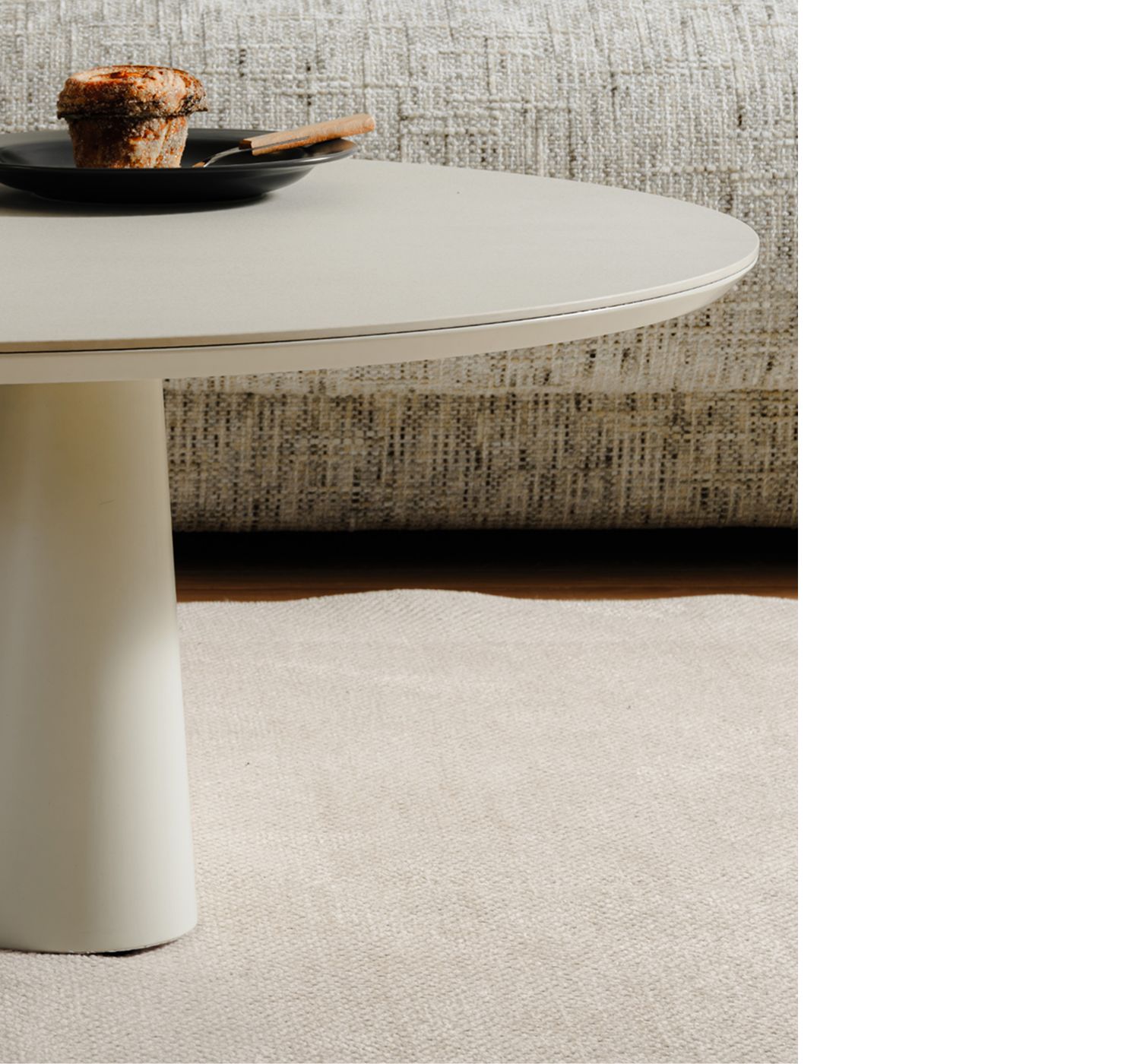
Generally, a low absorption rate of below 0.05% means that liquids or contaminants hardly seep into the tabletop, making care easy.
Looking first at the figure of below 0.05%, the absorption rate of the ceramic top of VILLA RECORDS's VELLE SOFA TABLE falls below this standard[1]. Generally, porous natural stone or wood used for dining or table tops has microscopic pores inside, so when liquids seep in, stains are likely to remain. On the other hand, an absorption rate of below 0.05% means there are almost no gaps for moisture to penetrate.
This ceramic is manufactured using LAMINA equipment from the Italian company SYSTEM[2]. It has undergone an ultra-high-pressure press of over 36,000 tons, a vacuum compression process, and a high-temperature firing process at 1250°C[3][4]. Generally, ceramics that have undergone high-pressure compression and high-temperature firing have reduced internal pores, achieving a dense structure that makes it difficult for water and stains to penetrate.
Generally, a ceramic top with an absorption rate this low does not allow dark liquids such as coffee or sauce to spread inside even if spilled. Because food stays only on the surface, it is easy to maintain simply by wiping it off lightly with a wet dishcloth.
Resistance to staining when contaminants are left for a long time and recommended cleaning methods have not yet been confirmed.