How is the 'kamasu envelope' mentioned in the pochibukuro description different from a regular envelope?
After seeing the unfamiliar term 'kamasu envelope' written in the pochibukuro guide, the shopper wondered how it differs from a regular envelope. The question is asked to understand its appearance and structural characteristics in order to use it appropriately.
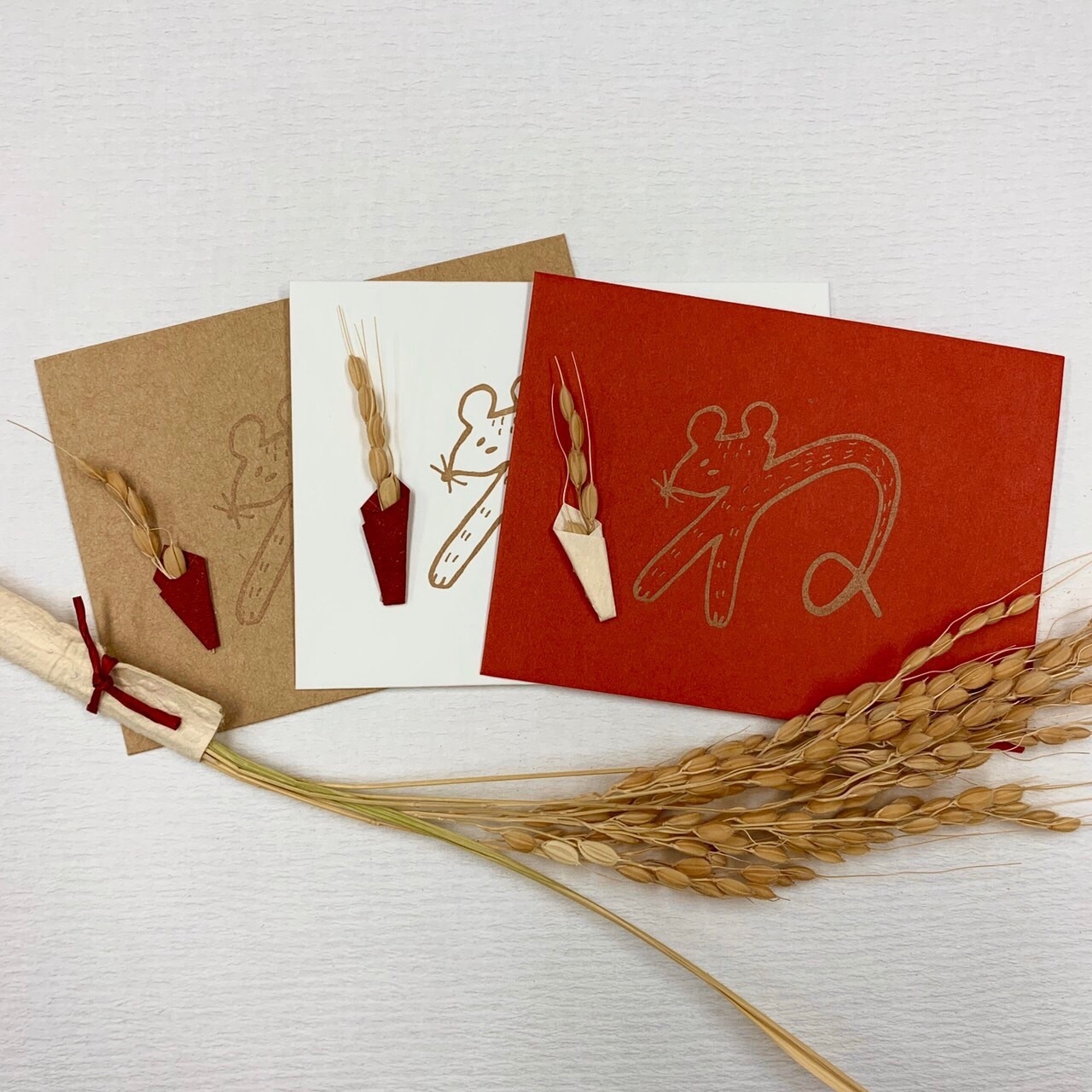
Unlike regular envelopes, which are vertically long, a kamasu envelope is made by folding a sheet of paper up from the bottom, gluing both sides, and opening wide horizontally at the top.
When you pick up the envelope, the first thing that catches your eye is the opening that stretches wide horizontally. The name kamasu envelope comes from the structure of a straw bag (kamasu), and it is made by folding paper up from bottom to top and gluing both sides of the fold. Unlike regular letter envelopes where the back is joined vertically in the center, the entire top opens wide horizontally, making it easy to put in and take out small cards or folded bills.
When the structure differs, the proportions of its usability also change. Measuring 95mm in width and 70mm in height, it has a compact rectangular shape that rests stably on the palm of your hand[1]. On the front of this kamasu envelope, syubisya PRINTING lab printed the character 'ne (ね)' in gold ink using letterpress printing[2]. Adding a small handmade paper noshi decoration to this completed the pochibukuro[3].
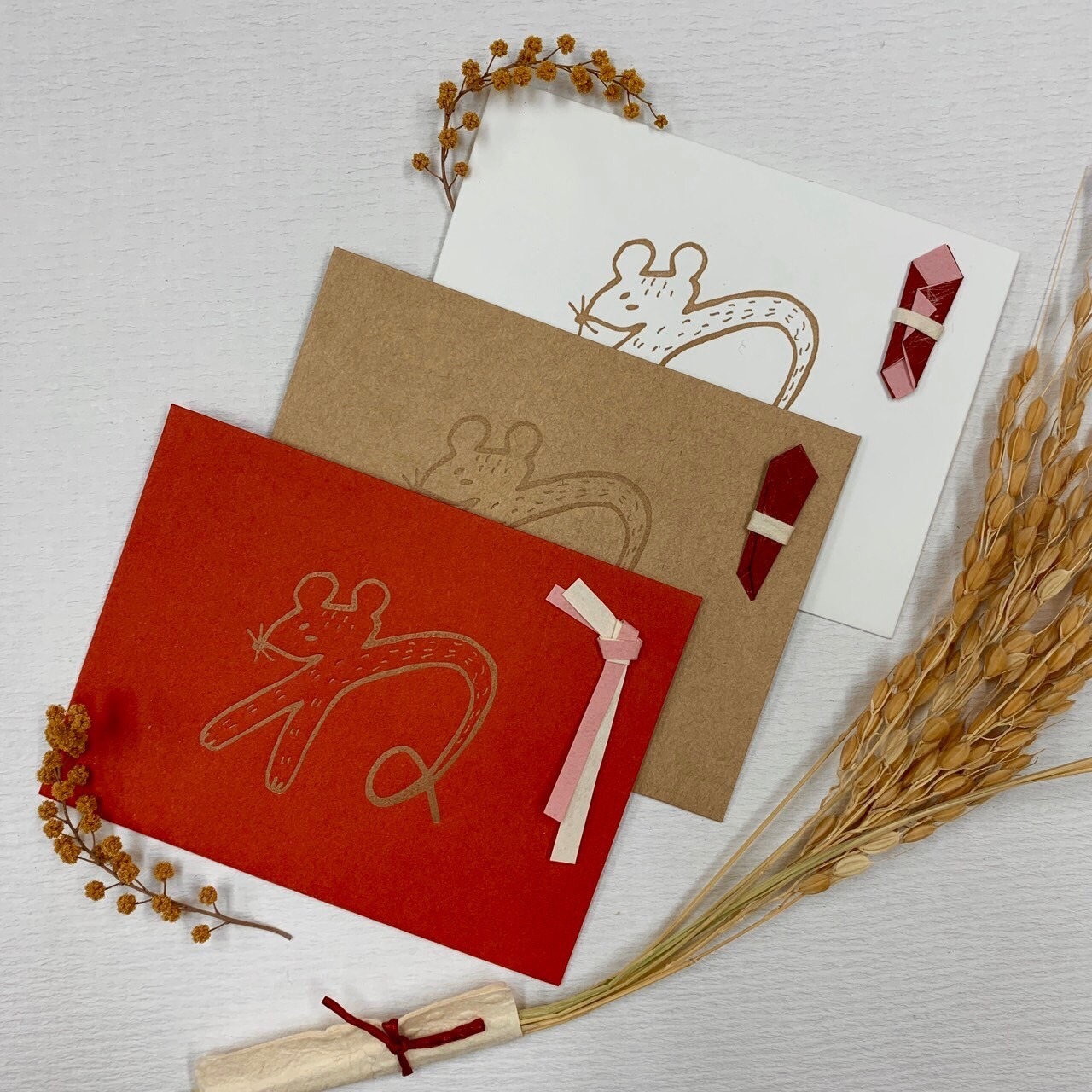
The specific type of paper or basis weight used in manufacturing the envelope has not yet been confirmed.