What role does the 'deer tail knitting' net mentioned in the description play?
They want to know what role the unfamiliar knitting method described in the net sponge guide actually plays in foam generation or cleaning.
![[나카가와상점] 네트 스폰지](https://img.hmmm.pub/brands/nakagawa-masashichi/products/fd44f7db-e1c4-480b-9c64-5b8b8e58d8ad/8c61bbd889ed34d8.jpg)
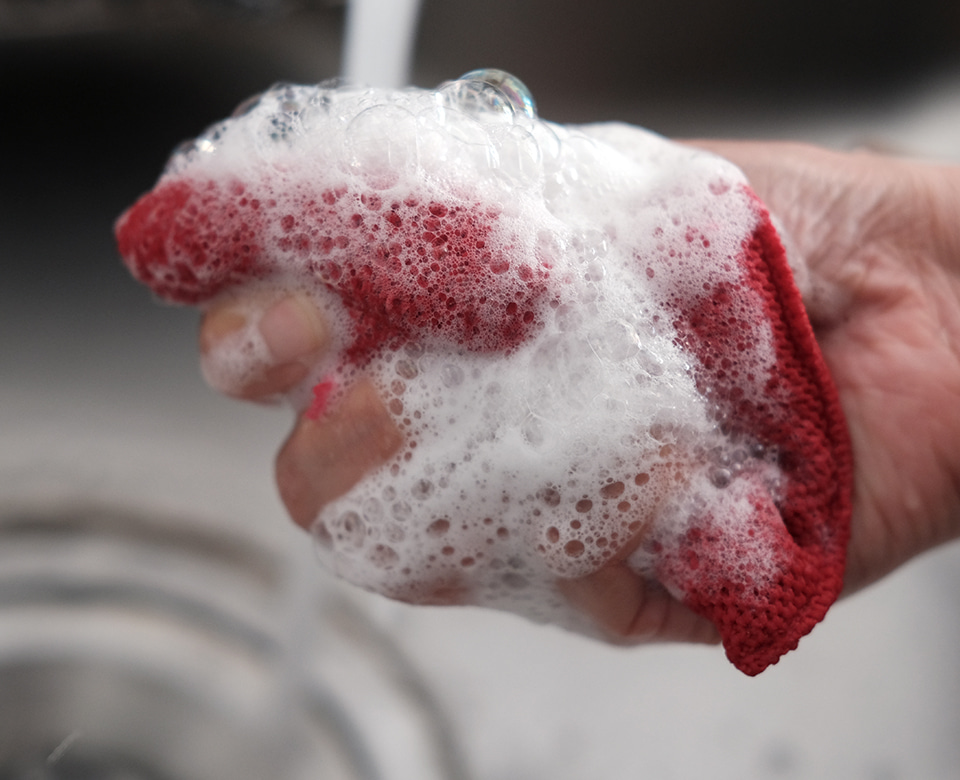
The gaps within the knit made with the deer tail knitting method generate rich foam and gently wipe tableware.
Deer tail knitting refers to a knitting method that creates an uneven, textured surface leaving small gaps. These gap spaces hold air, generating rich foam even with a small amount of detergent[1]. The textured grain evenly disperses friction when contacting dishes, helping to wipe away grime without scratching the tableware.
The net wrapping the sponge also has a dual structure woven with different materials on the inside and outside. The outer surface uses nylon fibers resistant to friction, while the inner surface is wrapped with quick-draining fibers, providing both durability and drying performance[2]. The sponge body filled inside uses high-density antibacterial urethane, maintaining its shape firmly and hygienically[3].
There is also a way to shake off water in order to preserve this knit structure and the elasticity of the urethane. Wringing it like laundry can stretch the woven loops or damage the inner sponge, so wringing should be avoided[4]. Placing the sponge flat between your palms and gently pressing down to drain water is the way to preserve its shape intact.
The specific material composition of the quick-drying fiber used on the inner surface of the net has not yet been confirmed.
Product measurements
View details
[나카가와상점] 네트 스폰지
Other stated figures
| Part | Value |
|---|---|
| 가로 | 11cm |
| 깊이 | 7cm |
| 높이 | 2.5cm |