How is color applied in the 'tie-dye dyeing' mentioned in the description?
When seeing the phrase tie-dye dyeing in the trench coat material description, one might want to know exactly what kind of processing the fabric has undergone.
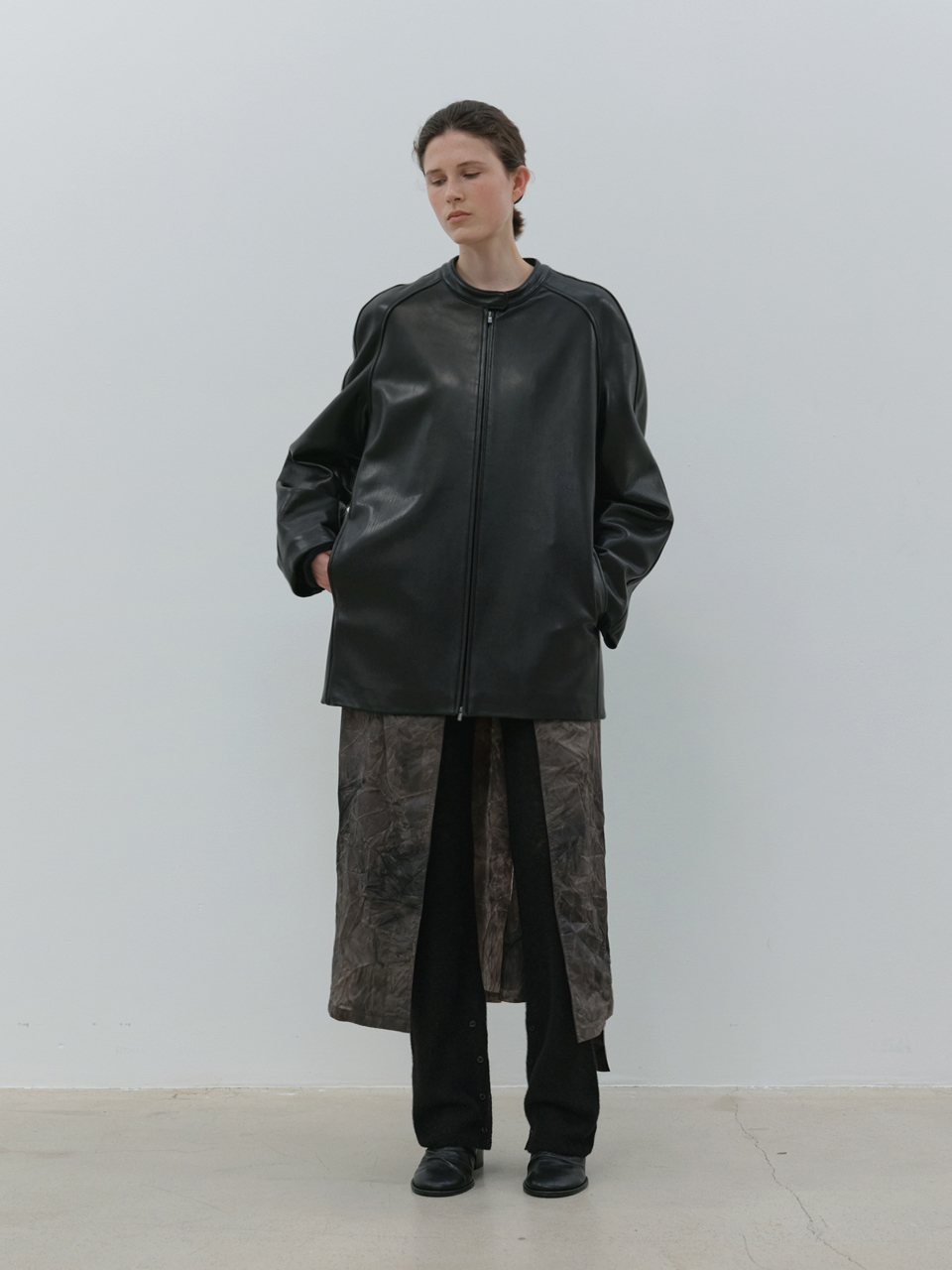
Tie-dye is a resist-dyeing technique in which fabric is bound with thread or string before being dyed, leaving natural bleed effects and irregular patterns.
Unlike a surface colored uniformly in a single tone, areas where color has deeply penetrated and gaps that remain faint form a distinct contrast depending on how the fabric was bound. Just as its name suggests—tying fabric (tie) and dyeing it (dye)—tie-dye is a technique that creates patterns by firmly fastening cloth with thread or string to leave areas untouched by dye. Depending on the bound pressure and the paths through which the dye penetrates, irregular gradations and wrinkled patterns emerge. Because the spreading lines vary according to how it is tied by hand, slightly different shapes appear on each piece, unlike machine-printed patterns.
The tiedye option, one of the trench coat choices from Moia, applies this dyeing process to 100% nylon fibers[1][2]. Nylon is inherently a synthetic fiber with a smooth surface that does not wrinkle easily. In contrast, nylon fabric that has been submerged in dye while tightly bound and then released retains gentle textures and layered shades on its surface instead of a stiff, smooth grain. Because the dye spreads through the weave of the fabric rather than having a uniform pattern printed on the surface, it visually conveys even deeper color tones and three-dimensionality.
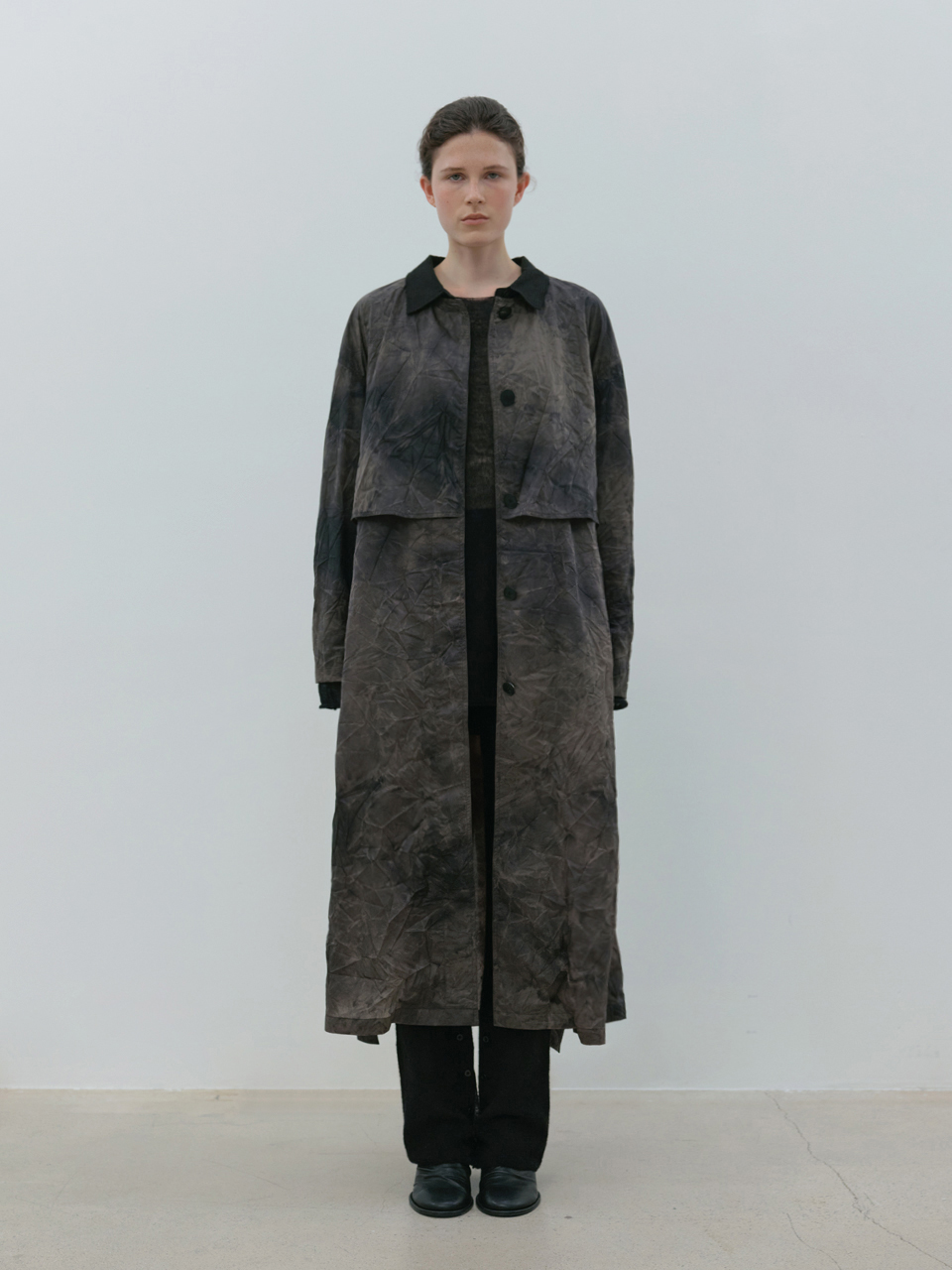
Whether the tie-dye fabric has been treated to prevent color bleeding and specific washing precautions have not yet been confirmed.
Product measurements
View details
layered trench coat (tiedye)
Measurements
| Part | one size |
|---|---|
| 소매길이 | 52cm |
| 어깨단면 | 55.5cm |
| 가슴단면 | 55cm |
| 밑단단면 | 90cm |