What kind of finish is the 'blind stitch (single stitch)' written in the T-shirt description?
Sometimes in product descriptions, you encounter statements mentioning that blind stitching was used instead of the usual double-row stitching. It is difficult to determine how this unfamiliar sewing technique affects the appearance and make of the garment.
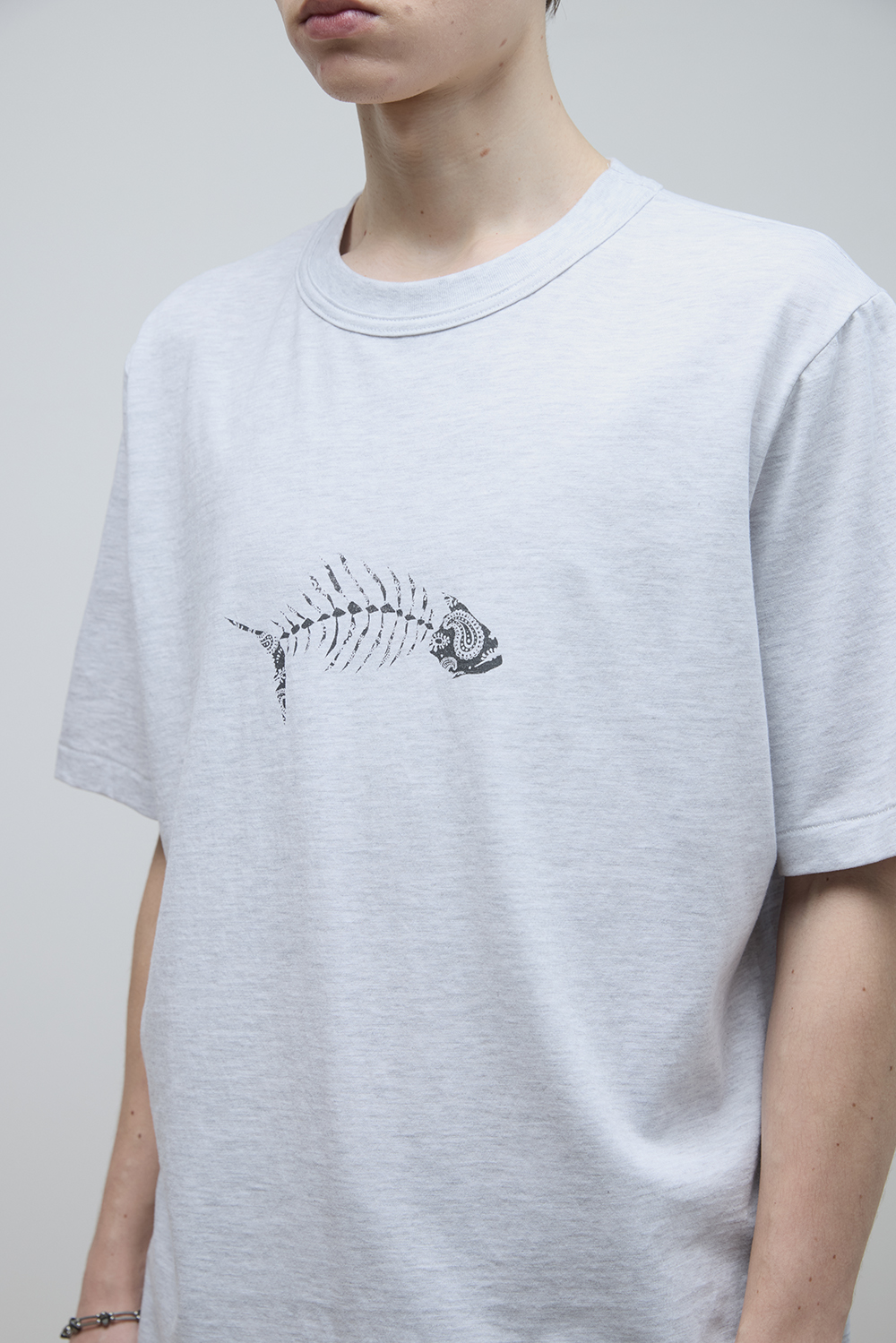
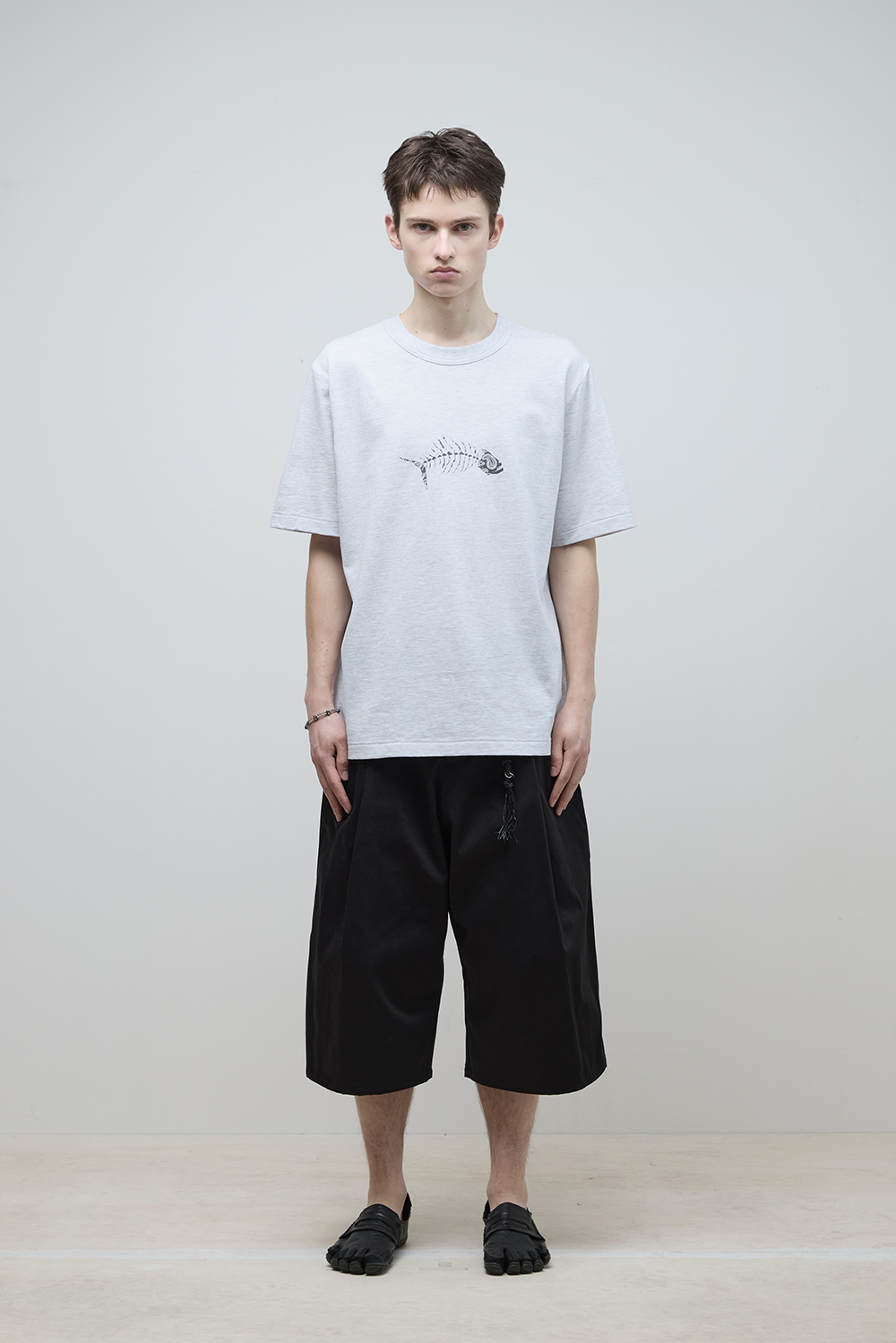
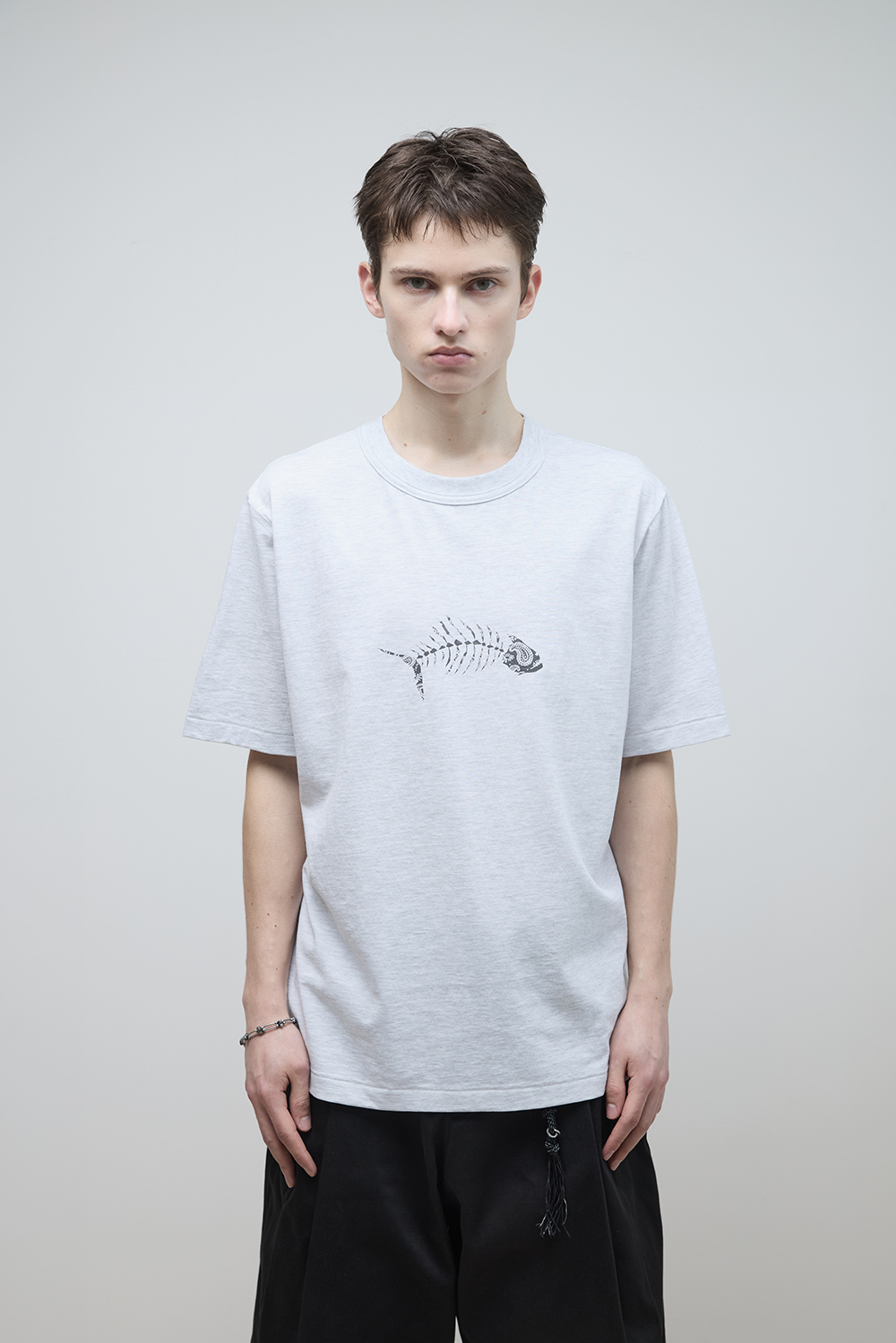
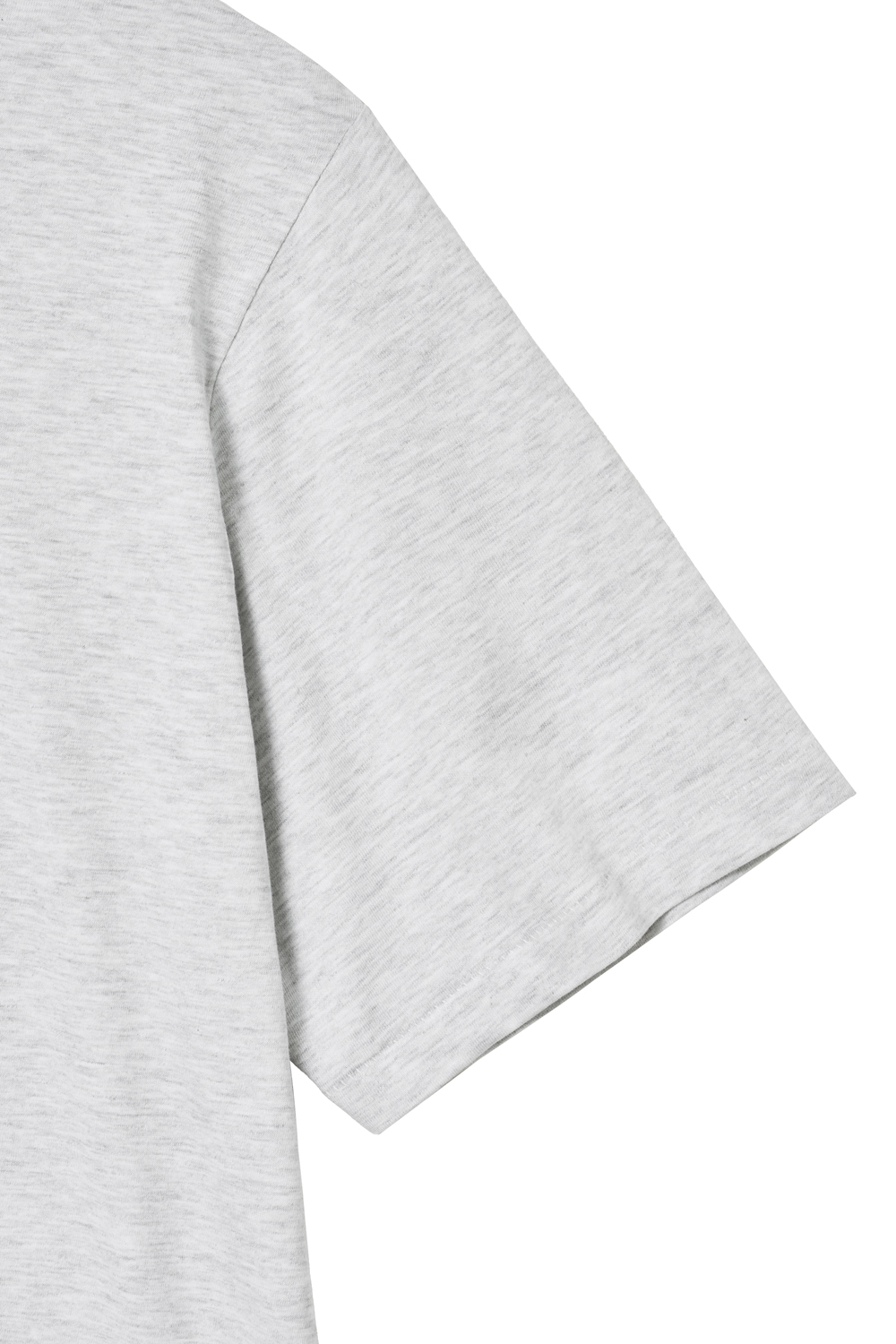
It is a vintage finishing method where the outer grain is lightly caught and sewn so that the thread does not stand out prominently on the outside of the fabric.
Blind stitching (single stitch) is a finishing technique where the fabric is lightly picked and sewn from the inside so that thick stitch lines are not exposed on the outside of the garment. Usually, coverstitch—which exposes two parallel thread lines on the outside—is used for T-shirt hems, but vintage T-shirts in the past often used a single-stitch method that engages only minute stitches on the outside with a single needle.
Almost no thread lines are visible from the outside. Thanks to this, hems or sleeve ends do not press down thickly, but instead fall lightly along the fabric's natural grain.
HATCHINGROOM applied this blind stitching to the sleeve ends and hems of the Paisley Bone Fish Tee[1]. Instead of two solid stitched lines, they left stitches that do not stand out conspicuously on the outside, creating a thin, neat finish that stays in place rather than looking detached[2].
hmmm, this make can be read as an effort to lend a calm texture to the T-shirt's edges by borrowing an old method, rather than opting for modern processing that prioritizes sturdy securing alone.
The specific machine method or stitch interval used for the blind stitching has not yet been confirmed in official materials.
Product measurements
View details
Paisley Bone Fish Tee 1% M.Grey
Measurements
| Part | S | M | L |
|---|---|---|---|
| 총장 | 67cm | 69cm | 71cm |
| 소매길이 | 25.5cm | 26cm | 26.5cm |
| 가슴단면 | 58cm | 60cm | 62cm |