Why are the names of the blacksmith and the sharpener listed separately as the makers in the knife description?
It is easy to think that a single craftsman takes charge of making an entire knife, which makes one wonder about the background behind listing the blacksmith and the sharpener separately.
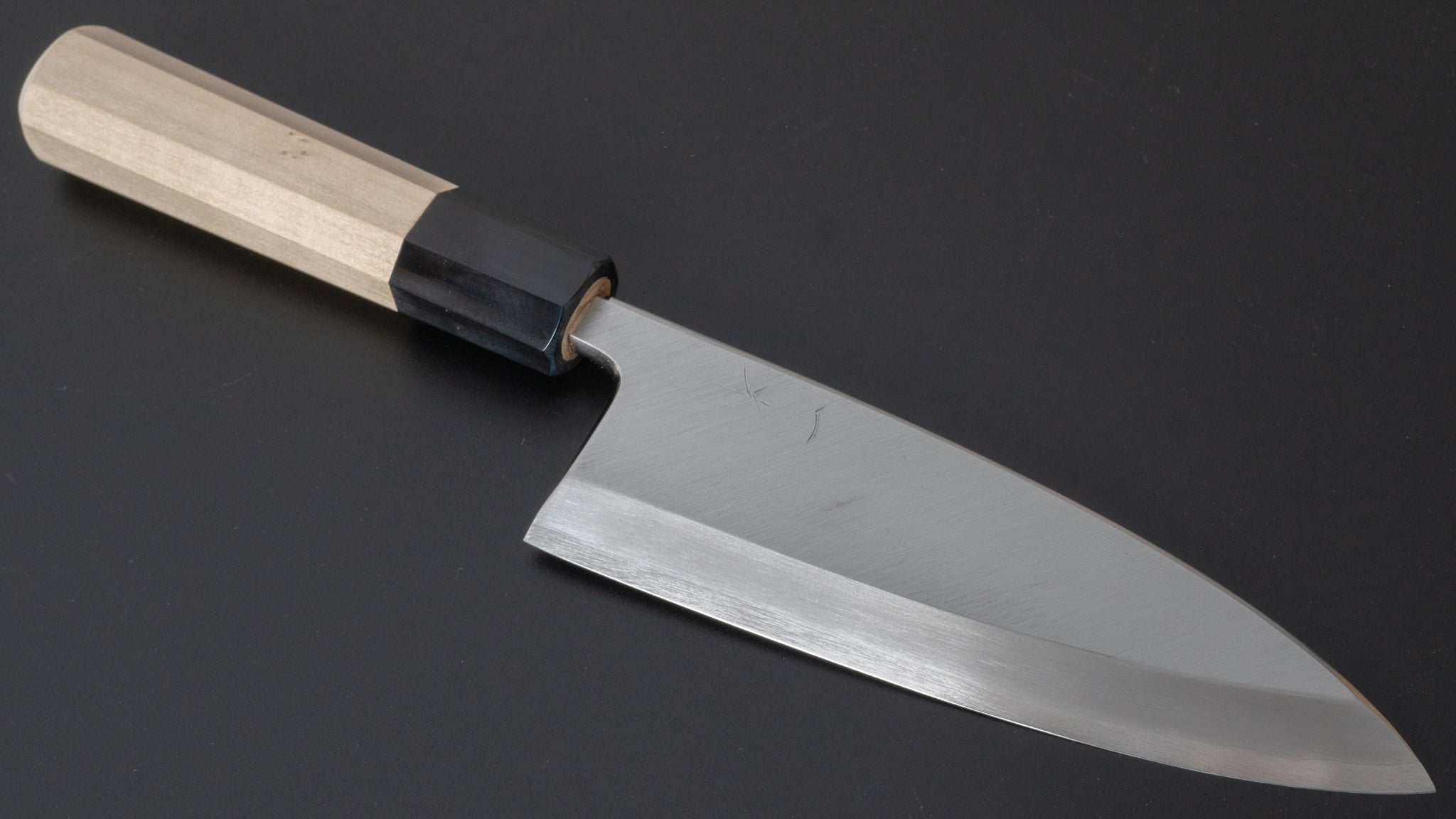
This is because the work is divided between the blacksmith, who heats the iron to shape the knife, and the sharpener, who hones the blade thin and sharp.
The processes are divided. In traditional knife-making methods, forging—hammering heated iron to shape it—and sharpening—grinding the blade sharp on whetstones—are separated into distinct specialized fields. Because both processes require high levels of skill, a system has continued where the blacksmith who hammers the iron and the sharpener who hones the blade divide their roles.
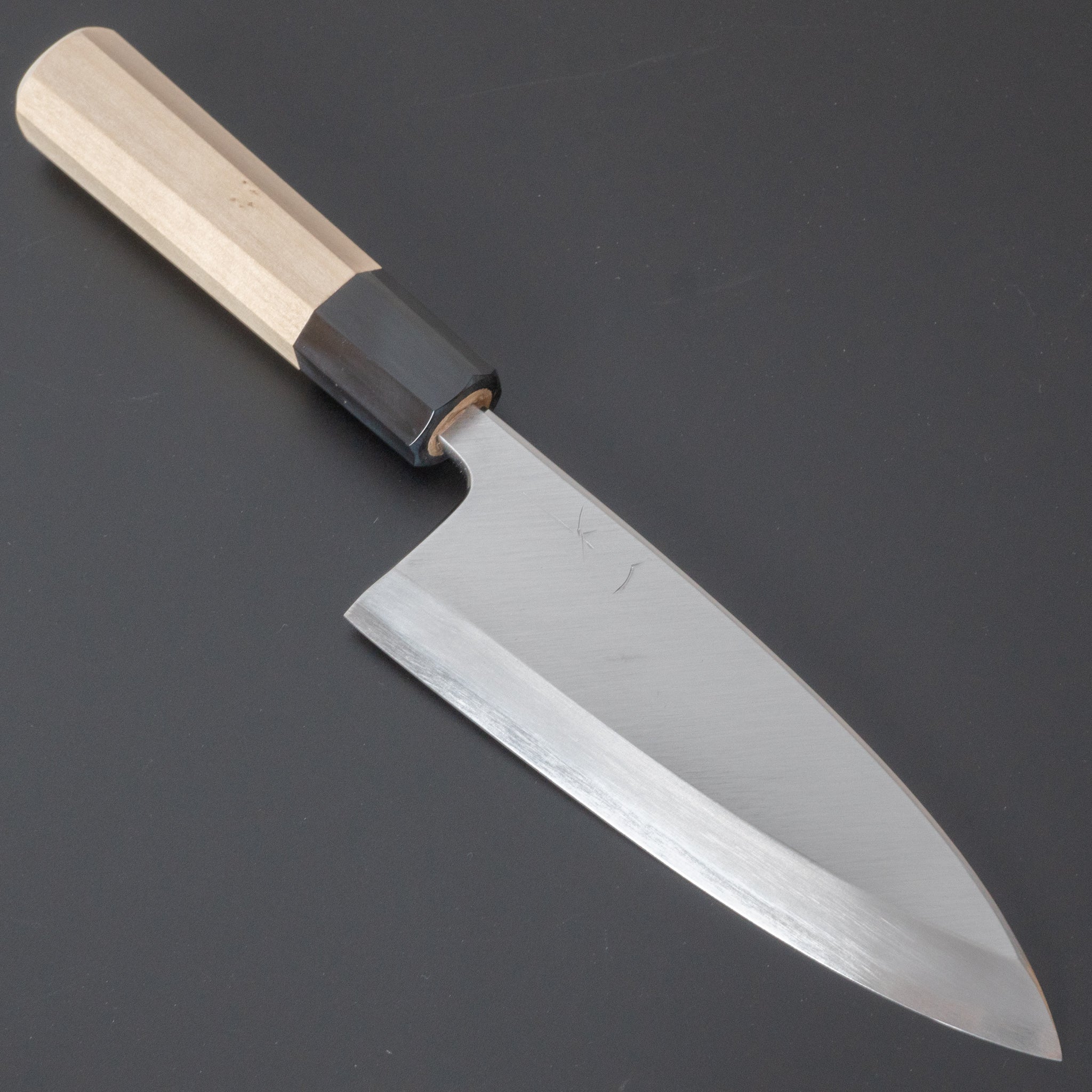
HITOHIRA operates as a trading company that does not manufacture knives itself, but curates products by weaving together the skills of multiple craftsmen[1]. It discovers hidden artisans across Japan and leads projects that link unique collaborations between blacksmiths and sharpeners[2]. In fact, for one Deba knife product, it separately specifies Nakagawa Blacksmith as the blacksmith who hammered the iron to forge the knife's basic shape[3], and Rikichi as the sharpener who honed the blade[4].
By fully revealing the roles of the two craftsmen involved in completing a single knife, it helps clearly identify the knife's origins and whose hands brought it into being.
It has not yet been confirmed by what criteria the blacksmiths and sharpeners participating in collaborations are paired to curate products.
Product measurements
View details
Hitohira Nakagawa Rikichi Silver #3 Deba 150mm Ho Wood Handle (Saya)
Other stated figures
| Part | Value |
|---|---|
| Height | 48mm |
| Weight | 228g |
| Total Length | 287mm |
| Thickness | 6mm |