What kind of detail is the embroidery on the hidden placket that conceals the buttons?
The shirt description mentions a hidden button placket and appliqué embroidery, so I wondered how the exterior appearance differs when it is buttoned versus unbuttoned.
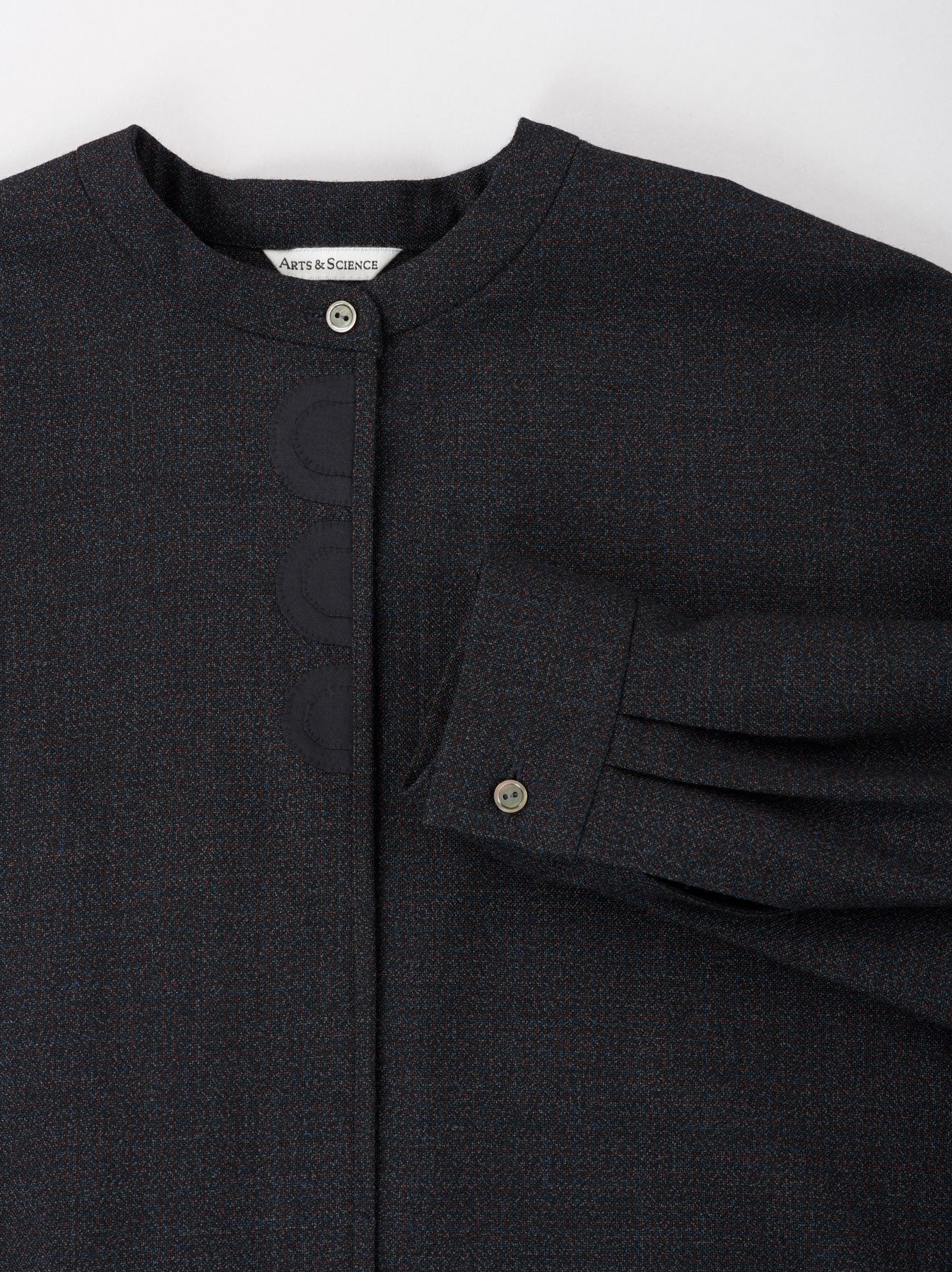
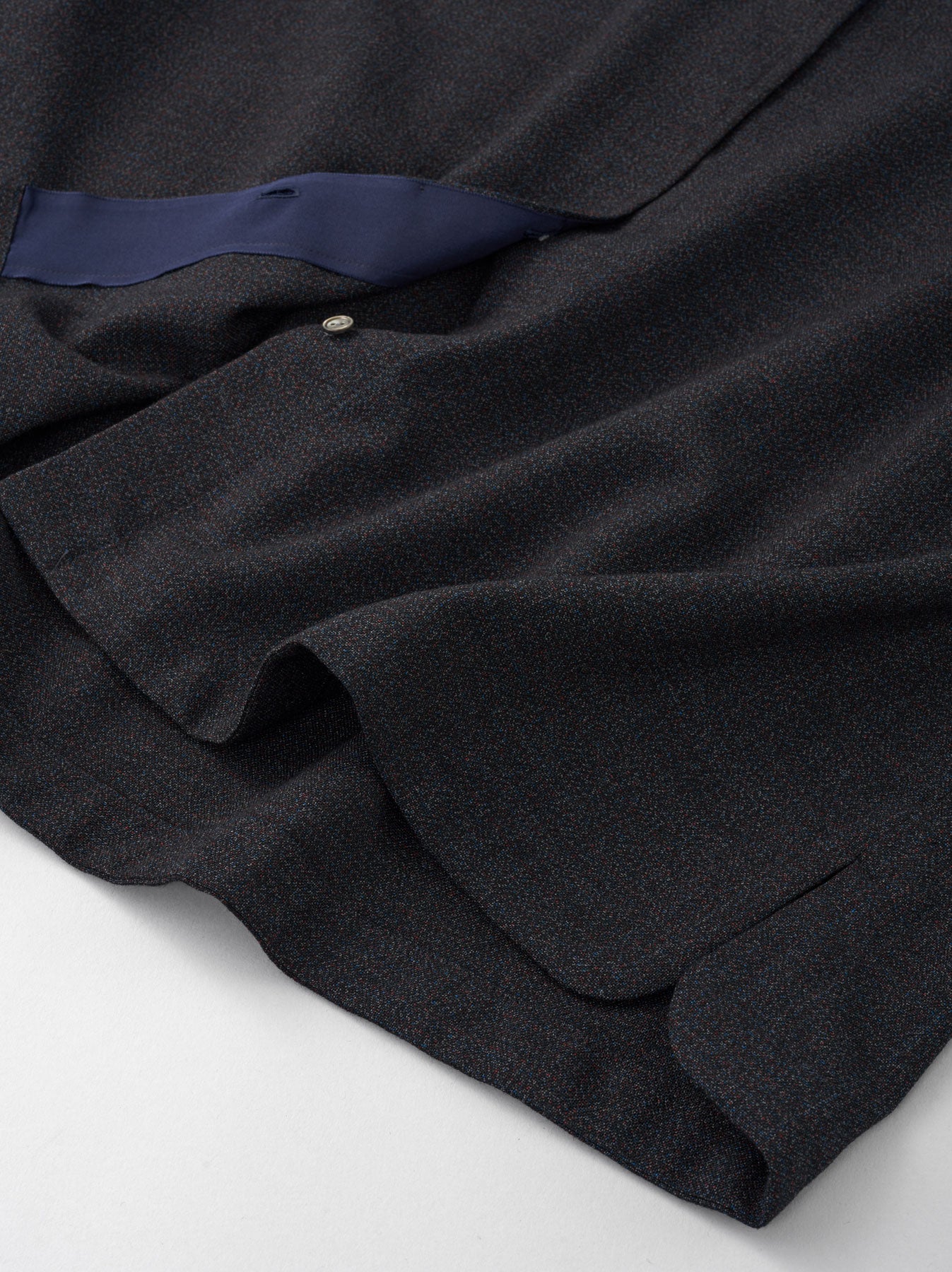
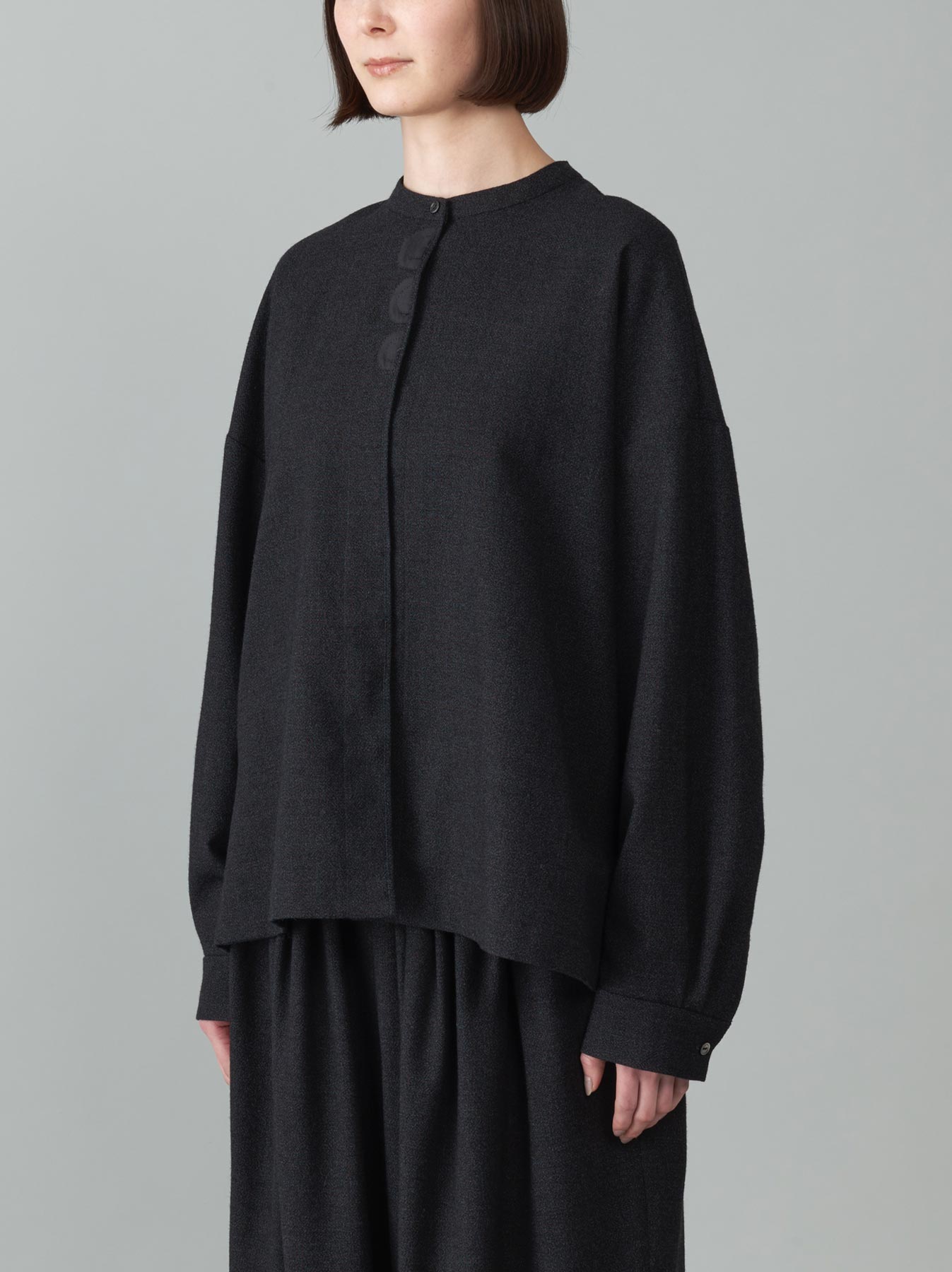
It is a detail finished so that appliqué embroidery is added to the inside of the front placket concealing the buttons, subtly revealing itself when unbuttoned or adjusted.
The outside covers the buttons for a neat and smooth look, while raised embroidery decoration is concealed on the inner placket. A hidden placket is a closure method that adds a double layer of fabric so buttons are not visible from the exterior when fastened. ARTS&SCIENCE placed appliqué embroidery—sewing an overlapping piece of fabric over the base fabric—on the hidden button placket of this long-sleeve shirt[1]. Fastening the buttons maintains a neat exterior, but opening the collar or unbuttoning reveals the three-dimensional texture of the stitching on the inside of the placket.
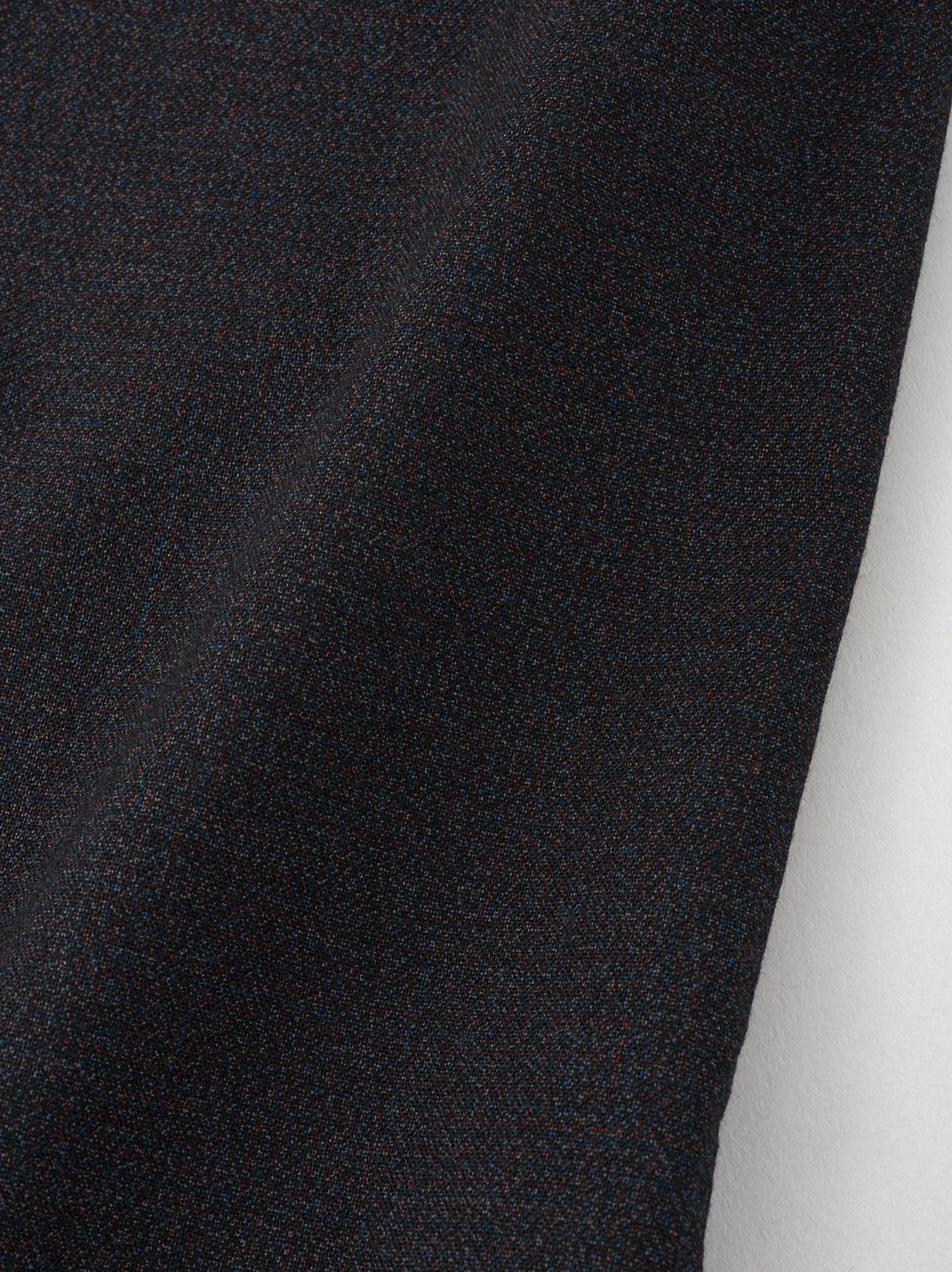
This detailed embroidery finish is hand-crafted directly at a workshop in Aomori, Japan[2]. The fabric also features an elaborate construction. The material used for the shirt is MITSUMOKU ZQ wool poral, made of 100% New Zealand ZQ-certified superfine merino wool[3][4]. It is woven by blending threads of four different colors and varying thicknesses[5]. Poral is a textile loosely woven with high-twist yarn to provide breathability and resilience, where yarns of varying thicknesses intersect to create subtle layers of color and gentle grain on the surface.
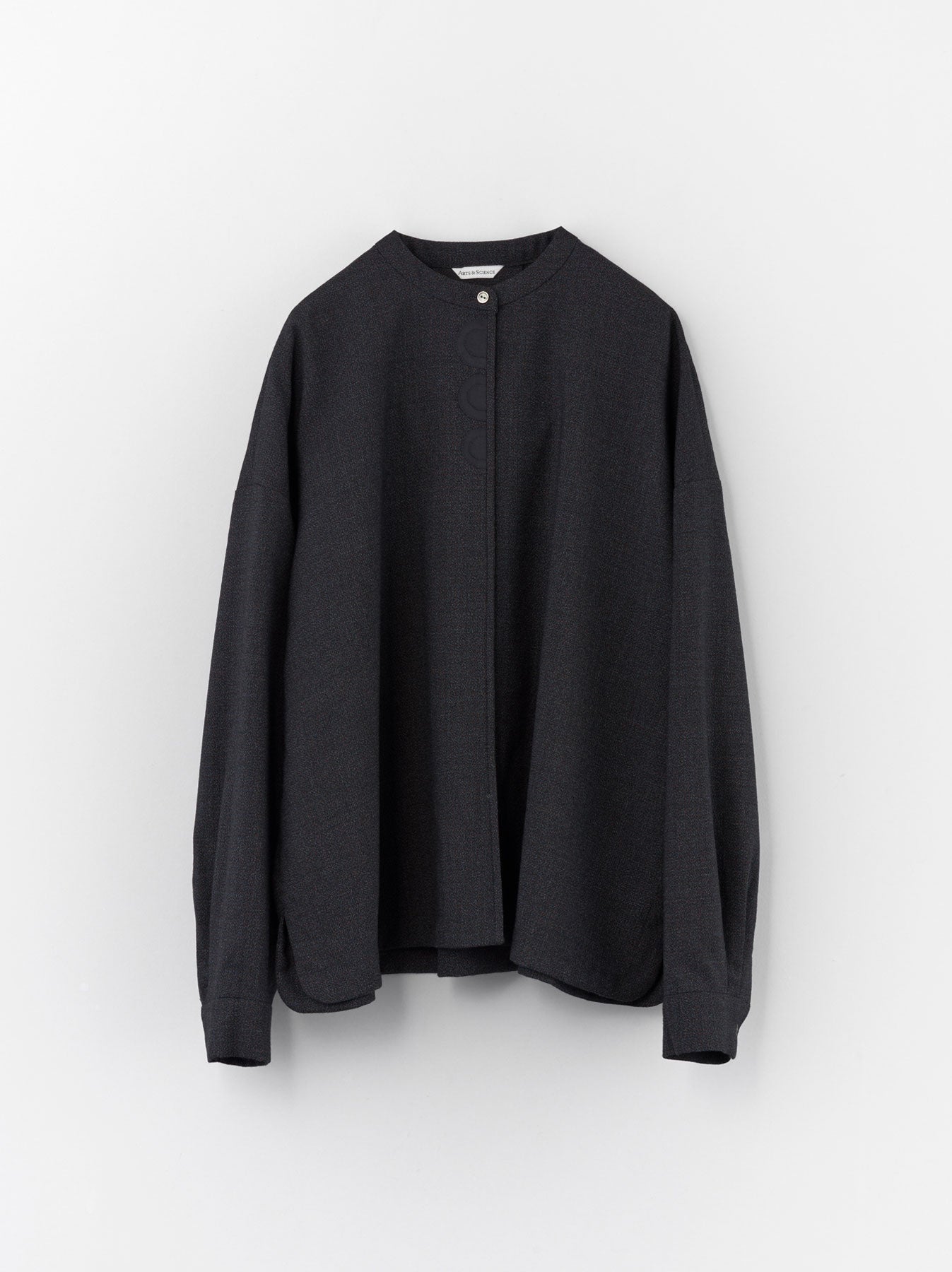
The specific design and pattern of the appliqué embroidery featured on the hidden placket have not yet been confirmed.
Product measurements
View details
Back tuck shirt long sleeve
Measurements
| Part | 1 |
|---|---|
| Length | 61cm |
| Shoulder Width | 64cm |
| Sleeve length | 49cm |
Other stated figures
| Part | 1 |
|---|---|
| Width ◦ | 64cm |
For rows marked with ◦, flat measurement or circumference could not be confirmed in official sources, so hmmm determined them using figures from the same item.