The textures of the upper plate and the bottom foot are different; how are the two parts joined together?
This is asked when wondering about the manufacturing method because the upper and lower parts of the plate feel different to the touch, or when concerned whether the unique foot structure that appears to be simply placed on top might easily separate.
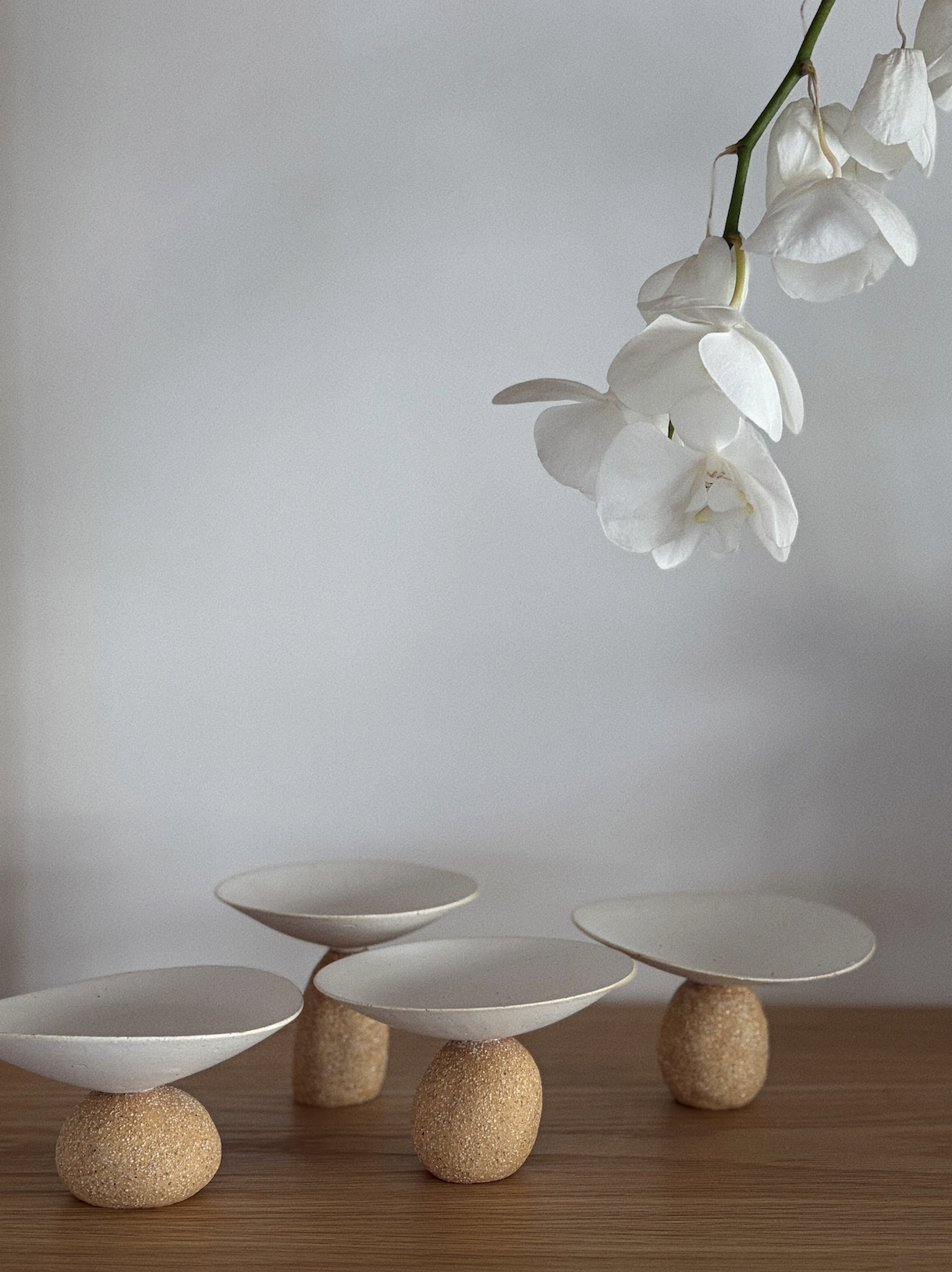
The upper part that contacts food is finished smoothly and the lower part supporting the base is finished roughly, and the two parts naturally join as one as the glaze melts when fired in the kiln.
The upper part is soft and smooth, and the lower part supporting the base reveals the rough grain of clay[1]. Atelier AECHAE 아틀리에 애채's 부유하는 하양 Plate takes a form where a plate vessel is placed atop a foot resembling a pebble[2]. On the surface, it looks as if two different lumps have been placed together, but when undergoing the firing process inside the kiln, the glaze melts and the two join into one[3].
The glaze applied to ceramics melts in the high heat of the kiln and turns into a glassy substance, serving to solidify and firmly connect the clay and the vessel during the cooling process. Because an integrated vessel is completed solely through the reaction of clay and glaze without using separate chemical adhesives, the foot does not easily detach even when used as tableware or washed.
While the foot, which is placed on the dining table and touched by hands, retains the rough texture of gravel to provide sculptural beauty, the top surface of the plate that holds food is smoothly finished to make it convenient to use[4].
The specific firing temperature at which the upper and lower parts are joined or the strength to withstand loads has not yet been confirmed.