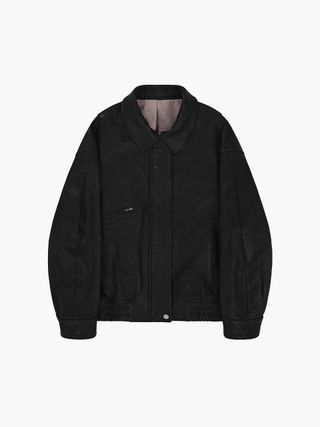
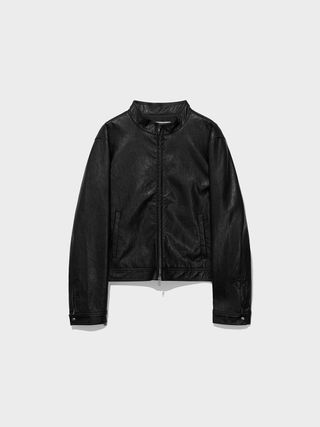
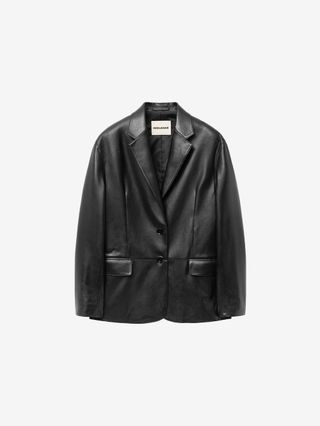
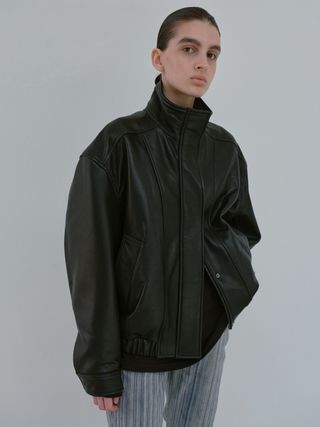
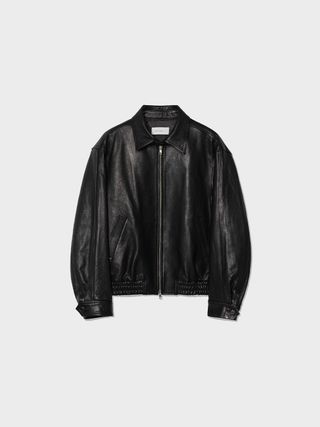
I've picked four pieces of leather outerwear that are great to lightly throw on starting now: LOW CLASSIC's artificial leather short jacket with a crisp length, Moia's leather jumper, as well as INSILENCE's leather blazer and vegetable lambskin jacket, both neatly tailored from Italian leather. During the change of seasons, simply tossing one on over thin inner layers solidly grounds the entire outfit's mood.
In the Tuscany region of Italy, leather is tanned without artificial chemicals by placing natural tannins, such as oak bark or chestnut extract, into large wooden vats and slowly turning them for months. Instead of artificial hot-air dryers, it's a traditional process that leisurely dries the leather in the region's natural breeze, letting its original grain breathe. Vegetable leather finished like this takes in the wearer's touch and sunlight, deepening in rich color and building a soft, subtle sheen as time passes.

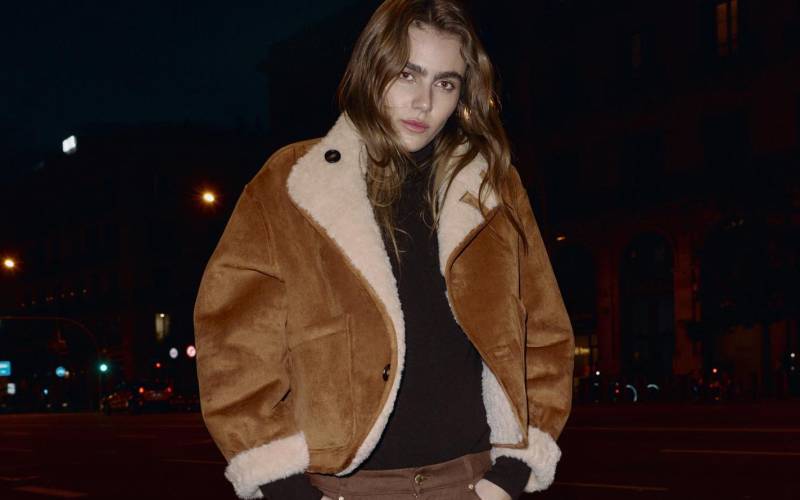
INSILENCE's butter beige lambskin jacket goes through that very process, so being soft lambskin, it will only drape more stylishly along your body the more you wear it. I've prepared a well-rounded selection, from fake leather that's easy to care for to real leather that gains character with hand wear. Which condition shall we narrow down first: material type, price range, or your preferred silhouette?
↳ Real leather
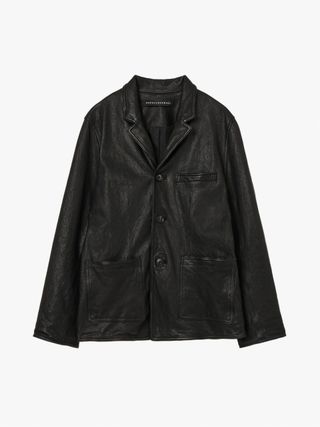
I've filtered out synthetic leather and picked five outerwear pieces that bring out the texture of genuine leather: INSILENCE's 이태리 레더 블레이저 BLACK and vegetable lambskin jacket, MARGESHERWOOD's WASHED LEATHER FITTED JACKET_black, Moia's leather jumper, and MOONDAL's Lambskin Safari Jacket in Brown. Real leather is meant to be worn not for its first-day stiffness, but for the charm of slowly conforming to its owner's movements.
When freshly completed, leather garments are stiff and have a glossy sheen due to the interfacing and adhesive used to hold their shape. That's why they undergo garment washing, where the finished piece is tossed entirely into water; because moisture and heat shrink the fabric by 20–30%, shrinkage must be calculated with precision from the very first pattern drafting. Only after drying for several days, being manually stretched by hand to fit measurements, and undergoing pressing do their distinctive natural shading and creases come to life.
How leather feels against the skin changes significantly with thickness and processing method. Shall we narrow it down only to soft lambskin materials, or would you like to look at softly textured suede or a relaxed oversized fit?
![[ITALY] 베지터블 램스킨 자켓 BUTTER BEIGE](https://img.hmmm.pub/brands/insilence/products/aa27973d-5d51-41c8-b401-3e57a4084919/0-320.jpg)
↳ Only lambskin materials
I've pulled four outerwear pieces made of lambskin from the shelves: INSILENCE's 이태리 레더 블레이저 BLACK and vegetable lambskin jacket, along with MARGESHERWOOD's WASHED LEATHER FITTED JACKET_black and OVERSIZED LEATHER BLOUSON_black. Lambskin has a finer grain and lighter weight than cowhide, so rather than holding a stiff, sharp structure against the body, it is enjoyed for its flexible, fluid drape.
Behind the supple demeanor of leather clothing lies a hidden process called skiving, which shaves down seam allowances. Unlike paper, leather possesses thickness and bulk, so if the cross-sections of joined edges aren't sliced diagonally, seams bunch up thick and stitch lines warp. Only when the back layer of the leather is precisely trimmed down with a sharp blade is that flexible, contouring silhouette completed when held in hand.
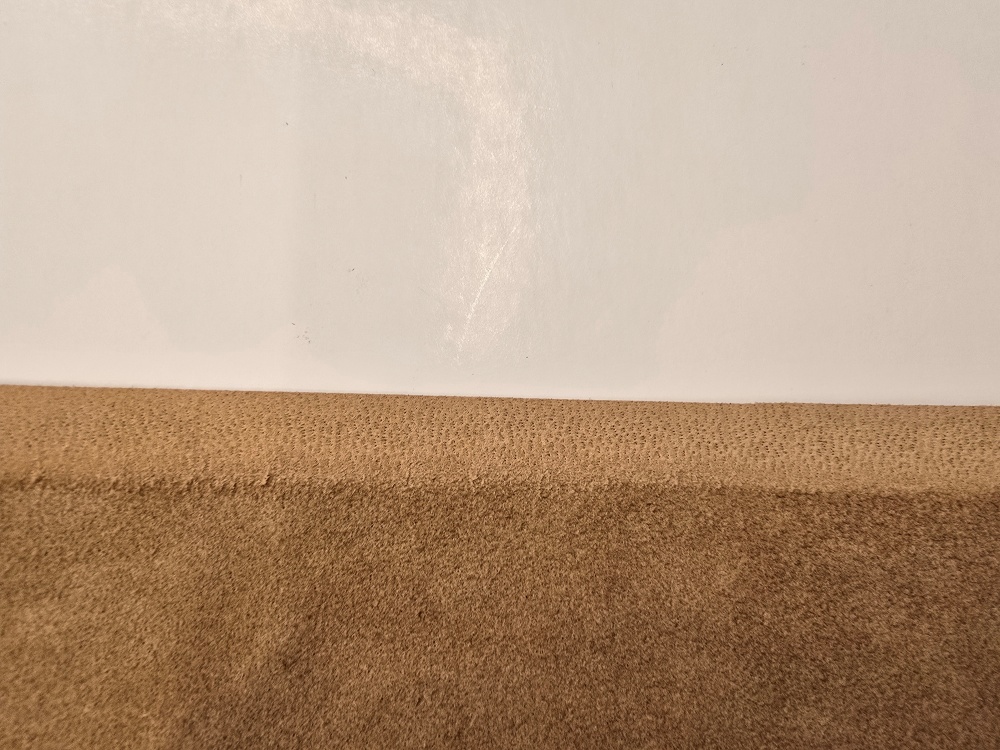
The clothes shortlisted this time also bring out that thin, supple texture to trace distinct lines. Would a generously draped blouson jumper feel comfortable, or shall we move over to a cleanly falling blazer first?
Final Selected Products