Why is birch plywood listed along with each table top description?
When choosing a ceramic or solid wood table, seeing birch plywood listed with each specification can sometimes be confusing regarding the structure. One wonders why plywood is added beneath the surface material.
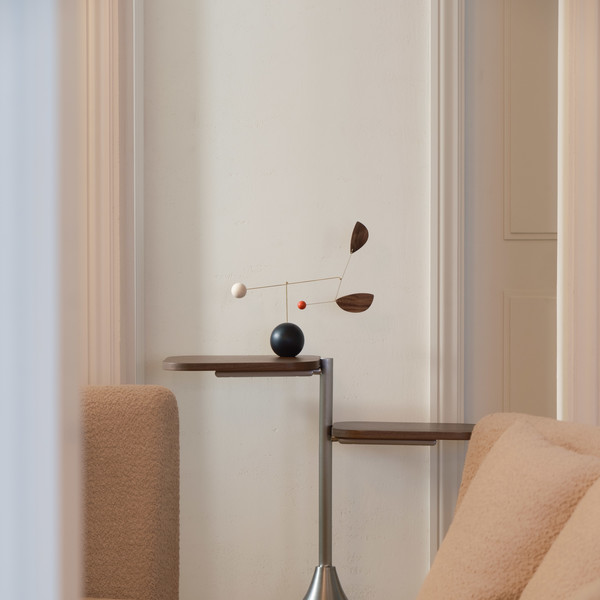
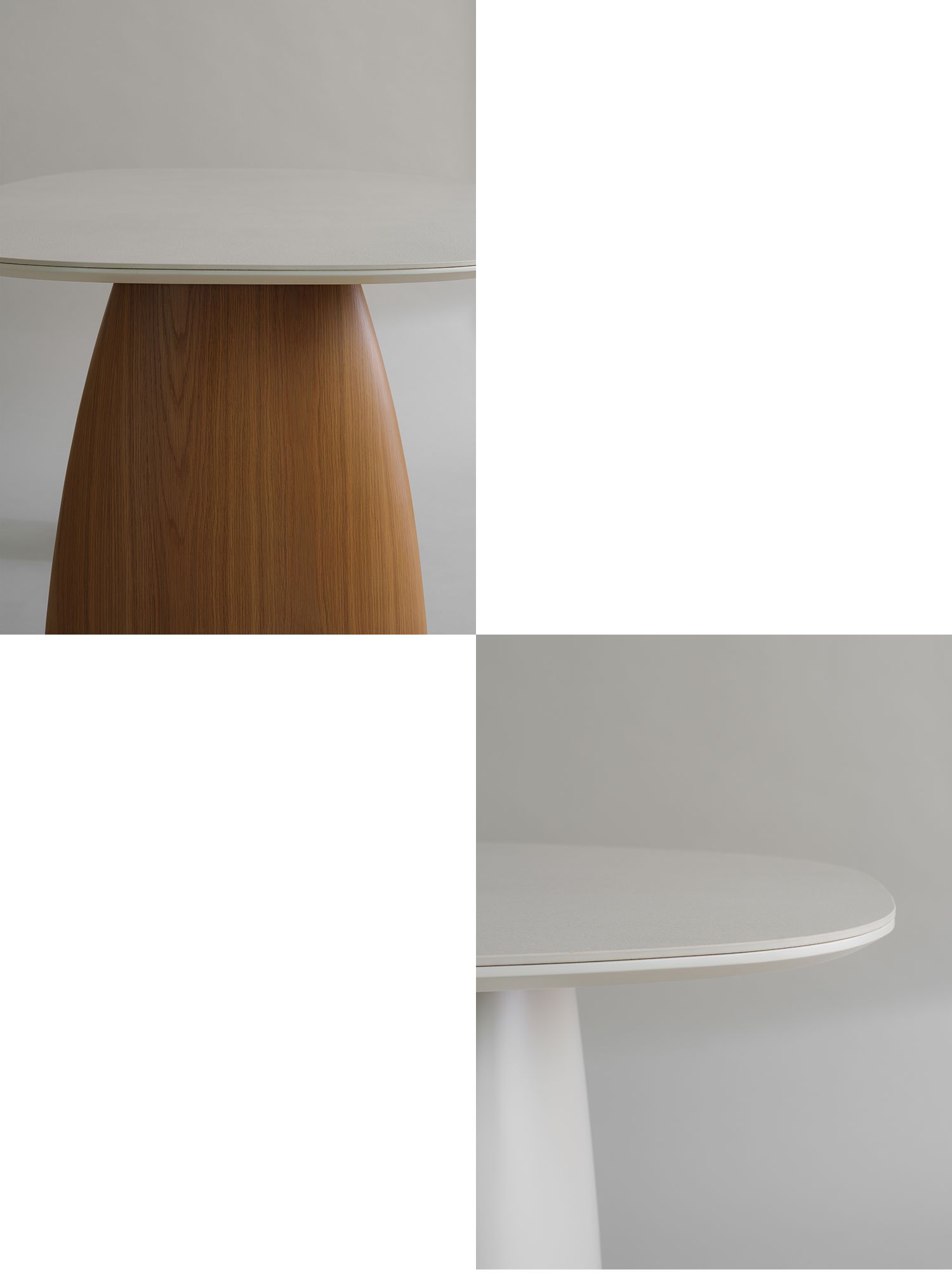
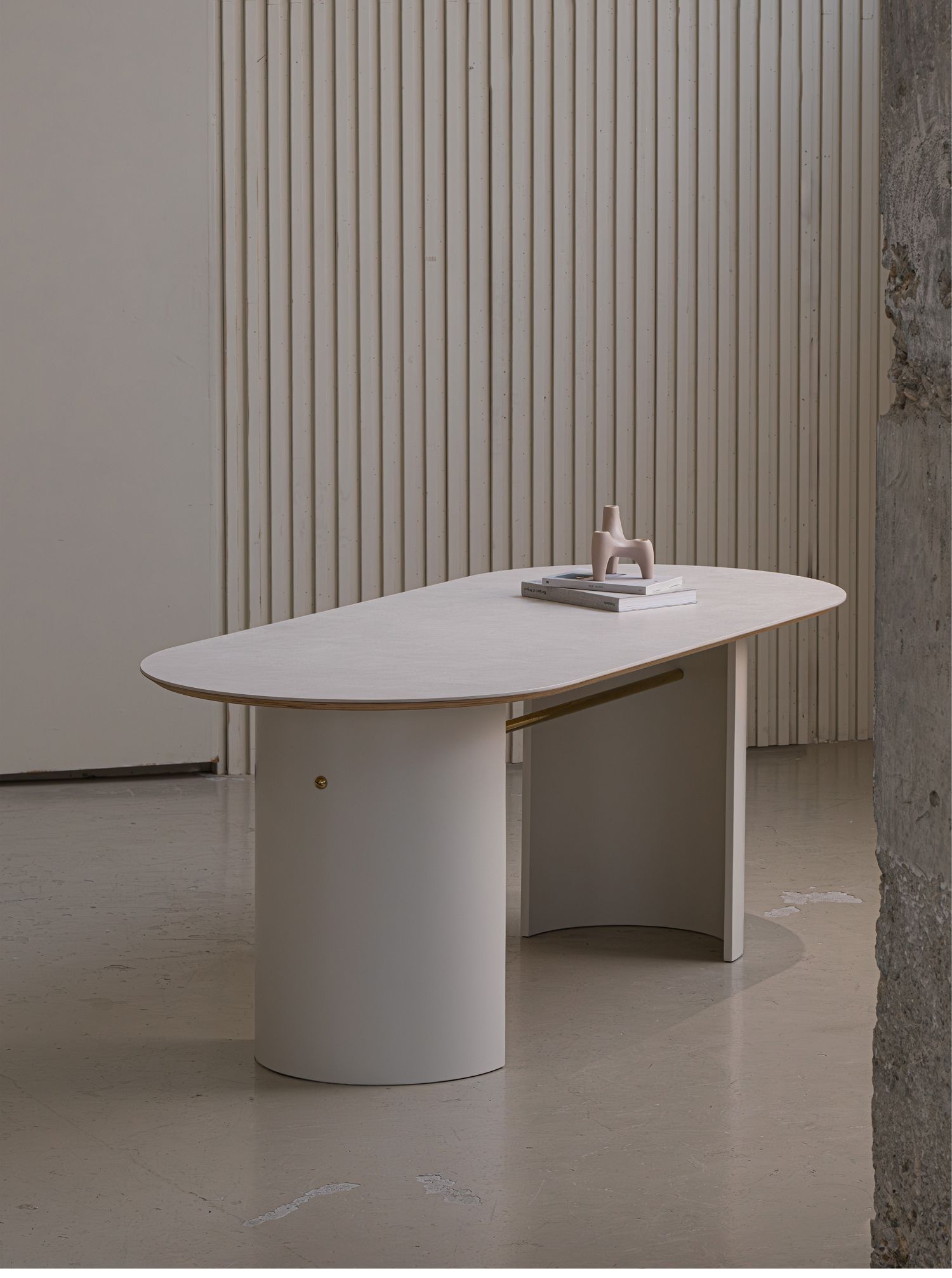
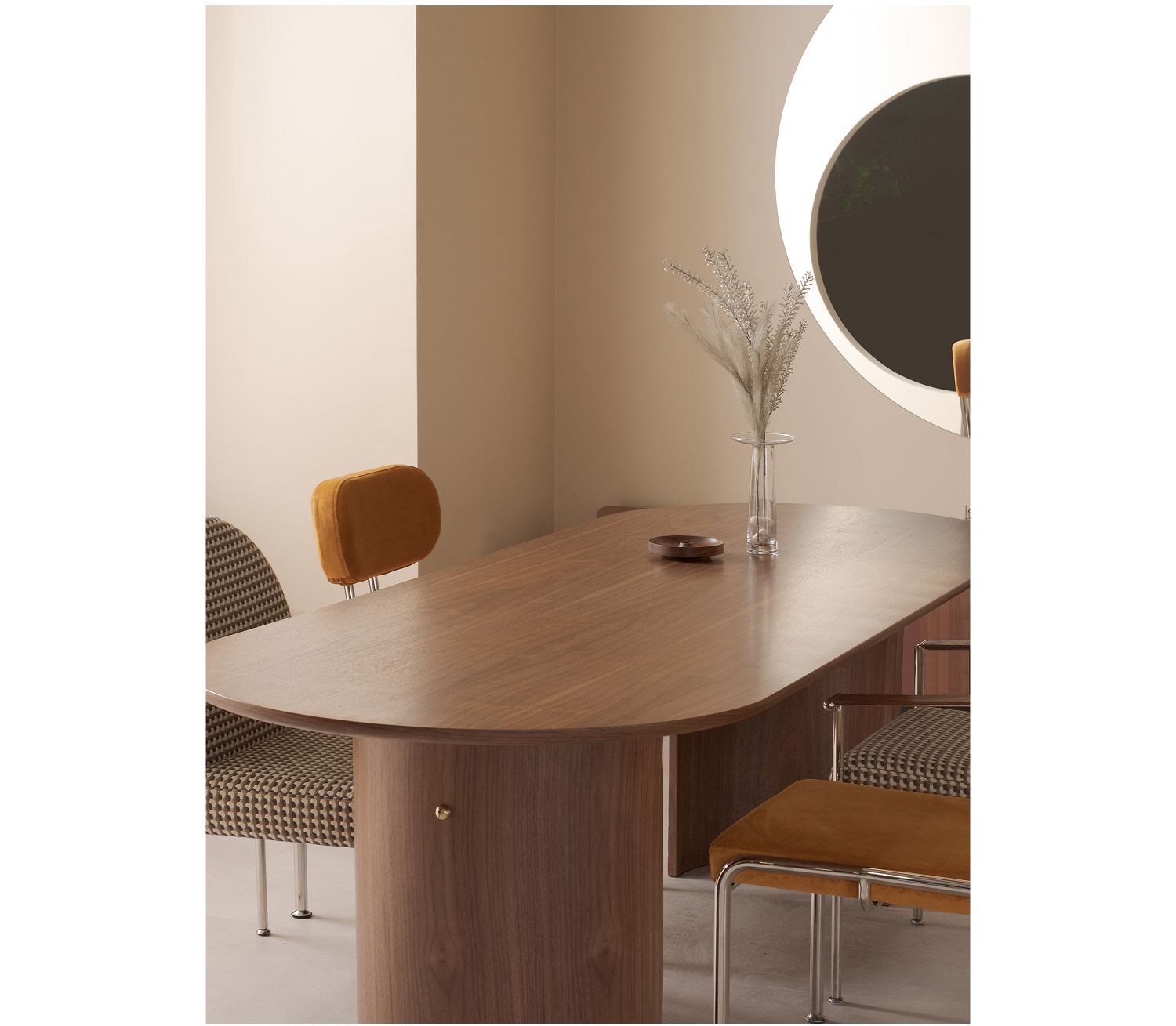
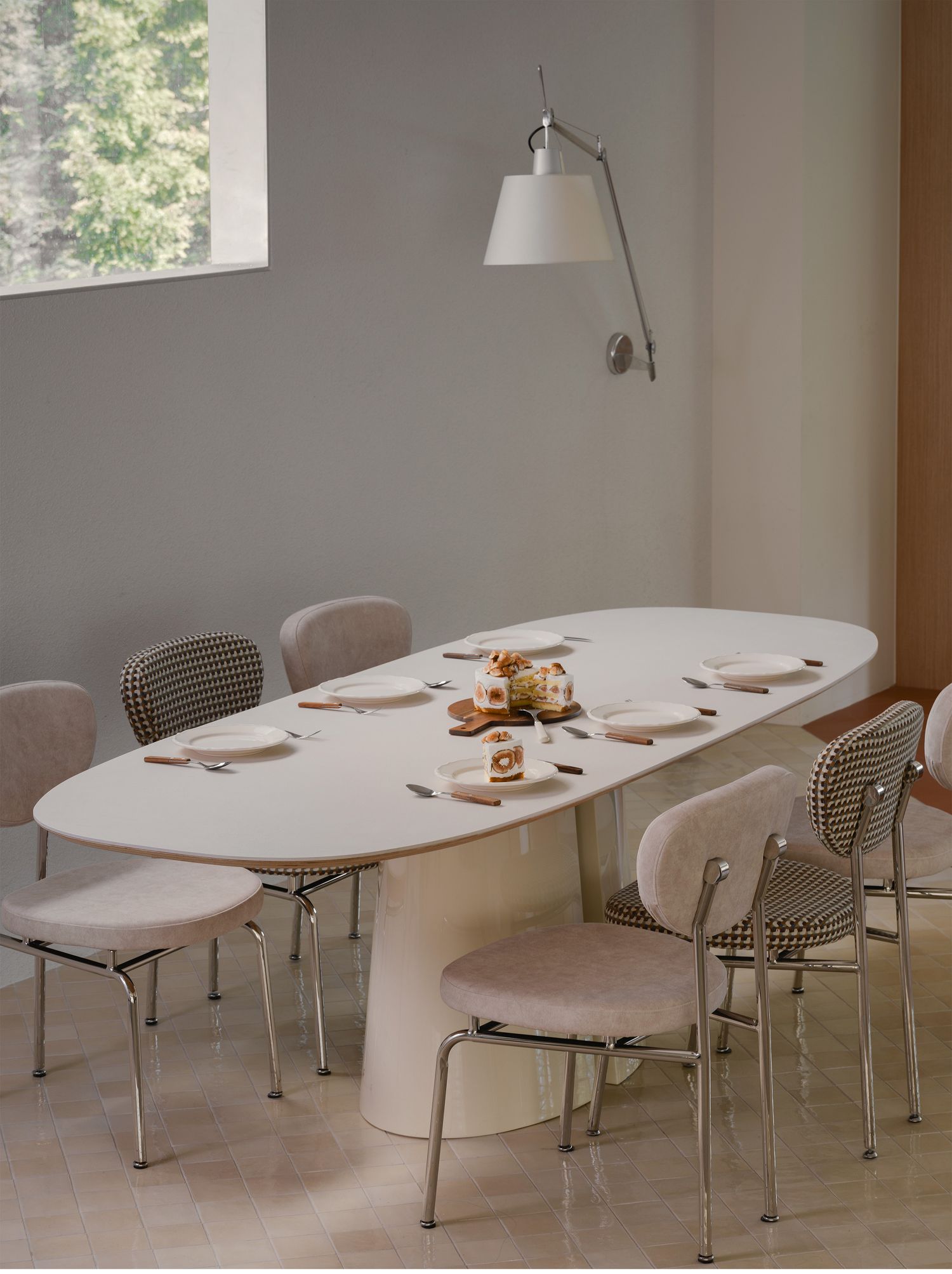
Even when ceramic or natural veneer is applied to the surface, VILLA RECORDS tables incorporate birch plywood underneath to reduce deformation and support impacts.
While the exterior is hard ceramic or wood with visible grain, birch plywood is commonly bonded directly underneath.
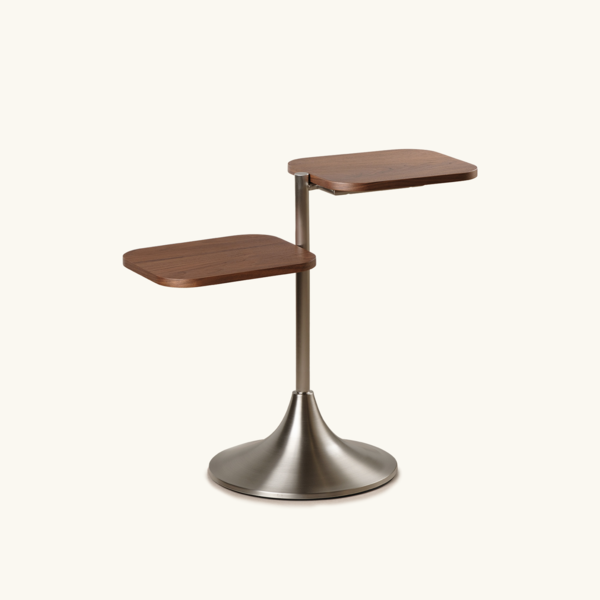
The SLIT DINING TABLE and ROUND DINING TABLE ceramic models combine Italian porcelain and ceramic with birch plywood[1][2], and the LOMA DINING TABLE also combines painted birch plywood with ceramic[3]. The LAYERED SIDE TABLE and the wood round table are also configured by supporting birch plywood beneath natural walnut veneer[4][5].
Generally, thin ceramic or porcelain is very resistant to surface scratches and heat, but without a supporting base underneath, it can easily crack under strong impact. Natural wood veneer can also warp or split across large surfaces due to seasonal humidity changes. Birch plywood, made by compressing thin layers of wood with alternating grain directions, resists warping and evenly distributes loads. It is a structure that supports the vulnerabilities of the surface finishing material from below, helping the dining table remain stable and usable for a long time.
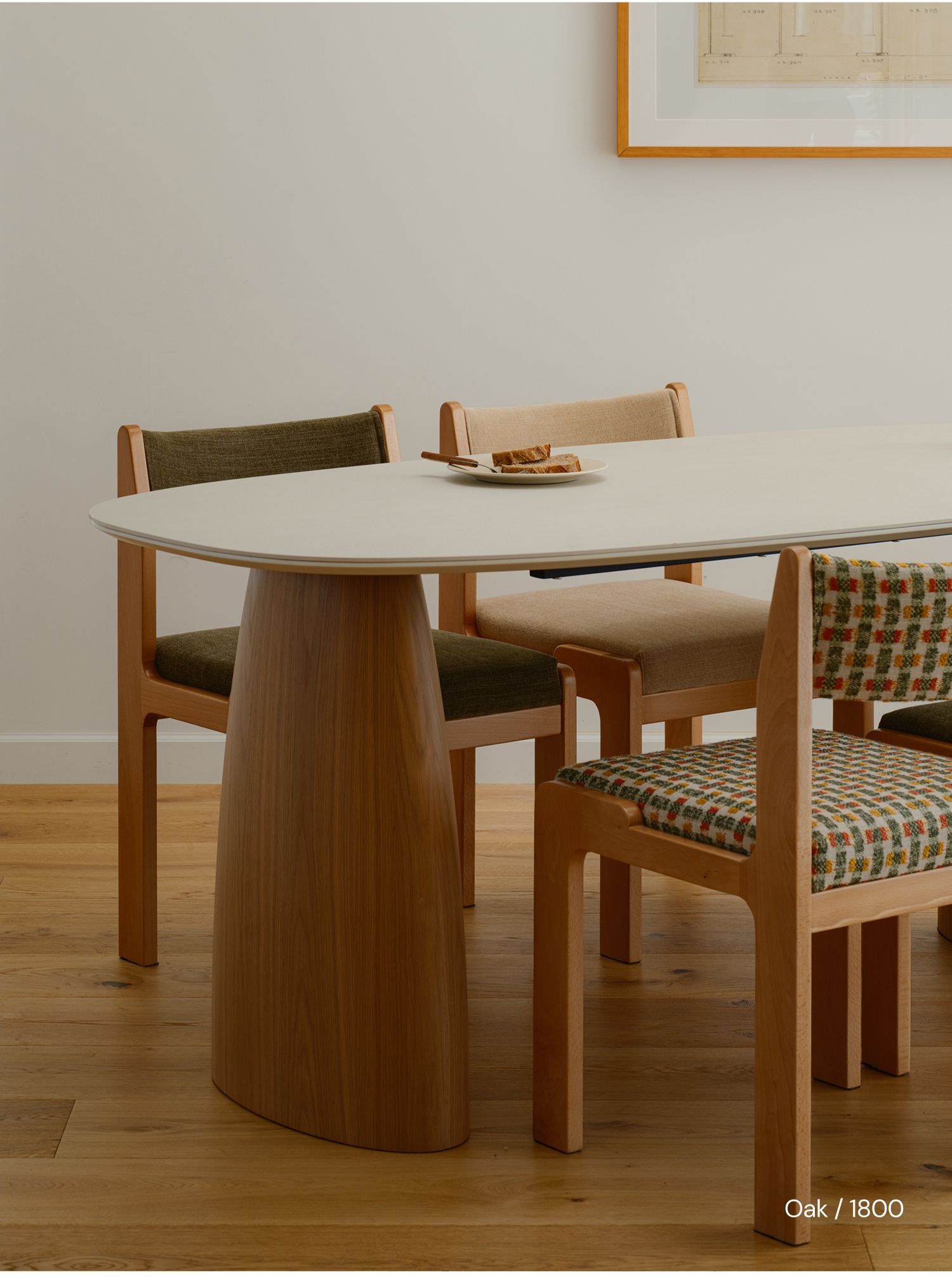
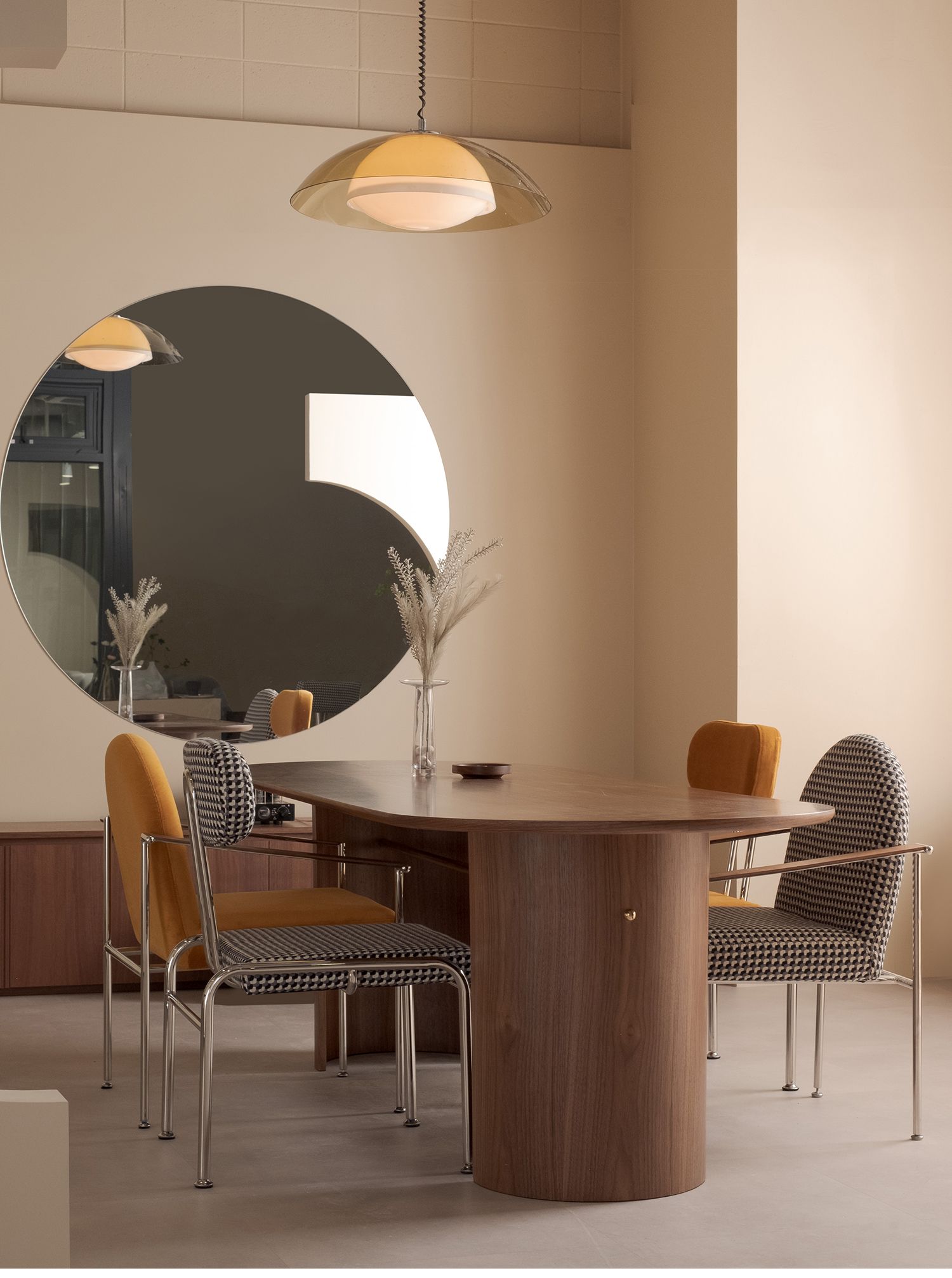
The specific thickness of the birch plywood inside the tabletop and the eco-friendly grade of the wood have not yet been confirmed.