What is the reason for backing the ceramic tabletop with wood underneath?
This is asked when looking at the tabletop thickness and material composition and wondering about the structure where birch plywood is placed beneath thin ceramic, as well as the reason for the gap at the joint.
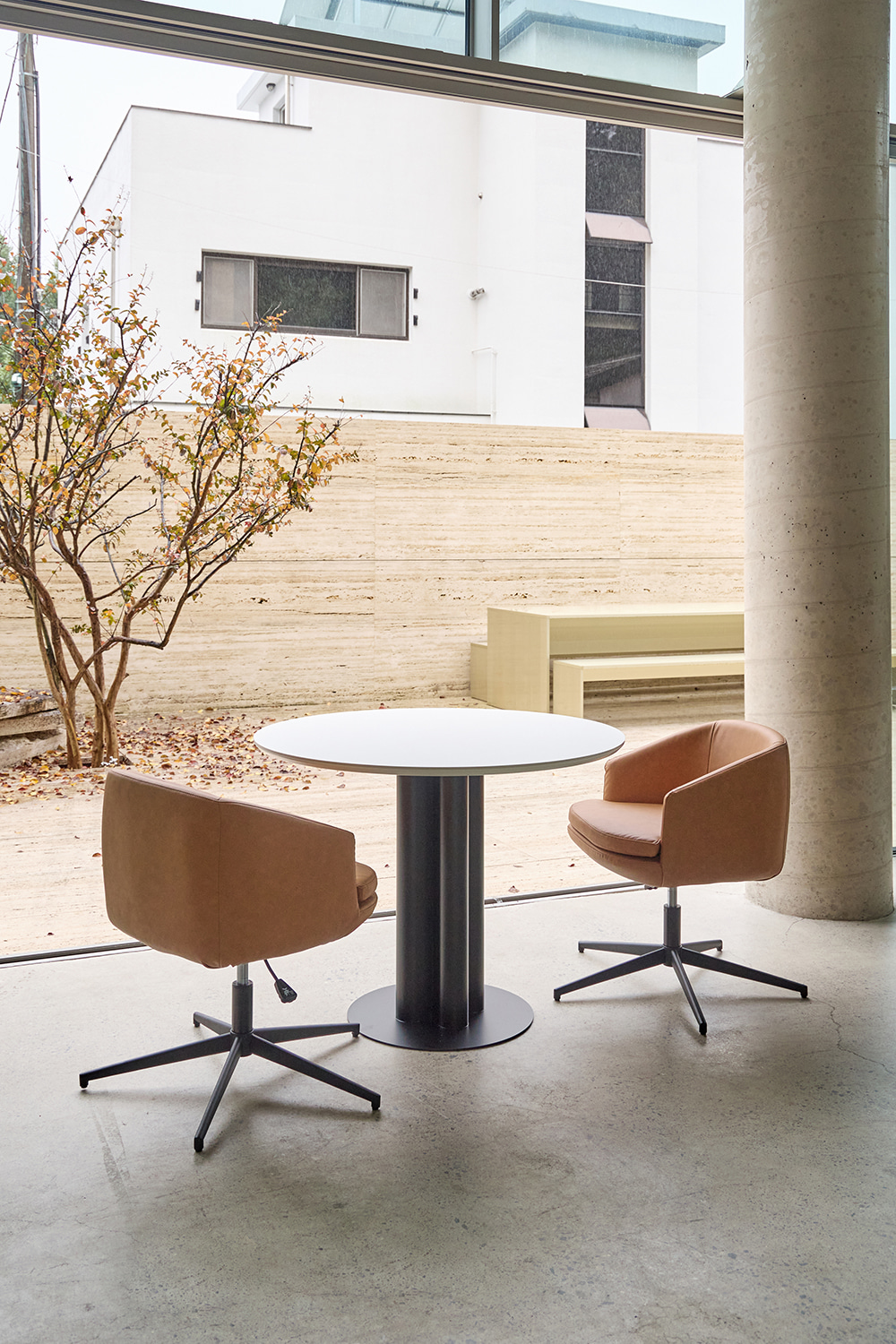
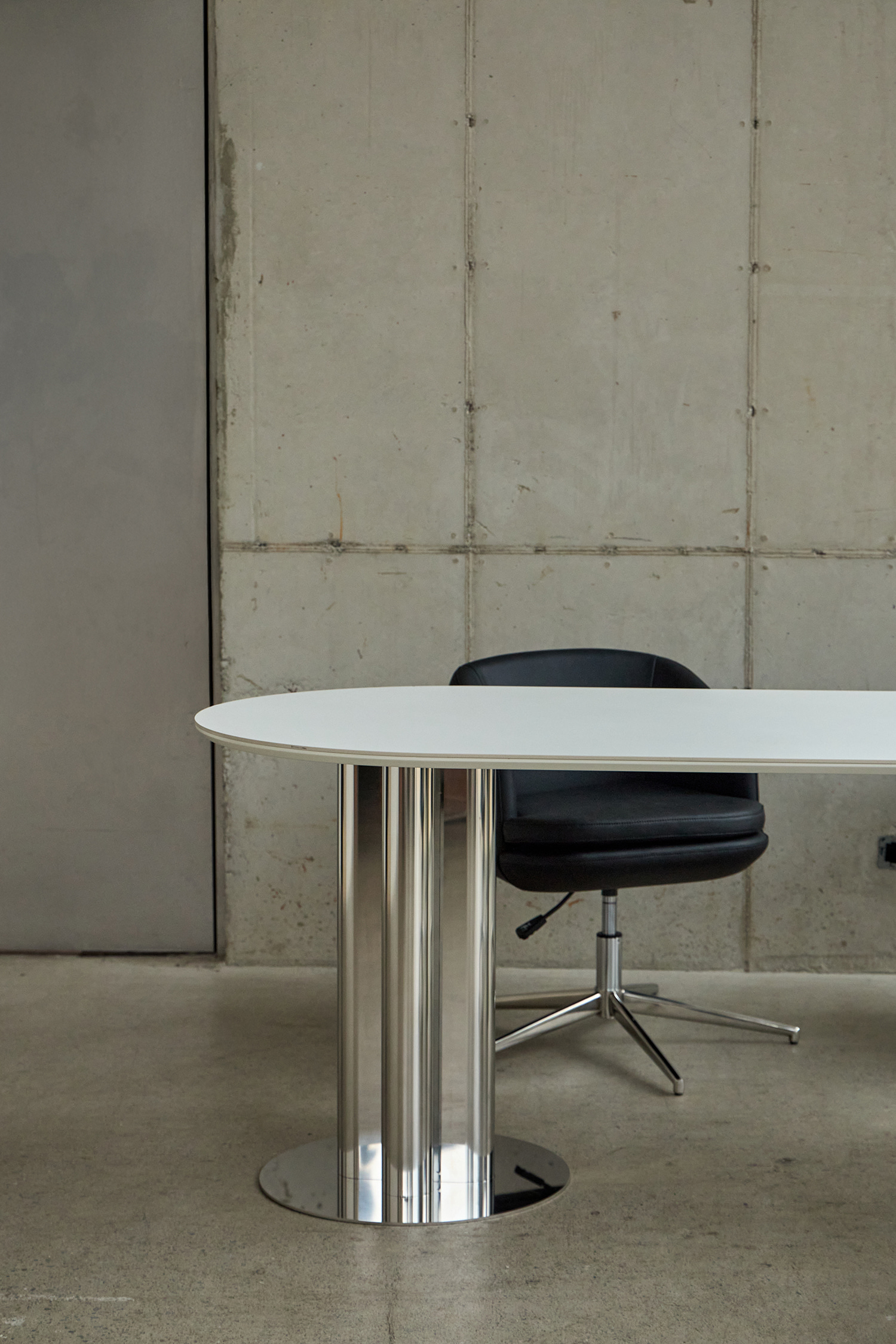
It is a structure where ceramic is bonded onto birch plywood to absorb impact, and a slight gap at the boundary where the two materials meet is a normal occurrence that can happen during the manufacturing process.
The ceramic model of TXTR's ROHE TABLE uses a tabletop where 18mm birch plywood has 6mm ceramic attached on top and is finished with white paint[1]. Thin ceramic is resistant to surface scratches and heat, but can be vulnerable to edge impacts if used alone, so a method of supporting it with thick wood underneath to distribute impacts and increase support is often used.
Due to the processing characteristics of pressing and bonding two different materials together, a fine gap may be visible at the joint line where the ceramic and the underlying wood meet, but this is a natural occurrence arising from the manufacturing process and is not a product defect[2]. hmmm, it is a design layered in two plies to achieve both the practicality of ceramic, which is resistant to everyday stains, and structural stability as furniture.
The manufacturer of the original ceramic slab used for the tabletop or specific surface texture specifications have not yet been confirmed.