How does maintenance differ when natural wood veneer is used instead of solid wood for a coffee table top?
The user is choosing a living room coffee table and is concerned about the maintenance burden, such as the shrinkage or warping characteristic of solid wood.
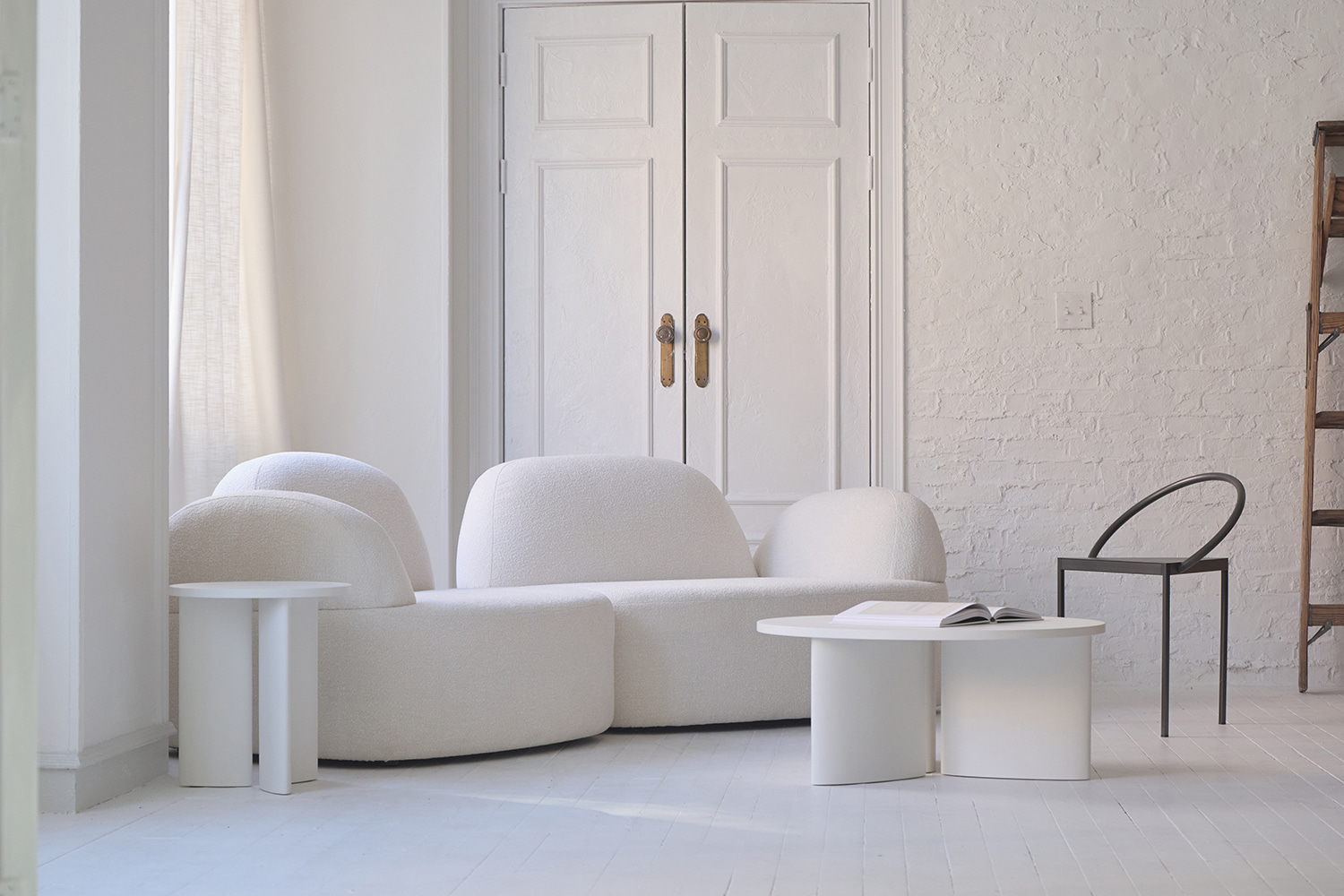
Natural wood veneer bonding retains the natural grain of wood while reducing the weakness of solid wood warping due to humidity or heat, making maintenance easier.
TXTR's Tulip coffee table uses a natural wood veneer bonding method known as wood veneer[1].
Generally, solid wood is prone to cracking or warping through repeated shrinkage and expansion when exposed to seasonal humidity changes or heat from hot tableware. Veneer processing, in which thinly sliced solid wood is bonded to a stable base board for finishing, maintains the unique natural look of solid wood while reducing such physical deformation[2].
Compared to solid wood, which is vulnerable to moisture and heat, it is easier to handle in daily life, reducing the effort required for maintenance[3]. hmmm, it is a sensible way to secure both the texture of solid wood and practicality in a living room table where teacups are frequently placed and hands frequently touch.
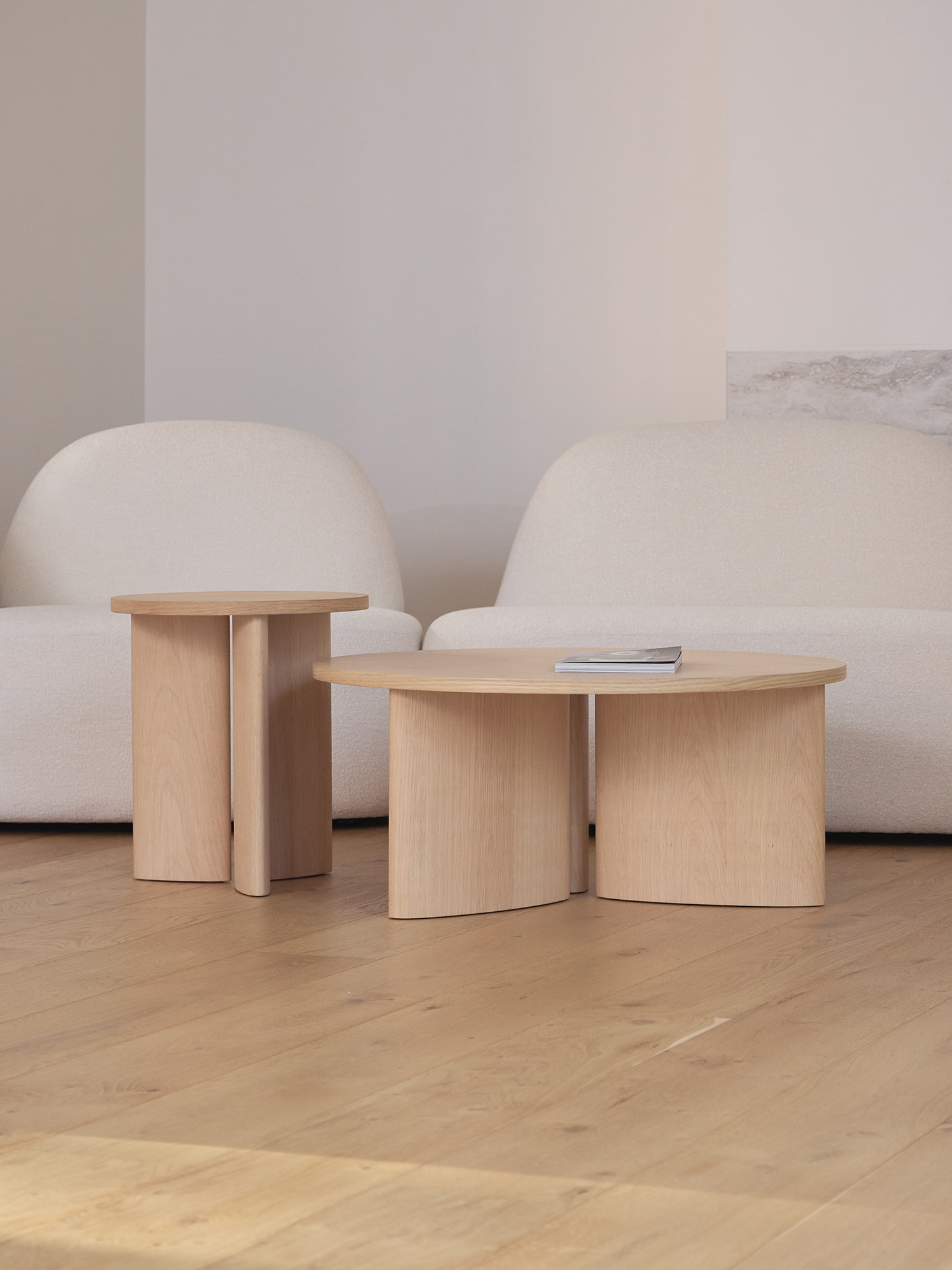
The specific painting and coating methods applied to the natural wood veneer surface have not yet been confirmed.