Oil is seeping out onto the surface of the hinoki cutting board; can I still use it as is?
Seeing greasiness on the surface of the cutting board makes it easy to worry about contamination or deterioration. It is a moment when you are unsure whether to wash it off with detergent or go ahead and cut food on it as is.
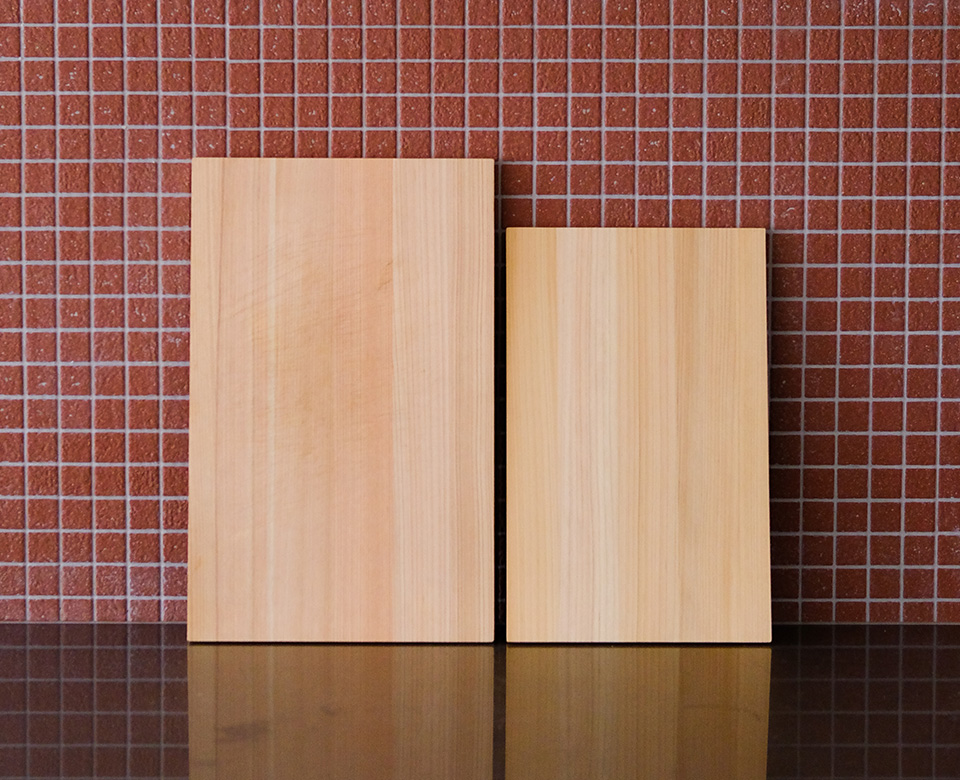
![[나카가와상점] 슬림 히노키 도마 (식기세척기O / 2size)](https://img.hmmm.pub/brands/nakagawa-masashichi/products/a33f3152-b201-4614-819d-7e791d4c3d46/3.jpg)
It is not contamination, but a phenomenon where the hinoki's own natural oil surfaces, and because it plays a role in suppressing the proliferation of bacteria, you can safely use it as is.
At first glance, it may look like a stain deteriorated by grease, but it is actually an inherent natural component contained in the wood. Hinoki (cypress) is originally a wood rich in its own oils, and there are cases where oil seeps out onto the surface during use or storage[1].
Rather than being a contaminant that needs to be wiped away, this oil actually serves to prevent bacteria from multiplying on the surface of the cutting board[2]. Generally, the oil in hinoki is known to reduce excessive moisture from penetrating deep into the wood and to help with natural antibacterial action. The oiliness that appears on the surface is not a deterioration of the product, but the natural result of the inherent properties of the wood.
Therefore, there is no need to scrub vigorously with detergent or scrape it away to force the grease off. You can maintain a hygienic condition for a long time simply by lightly rinsing it with water before use and drying it completely in a well-ventilated, shaded area after washing.
It has not yet been confirmed whether the oil that seeps onto the surface of the cutting board affects the aroma or taste of food ingredients.