What kind of mark is the 'trivet mark' mentioned in the enamel product guide?
This is because I wonder what exactly the trivet marks or glaze pooling described in the product explanation—along with the note stating they are not defects—actually are.
![[노다호로] 법랑 다용도 볼 (10size)](https://img.hmmm.pub/brands/noda-horo/products/22617356-71d3-4823-99d7-9bee813edfe5/20.jpg)
![[노다호로] 법랑 화이트 시리즈 원형 용기 (6size)](https://img.hmmm.pub/brands/noda-horo/products/39ffcf97-17bc-4d36-a673-4fa7da6f9765/0.jpg)
Trivet marks are natural traces of the manufacturing process that occur when placing vessels on a support stand while firing them at high temperatures after coating the metal surface with glass glaze.
Enamel is a material made by coating a solid metal frame with glass glaze and firing it in a high-temperature kiln[1]. Because the glaze is applied in liquid form, it may not spread evenly across the surface during drying and firing, leaving some pooled areas or dripping streaks[2].
'Trivet' refers to a 3-legged support tool that holds the glazed vessels inside the kiln. Fine dots or pressed marks are left where the rim or connecting parts of the container touched this support stand inside the kiln[3]. Subtle differences in glaze concentration, air bubbles, protrusions, and slight unevenness in the bottom surface also stem from these physical characteristics of high-temperature firing and metal forming[4][5].
These marks are inherent characteristics inevitably created in the manufacturing process and are not classified as product flaws or defects[6][7]. Therefore, exchanges and returns due to surface marks or irregularities are processed under simple change of mind standards rather than as defect claims[8].

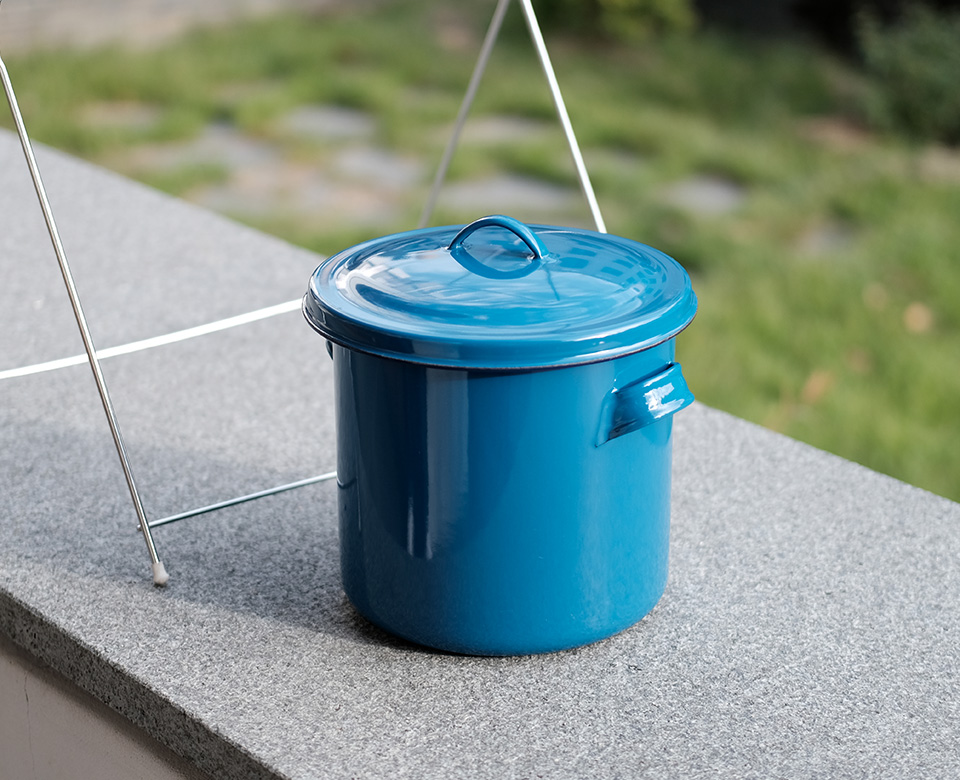
Specific cleaning methods for managing fine rust that may form on the areas where trivet marks touched at home have not yet been confirmed.
Product measurements
View details
[노다호로] 법랑 다용도 볼 (10size)
Measurements
| Part | Value |
|---|---|
| 높이 | 11.3cm |
| 지름 | 28cm |