What is the difference between dry veneer and wet veneer mentioned in the description of the Boulder Table?
After seeing the explanation that different types of veneer were used for the tabletop and legs, one wonders why the finish was applied differently for each part.
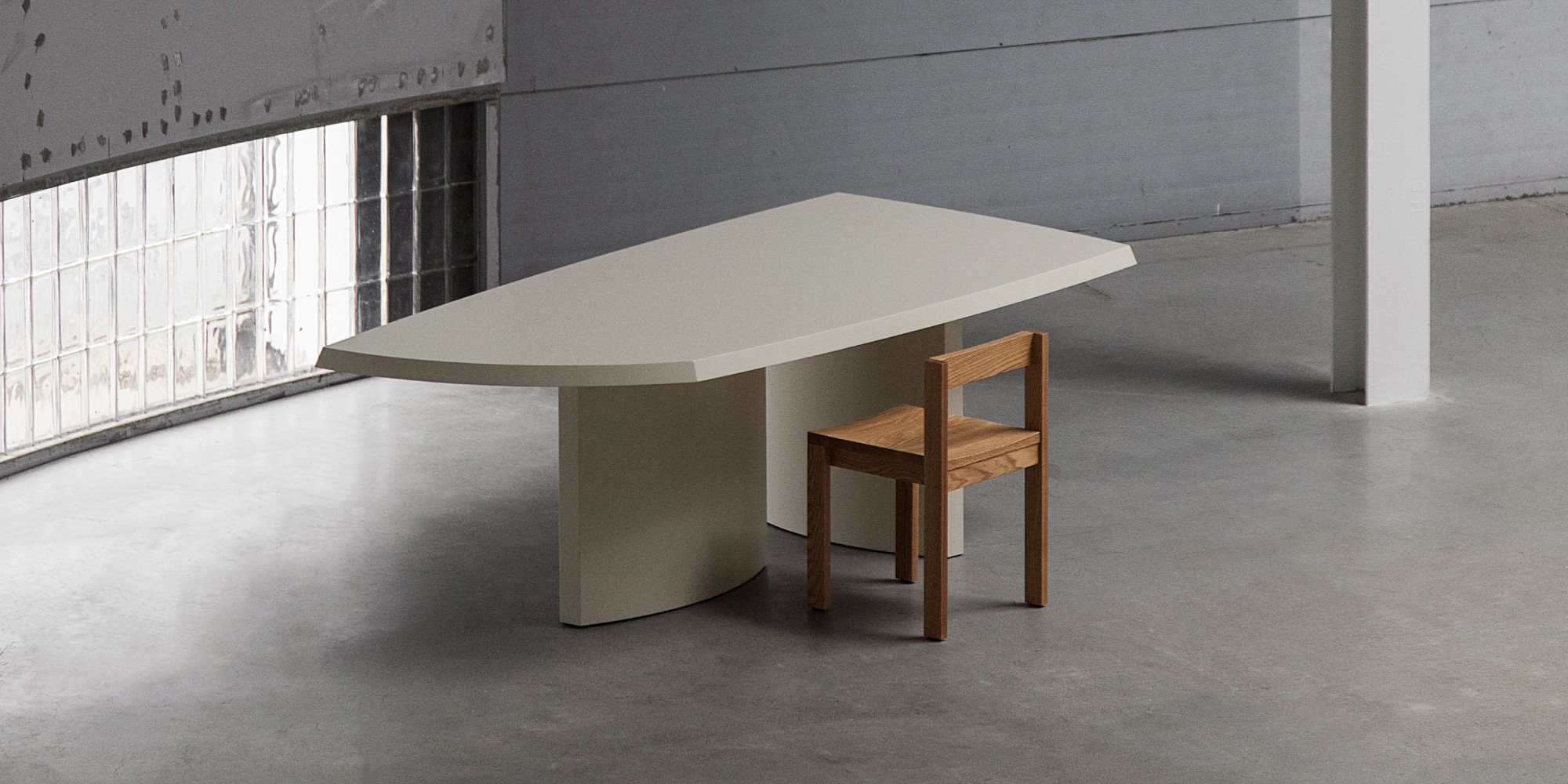
For the Boulder Table, dry veneer is applied to the top and sides of the tabletop where hands and gaze reach often, while wet veneer is separately used on the curved legs.
Veneer refers to a finishing material made by thinly slicing solid wood and attaching it to the surface of a board. It is divided into dry and wet depending on the processing method.
Dry veneer is shaved relatively thickly while the wood is in a dry state, leaving the original three-dimensional grain of solid wood thickly intact. Conversely, wet veneer softens the wood by steaming it before slicing it thinly, giving it good flexibility and making it suitable for smoothly wrapping curved surfaces.
Dry veneer, which distinctly shows the wood grain, was used on the top and sides of the tabletop of the BOULDER TABLE, and wet veneer was wrapped around the pillar-shaped legs[1]. This means that the appropriate processing method was used separately for each part, distinctly preserving the solid wood texture on the flat, wide tabletop and adding a flexible finish to the round legs.
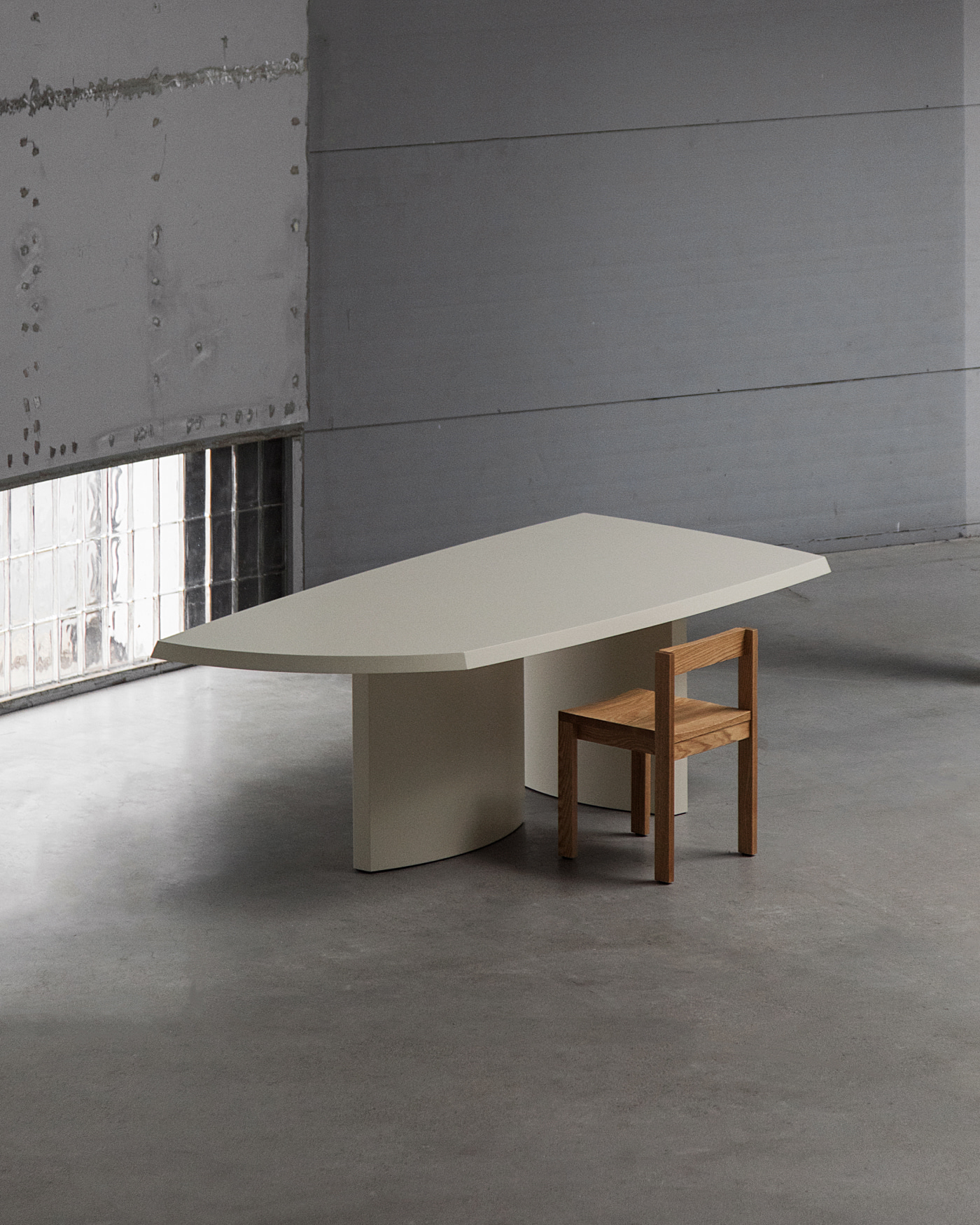
The specific thickness figures of the veneer used on the tabletop and legs have not yet been confirmed.