What role does adding thin double-row stitching play after raw cutting the hem?
This is out of concern that if the cross-section of the pant hem is simply cut, threads might unravel endlessly during washing or wearing. It is a question to check the purpose of this unique hem finish.
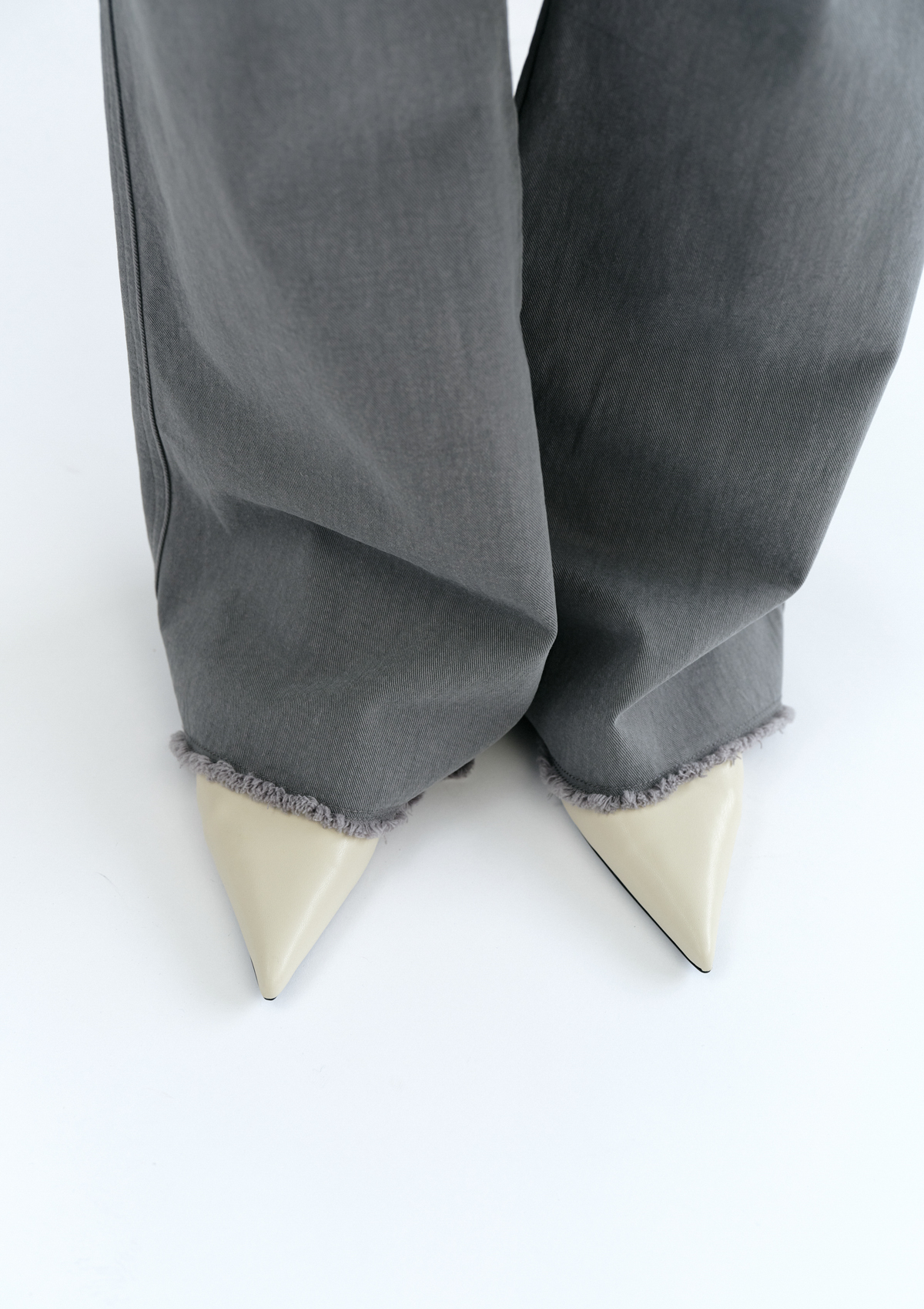
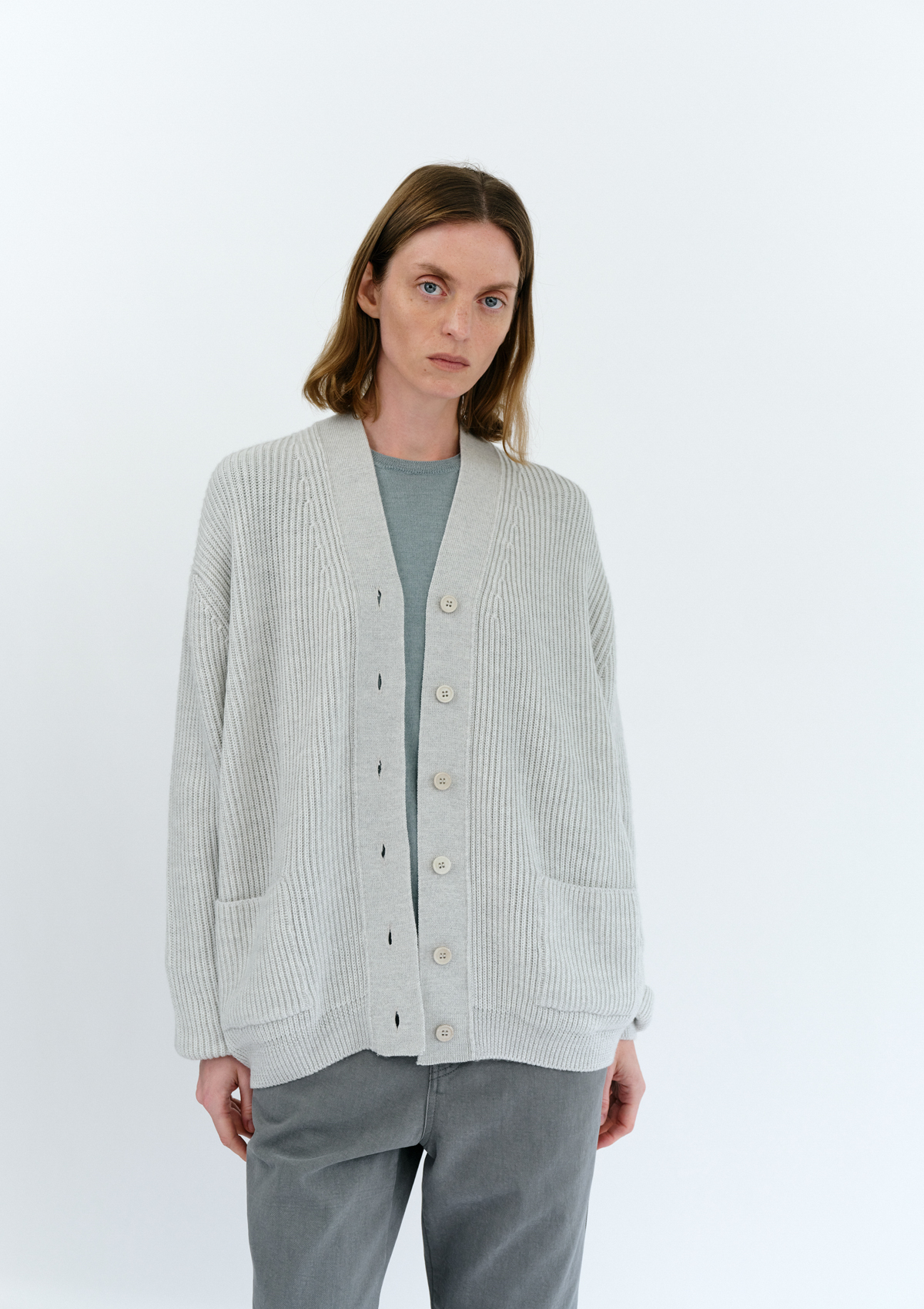
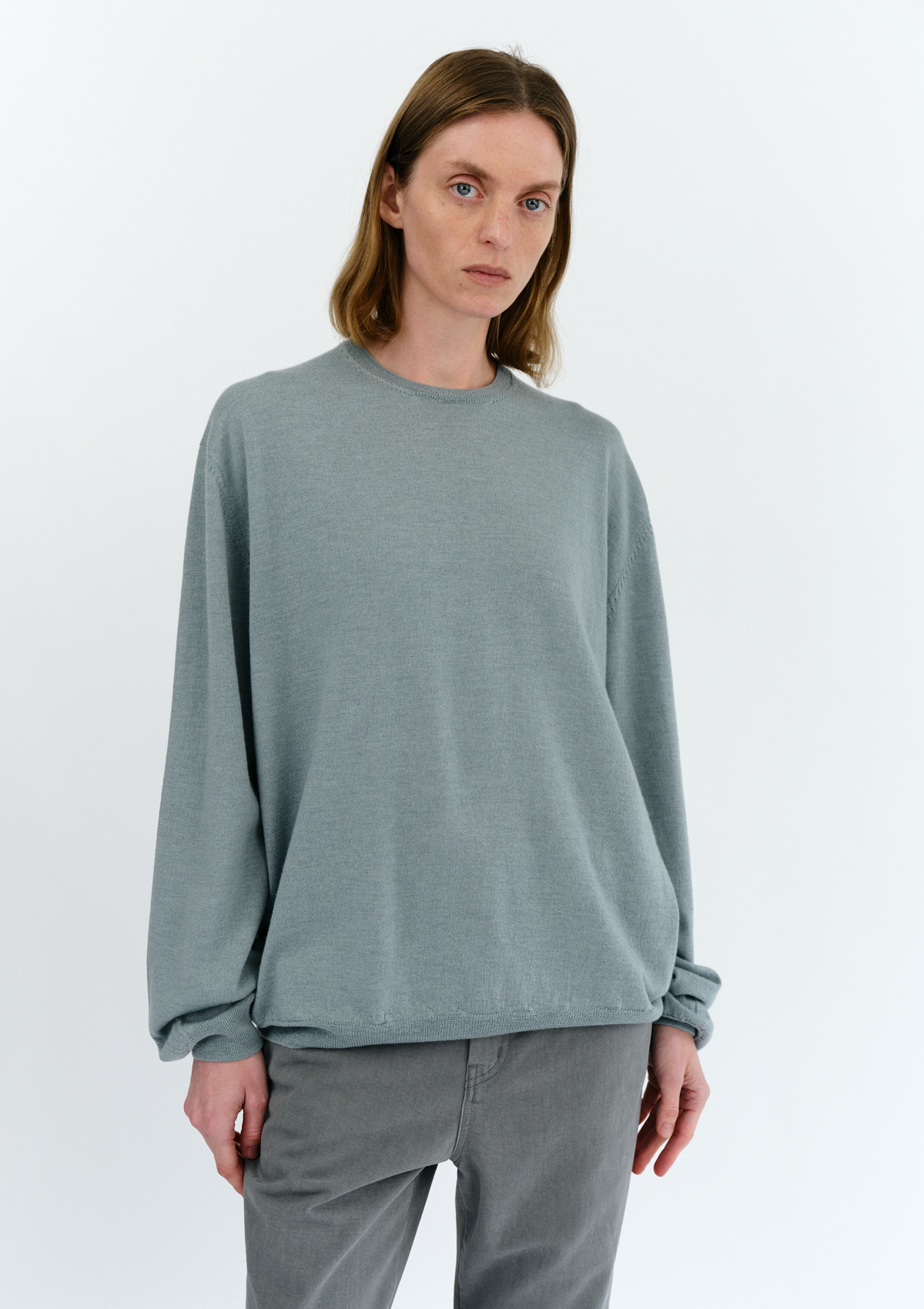
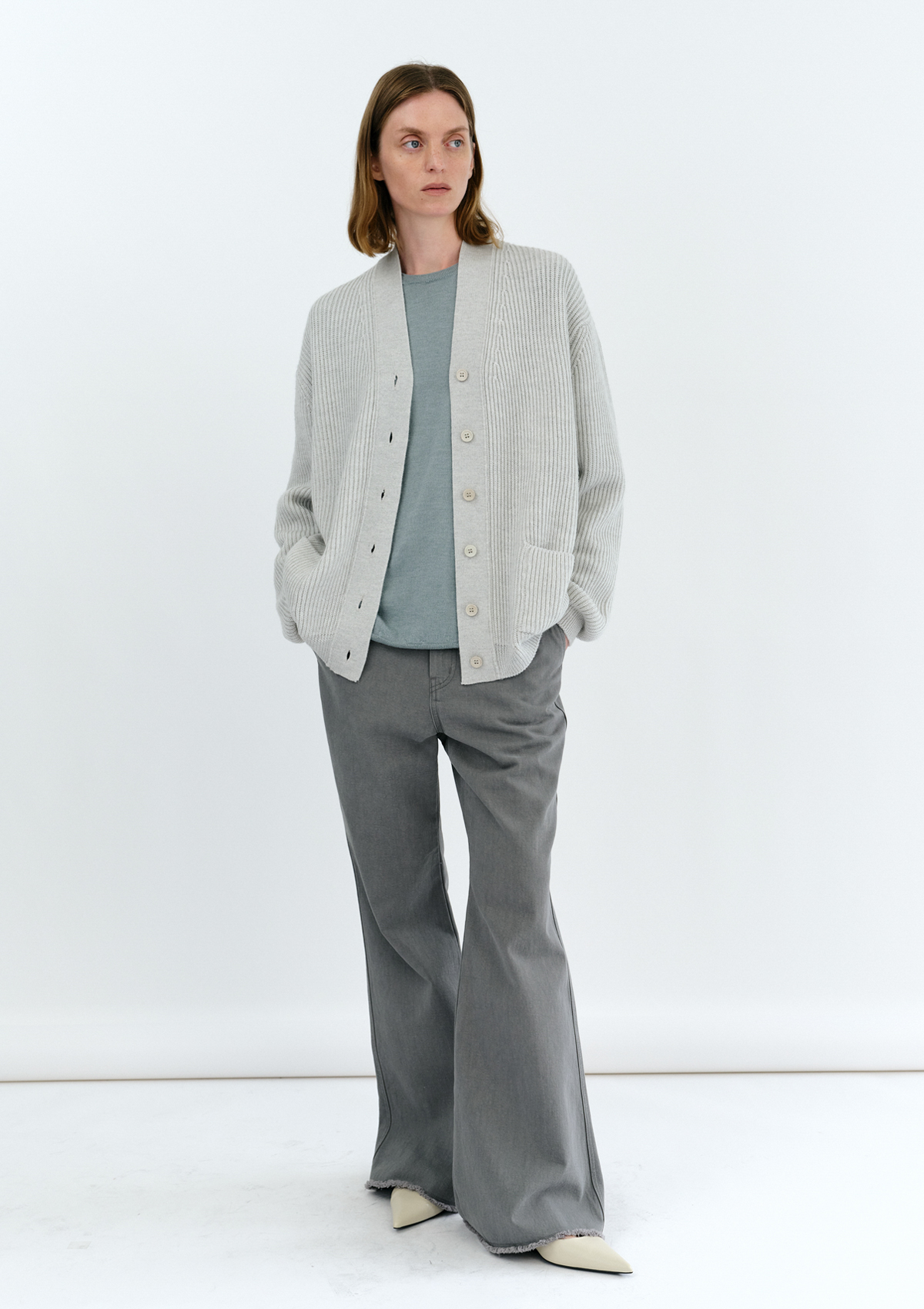
It serves to firmly hold the threads right above so that they do not unravel further, while preserving the natural fraying of the cut edge.
The end is left open, and right above it is secured. MOONDAL's Anouk Flare Denim in Sage Gray has a hem finished with thin double-row stitching after being raw-cut without folding the hem edges in[1].
Raw cutting is a process in which the fabric edge is not rolled inward and sewn, but rather the cross-section is cut directly. Denim that has undergone this process naturally frays during wearing and washing, creating a unique texture. However, if the cut edge is left as is, threads can continue unraveling upward, which may ruin the garment's shape.
At this point, the two rows of stitching lines passing right above the hem act as a boundary line that stops the fraying. While maintaining the sturdiness of the 100% cotton fabric, it adds only the texture of unraveled threads to the end of the naturally spreading flare silhouette[2][3].
hmmm, thanks to drawing a boundary line in advance with stitching to stop unraveling, the worn texture and the garment's lifespan come together neatly.
Specific standards or wearing guidelines regarding up to which point threads unravel during repeated washing have not been confirmed yet.
Product measurements
View details
Anouk Flare Denim in Sage Gray
Measurements
| Part | S | M | L |
|---|---|---|---|
| 총장 | 102cm | 103cm | 104cm |
| 밑위 | 32cm | 33cm | 34cm |
| 허리 ◦ | 34cm | 36cm | 38cm |
| 밑단 ◦ | 30cm | 31cm | 32cm |
| 허벅지 ◦ | 29.5cm | 31cm | 32.5cm |
| 엉덩이 ◦ | 50cm | 52cm | 54cm |
For rows marked with ◦, flat measurement or circumference could not be confirmed in official sources, so hmmm determined them using figures from the same item.