Why does the 'gohonde' mentioned in the description appear on the surface of the vessel?
If pale pink spots spread across the surface of the vessel, one might worry whether the product is defective. This question is asked to understand what the unfamiliar term in the product description means.
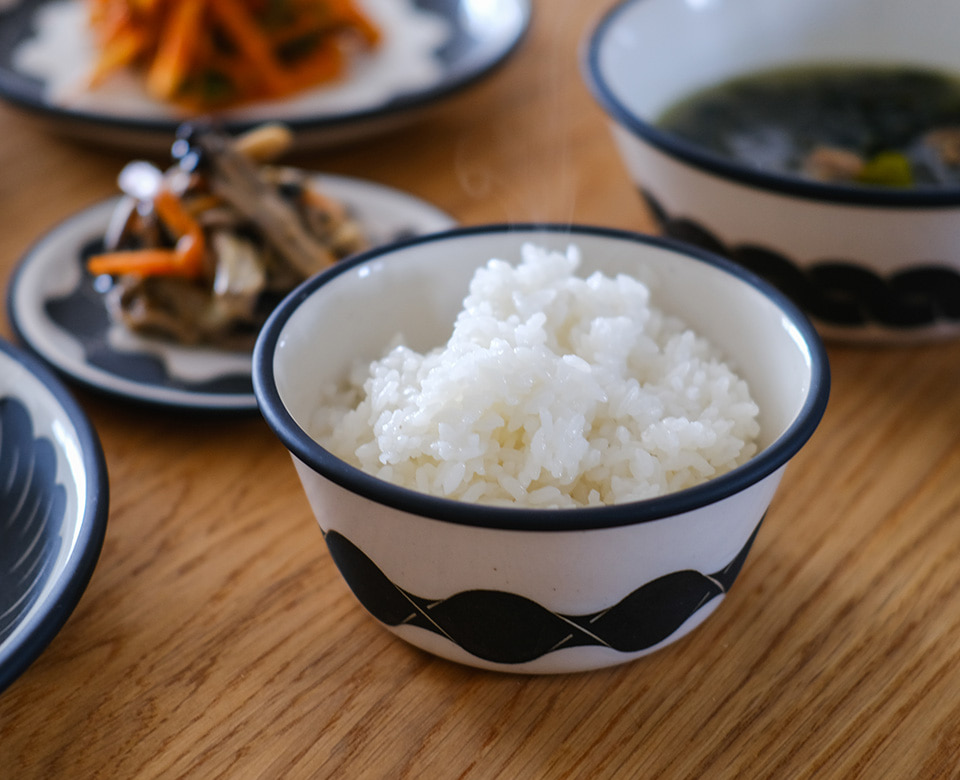
![[마루히로 하사미] Takahiro Yasuda TAGAYA 볼 (5size / 5type)](https://img.hmmm.pub/brands/maruhiro/products/8d7e25a6-840c-4bcc-b3bc-567fd84c4bc1/1.jpg)
Gohonde is a natural phenomenon where iron in the clay blooms into pale pink spots on the surface during reduction firing, a process of firing with reduced oxygen in the kiln.
In ceramics, gohonde refers to a phenomenon where iron in the clay or glaze reacts during reduction firing—a process of firing by reducing oxygen inside the kiln—and spreads out as pale pink spots. When the flames touch it, the elements in the clay react with surrounding materials instead of oxygen, leaving a delicate reddish tint lingering on the surface of the ceramic ware.
The pink spots that appear on the surface of Maruhiro's TAGAYA bowl also bloom naturally through this reduction firing[1]. The brand explains that these spots are natural characteristics created when clay meets fire, and are not product defects[2].
hmmm, depending on the extent to which the flames and heat reach inside the kiln, the size and location of the spots form differently on each piece.
Official materials have not yet confirmed whether there is any difference in the degree to which the gohonde phenomenon appears on the surface depending on the five shapes or sizes of the TAGAYA bowl.