The sweat fabric on the front and the denim on the back have different textures, so why are both listed as 100% cotton?
The front and back fabrics have visibly distinct textures, yet both parts are indicated as 100% cotton on the composition label, which can be confusing. This question asks how fabrics with completely different characteristics can be listed with the same composition.
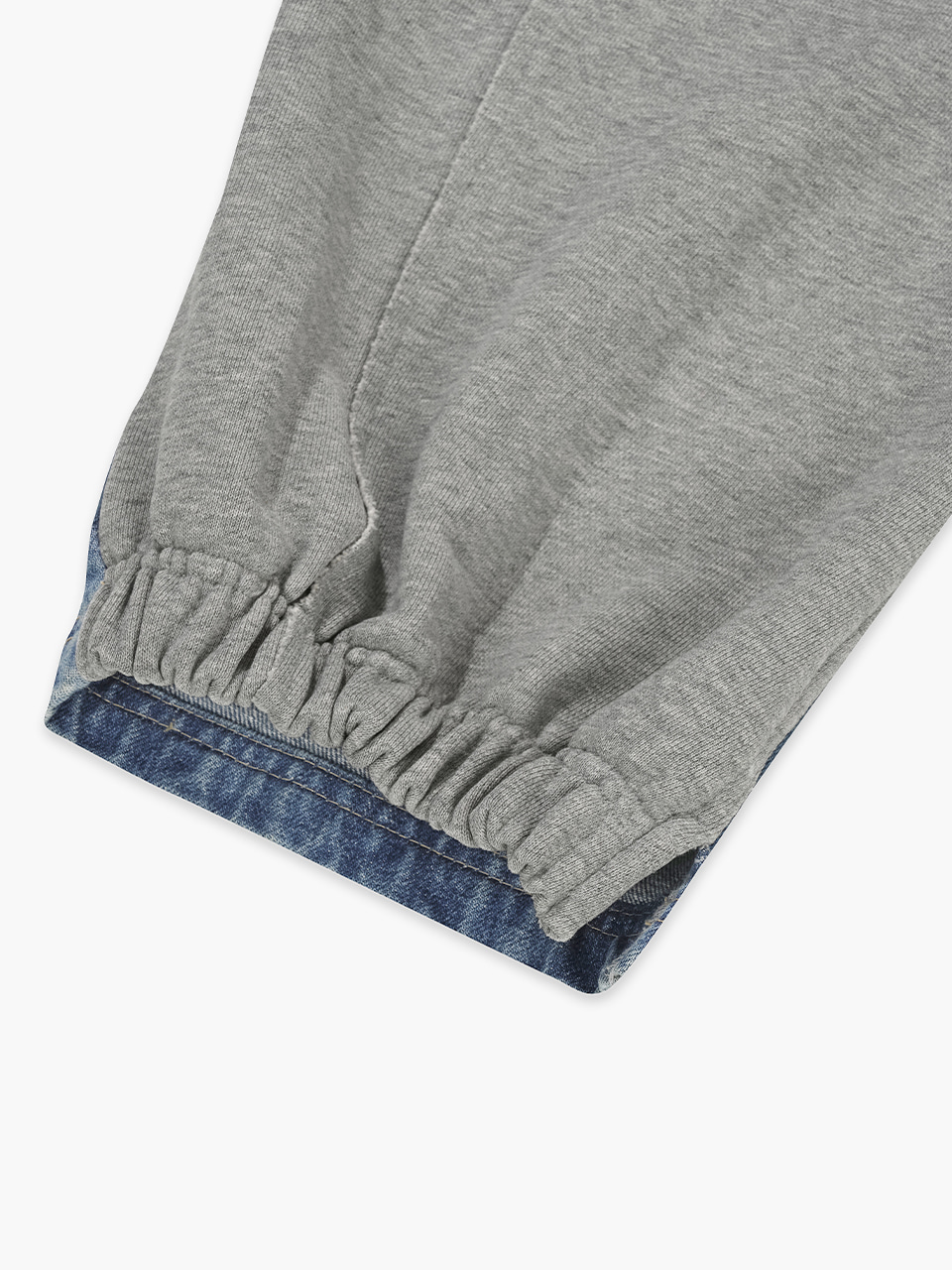
This is because cotton is the name of the raw fiber spun into yarn, while sweat fabric and denim are textiles shaped by weaving or knitting that cotton yarn in different ways.
The front is sweat fabric, and the back is denim[1]. MARGESHERWOOD placed sweat fabric on the front of the pants and recycled denim on the back, interlocking different surface textures on the front and back[2]. Although the apparent textures are clearly divided, both areas are listed as 100% Cotton in the material details[3].
This is because raw fibers and fabric construction methods operate on different levels. Cotton refers to the raw fiber obtained from the cotton plant, while sweat fabric and denim refer to the methods of interlacing those yarns to form a structure. Sweat fabric is a knitted fabric where yarns are looped together, making it thick and flexibly stretchy. In contrast, denim is a woven twill fabric where yarns are tightly interlaced horizontally and vertically, giving it a firm and durable structure.
Ultimately, the raw material is unified as pure cotton, with only the yarn construction methods varied and juxtaposed[4]. Even with the same cotton yarn, depending on the construction method, both the soft touch of a sweatshirt and the sturdy texture of jeans can be created.
This product is currently no longer sold.