Are the fine hairline cracks visible on the surface of the dish or the scorched marks on the bottom considered defects?
When receiving new ceramics, if there are thin cracks on the surface or the bottom rim is scorched, it is not easy to determine whether it is damaged or a product defect.
The fine cracks on the surface are a phenomenon that occurs when the glaze shrinks as it cools, and the soot on the bottom is a trace left by the high heat of the kiln, so neither is a defect.
Fine cracks that appear on the surface of ceramics are a natural phenomenon that occurs when the glaze hardens and shrinks. HASAMI PORCELAIN explains that delicate cracks can form as the glaze applied to the outer surface contracts[1][2]. Generally, the body shaped from clay and the glaze coated on the outer surface shrink at different rates and proportions during the cooling process after undergoing high temperatures in the kiln, which creates thin hairline cracks on the surface.
The dark soot remaining on the bottom surface is also not a product defect[3]. These marks naturally occur during the process of firing ceramics at high temperatures, and the degree to which they appear varies from product to product depending on the conditions under which heat reaches them inside the kiln[4][5].
hmmm, unlike smoothly uniform industrial products, it is closer to a unique texture created as the clay and glaze endure the high-temperature flames.

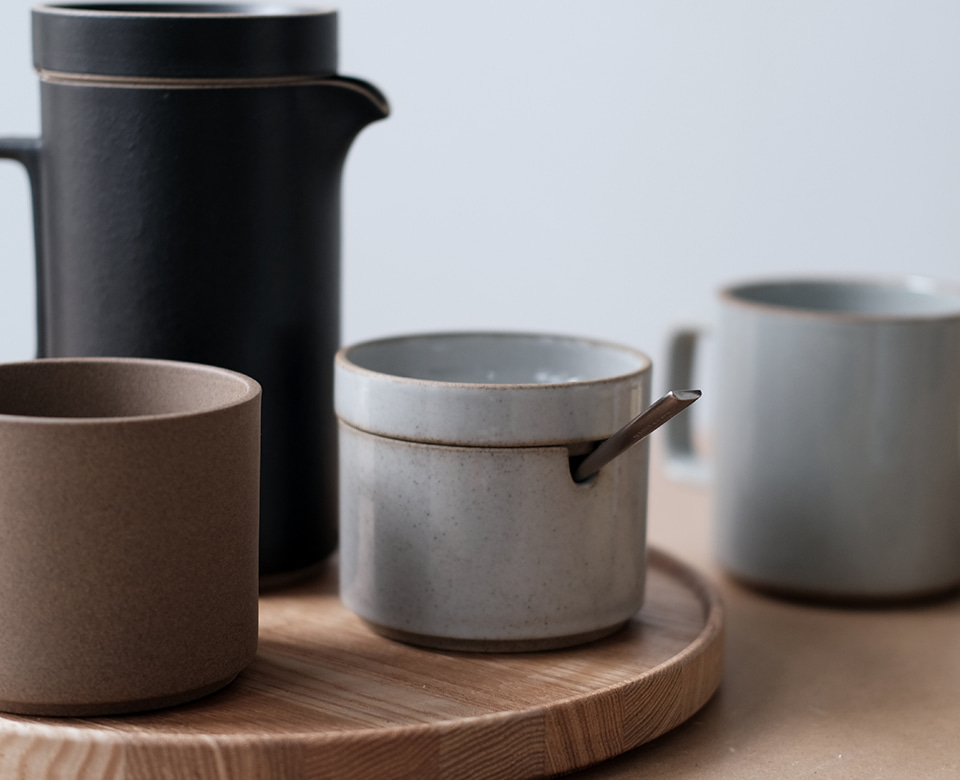
We have not yet confirmed separate maintenance methods to reduce food color or oil seeping into the fine cracks of the glaze.
Product measurements
View details
[하사미포셀린] Bowl-Round 라운드 볼
Measurements
| Part | Value |
|---|---|
| 높이 | 9cm |
| 지름 | 14.5cm |
[하사미포셀린] Sugar Pot 슈가팟
Other stated figures
| Part | Value |
|---|---|
| 용량 | 180ml |