Why are the table legs joined as a single unified structure instead of being assembled individually one by one?
You may wonder what advantages a solid wood integrated structure has compared to furniture where table legs are assembled individually. It is also to check whether it can withstand the weight of the tabletop over time and remain wobble-free during everyday use.
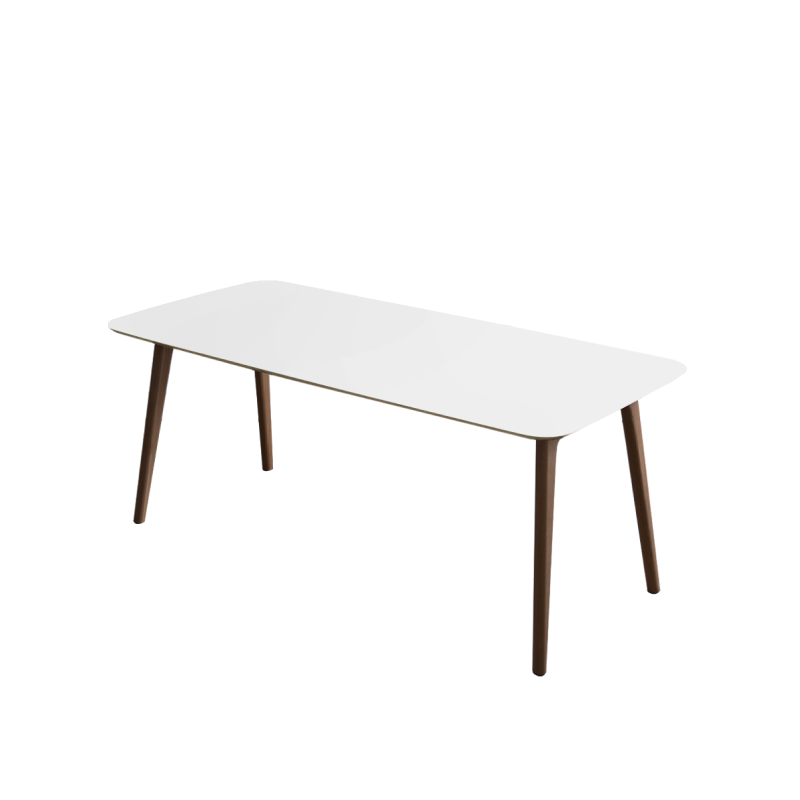
The Deer Ceramic Table from flat point is crafted as an integrated solid wood structure using mortise-and-tenon joinery rather than attaching the legs individually, ensuring wobble-free sturdiness[1].
Generally, assembling dining table legs one by one beneath the tabletop using bolts or screws makes the joints prone to loosening over time, leading to wobbling. Mortise-and-tenon joinery is a joining technique where a projection is formed on one piece of wood and a groove is carved into the other so they interlock. Because the contact area between the pieces of wood is wider than in structures supported only by screws, it withstands external shocks and warping far better.
flat point finished the Deer Ceramic Table with an integrated solid wood structure utilizing mortise-and-tenon joinery, rather than attaching the legs individually[2]. Because the four legs are connected into one solid frame, they stably support the weight of the tabletop and effectively reduce wobbling[3].
It has not yet been confirmed what bonding method was used together at the mortise-and-tenon joints of the leg frame.